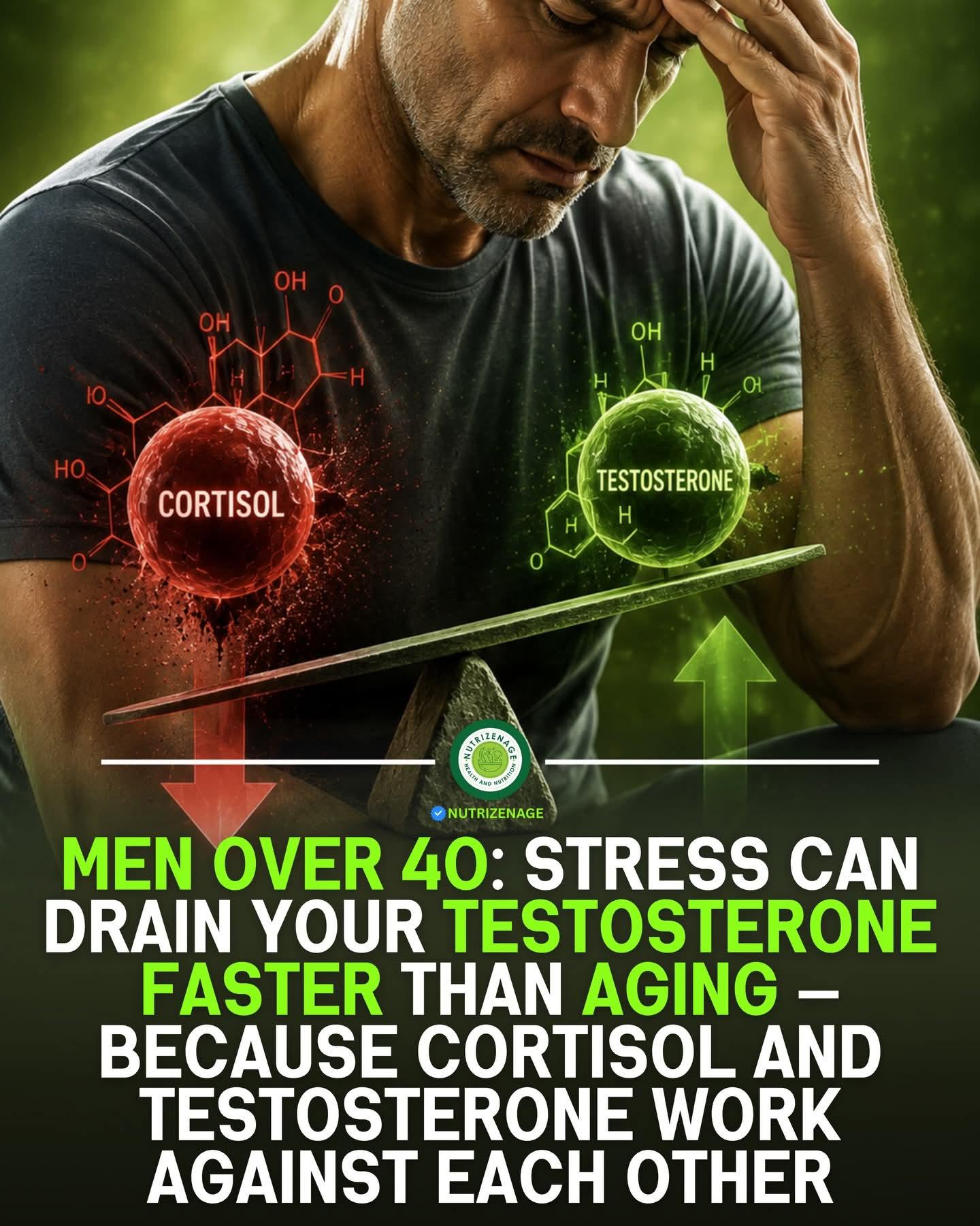



The slow, gradual decline in testosterone with age is normal. Chronic stress is what accelerates it into a real problem — and the mechanism is direct.
Here’s what happens: cortisol (your stress hormone) and testosterone work in opposition. When your body is under sustained stress, it prioritizes cortisol production — and the raw materials and signaling get diverted away from testosterone.
Chronic high cortisol also:
🔻 Disrupts sleep — and most testosterone is made during deep sleep, so the two compound each other
🔻 Drives visceral (belly) fat — which produces aromatase, converting testosterone into estrogen
🔻 Reduces libido, motivation, and mood
So stress hits your hormones from several directions at once, creating a downward spiral.
Signs stress is costing you hormonally:
⚠️ Low libido and drive
⚠️ Belly fat that won’t shift
⚠️ “Wired but tired,” with poor sleep
⚠️ Irritability and a flat mood
What genuinely helps break the cycle:
✅ Manage stress directly — slow breathing (long exhales), time outdoors, saying no to chronic overload
✅ Protect sleep — the foundation of testosterone production
✅ Strength training — builds muscle and supports testosterone
✅ Cut alcohol, which worsens both cortisol and sleep
Age takes about 1% a year. Unmanaged chronic stress can take far more — and unlike aging, it’s something you can actually address.
#MensHealth #TestosteroneSupport
Here’s what happens: cortisol (your stress hormone) and testosterone work in opposition. When your body is under sustained stress, it prioritizes cortisol production — and the raw materials and signaling get diverted away from testosterone.
Chronic high cortisol also:
🔻 Disrupts sleep — and most testosterone is made during deep sleep, so the two compound each other
🔻 Drives visceral (belly) fat — which produces aromatase, converting testosterone into estrogen
🔻 Reduces libido, motivation, and mood
So stress hits your hormones from several directions at once, creating a downward spiral.
Signs stress is costing you hormonally:
⚠️ Low libido and drive
⚠️ Belly fat that won’t shift
⚠️ “Wired but tired,” with poor sleep
⚠️ Irritability and a flat mood
What genuinely helps break the cycle:
✅ Manage stress directly — slow breathing (long exhales), time outdoors, saying no to chronic overload
✅ Protect sleep — the foundation of testosterone production
✅ Strength training — builds muscle and supports testosterone
✅ Cut alcohol, which worsens both cortisol and sleep
Age takes about 1% a year. Unmanaged chronic stress can take far more — and unlike aging, it’s something you can actually address.
#MensHealth #TestosteroneSupport
The slow, gradual decline in testosterone with age is normal. Chronic stress is what accelerates it into a real problem — and the mechanism is direct.
Here’s what happens: cortisol (your stress hormone) and testosterone work in opposition. When your body is under sustained stress, it prioritizes cortisol production — and the raw materials and signaling get diverted away from testosterone.
Chronic high cortisol also:
🔻 Disrupts sleep — and most testosterone is made during deep sleep, so the two compound each other
🔻 Drives visceral (belly) fat — which produces aromatase, converting testosterone into estrogen
🔻 Reduces libido, motivation, and mood
So stress hits your hormones from several directions at once, creating a downward spiral.
Signs stress is costing you hormonally:
⚠️ Low libido and drive
⚠️ Belly fat that won’t shift
⚠️ “Wired but tired,” with poor sleep
⚠️ Irritability and a flat mood
What genuinely helps break the cycle:
✅ Manage stress directly — slow breathing (long exhales), time outdoors, saying no to chronic overload
✅ Protect sleep — the foundation of testosterone production
✅ Strength training — builds muscle and supports testosterone
✅ Cut alcohol, which worsens both cortisol and sleep
Age takes about 1% a year. Unmanaged chronic stress can take far more — and unlike aging, it’s something you can actually address.
#MensHealth #TestosteroneSupport