


Penguins: More Than Charming Birds in Black and White Tuxedos

Penguins are some of the most recognizable and fascinating birds on Earth. With their upright posture, black-and-white plumage and amusing waddle, they may look slightly awkward on land, but beneath the ocean surface, they transform into remarkably agile swimmers.
These flightless seabirds are superbly adapted to marine life. From Emperor Penguins surviving the bitter Antarctic winter to African Penguins living along the sunny coastline of southern Africa, penguins have evolved an extraordinary collection of adaptations that allow them to survive in very different environments.
Physical Description
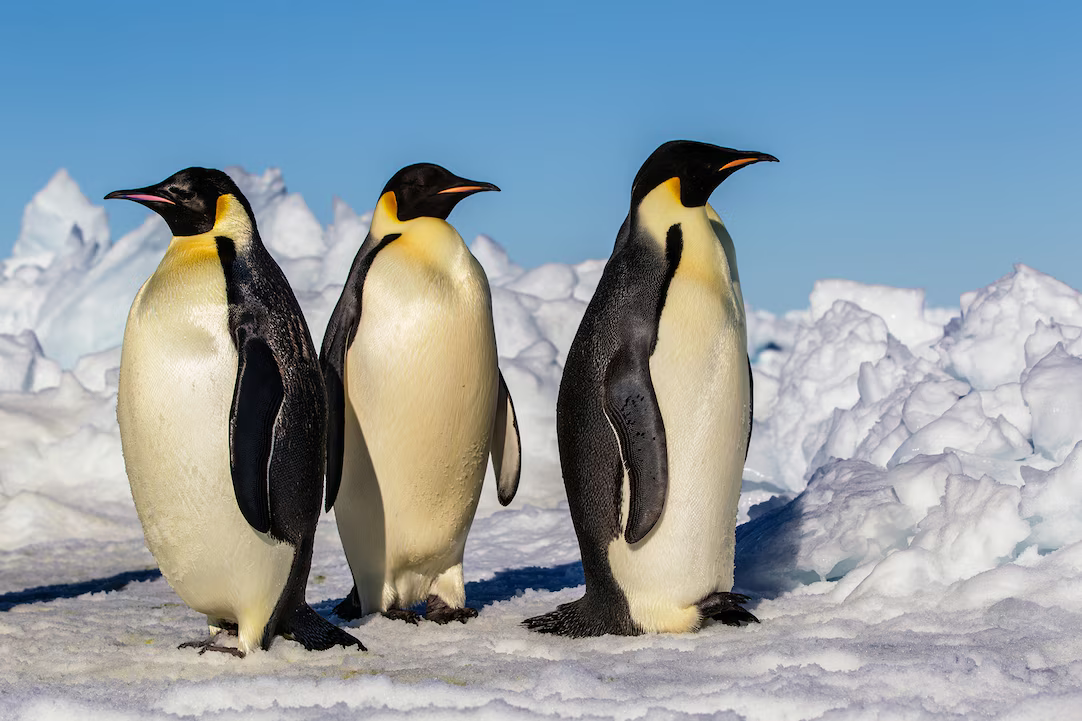
Penguins are flightless seabirds with streamlined, torpedo-shaped bodies. Their wings have evolved into stiff, paddle-like flippers that propel them through the water.
Penguins vary considerably in size. The tiny Little Penguin stands only about 30 cm tall, while the magnificent Emperor Penguin can grow to more than 1.2 metres.
Body Shape and Posture
A penguin's body is designed primarily for swimming rather than flying.
- Streamlined Body: Its tapered shape reduces resistance as it moves through water.
- Upright Posture: Short legs positioned towards the back of the body give penguins their characteristic upright stance and waddling walk.
- Dense Bones: Penguins have relatively dense bones that help reduce buoyancy and make diving easier.
- Powerful Flippers: Their modified wings act like underwater paddles, allowing penguins to move quickly and manoeuvre efficiently.
Feathers and Colouring
A penguin's famous black-and-white appearance is more than attractive colouring, it provides camouflage.
Their dark backs blend with the darker ocean when viewed from above, while their pale bellies blend with the brighter surface when viewed from below. This form of camouflage is known as countershading.
Penguins are also covered in dense, overlapping feathers that help keep water away from the skin while trapping insulating air close to the body. A layer of body fat provides additional insulation.
Unique Adaptations
Penguins have undergone remarkable evolutionary changes that allow them to thrive in the ocean and, in some species, survive extreme cold.
Built for Diving
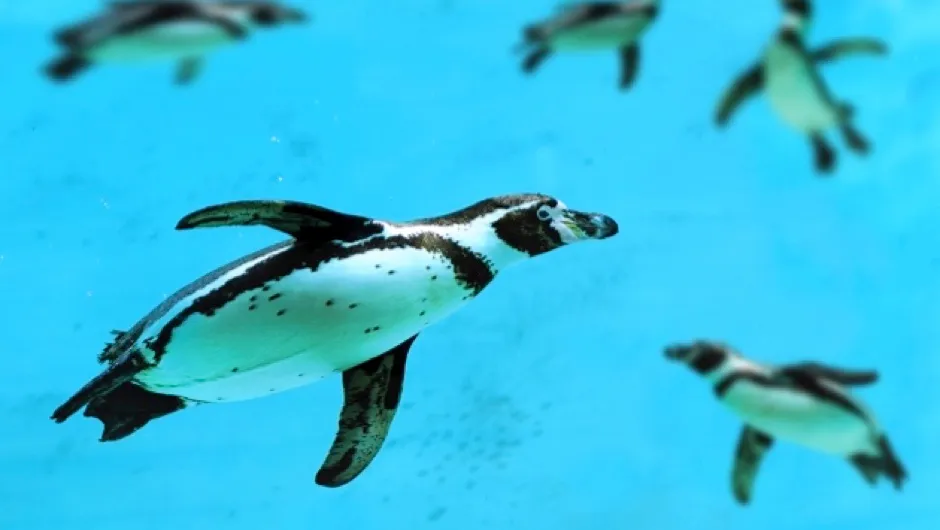
Their powerful flippers propel them through the water while their feet and tail assist with steering.
Penguins can adjust the amount of air in their bodies before and during dives, helping them manage buoyancy as they descend and return to the surface.
Keeping Warm
Cold-climate penguins have several ways of conserving body heat. Blood vessels in their legs and flippers help reduce heat loss through countercurrent heat exchange, while dense feathers and body fat provide insulation.
Emperor Penguins take this even further by forming enormous huddles during severe Antarctic weather. Individuals gradually change position within the group so that no penguin remains on the cold outer edge indefinitely.
Natural Salt Removal
Because penguins live at sea and consume salty prey, they have specialized glands above their eyes that remove excess salt from their bloodstream.
Excellent Underwater Vision
Penguins have eyes adapted to hunting underwater, helping them locate fast-moving prey even in relatively dim conditions.
Tobogganing
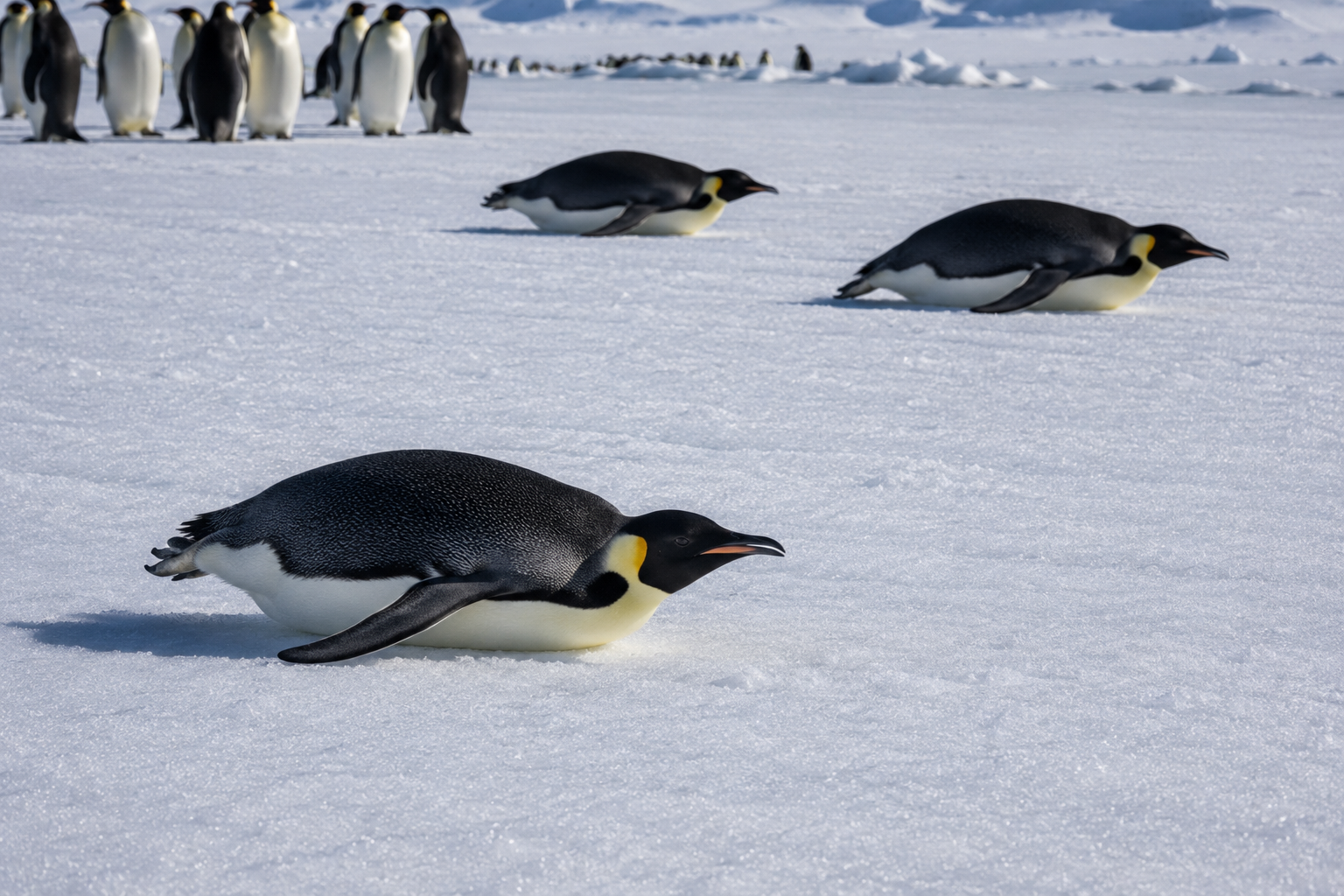
Walking across ice requires considerable energy. Some penguins save energy by lying on their bellies and pushing themselves across snow and ice with their feet and flippers, a behaviour known as tobogganing.
Distribution and Habitat
Penguins occur naturally almost entirely in the Southern Hemisphere, but they certainly do not all live surrounded by snow and ice.
Their range stretches from Antarctica to temperate coastlines and even the Galápagos Islands near the equator.
Antarctic Penguins
Species such as the Emperor Penguin and Adélie Penguin are strongly associated with Antarctica and its surrounding waters.
Sub-Antarctic Penguins
King, Macaroni and several other penguin species inhabit remote islands throughout the Southern Ocean.
African Penguins
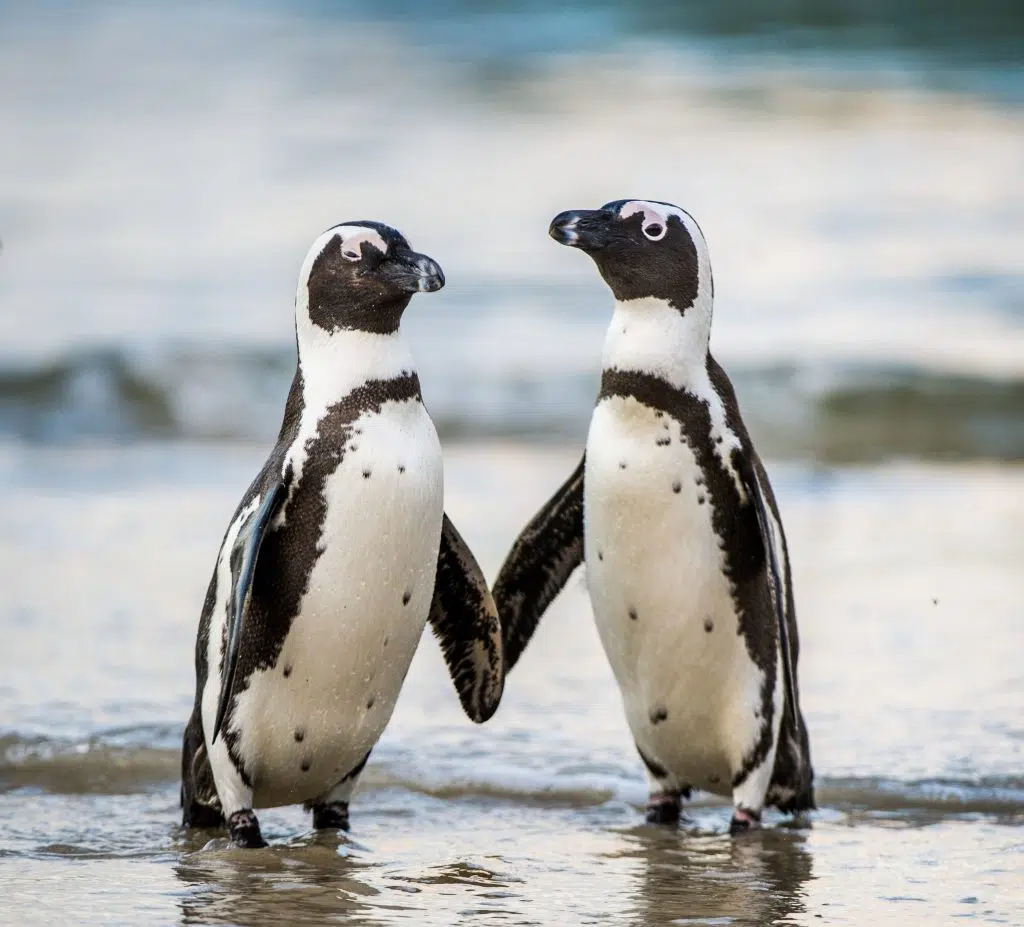
The African Penguin lives along the coasts of South Africa and Namibia, where the cold, nutrient-rich Benguela Current supports the fish populations on which these birds depend.
Penguins of Australia and New Zealand
The Little Penguin occurs along parts of Australia and New Zealand.
South American Penguins
Humboldt Penguins inhabit parts of the Pacific coastline of Peru and Chile, while other species occupy southern South America and nearby islands.
Galápagos Penguins
The Galápagos Penguin lives remarkably close to the equator. Cold, productive ocean currents make its unusual tropical home possible.
Behaviour and Social Structure
Penguins are highly social birds, particularly during the breeding season.
Many species gather in breeding colonies known as rookeries, which can contain thousands of individuals.
Living in large groups provides several advantages, including easier mate finding and, in some circumstances, greater protection from predators.
Finding Family in a Crowd
A huge penguin colony can be extremely noisy, yet parents and chicks are remarkably good at recognizing one another.
Individual vocalisations help partners, parents and chicks locate each other among thousands of other birds.
Porpoising
When travelling quickly near the ocean surface, penguins sometimes leap repeatedly out of the water in shallow arcs. This behaviour is known as porpoising.
Pebble Collecting
Some species build nests using stones and pebbles. Competition for particularly desirable stones can become intense, and neighbouring penguins may even steal pebbles from one another.

The Annual Moult
Penguins undergo an unusual annual moult in which their old feathers are replaced over a relatively short period.
During this time their waterproofing is temporarily compromised, so they remain ashore and cannot hunt normally at sea. They therefore depend heavily on stored body reserves until their new feathers are ready.
Diet and Feeding
Penguins are carnivorous marine hunters.
Depending on their species and location, their diet may include:
- Fish
- Krill
- Squid
- Small crustaceans
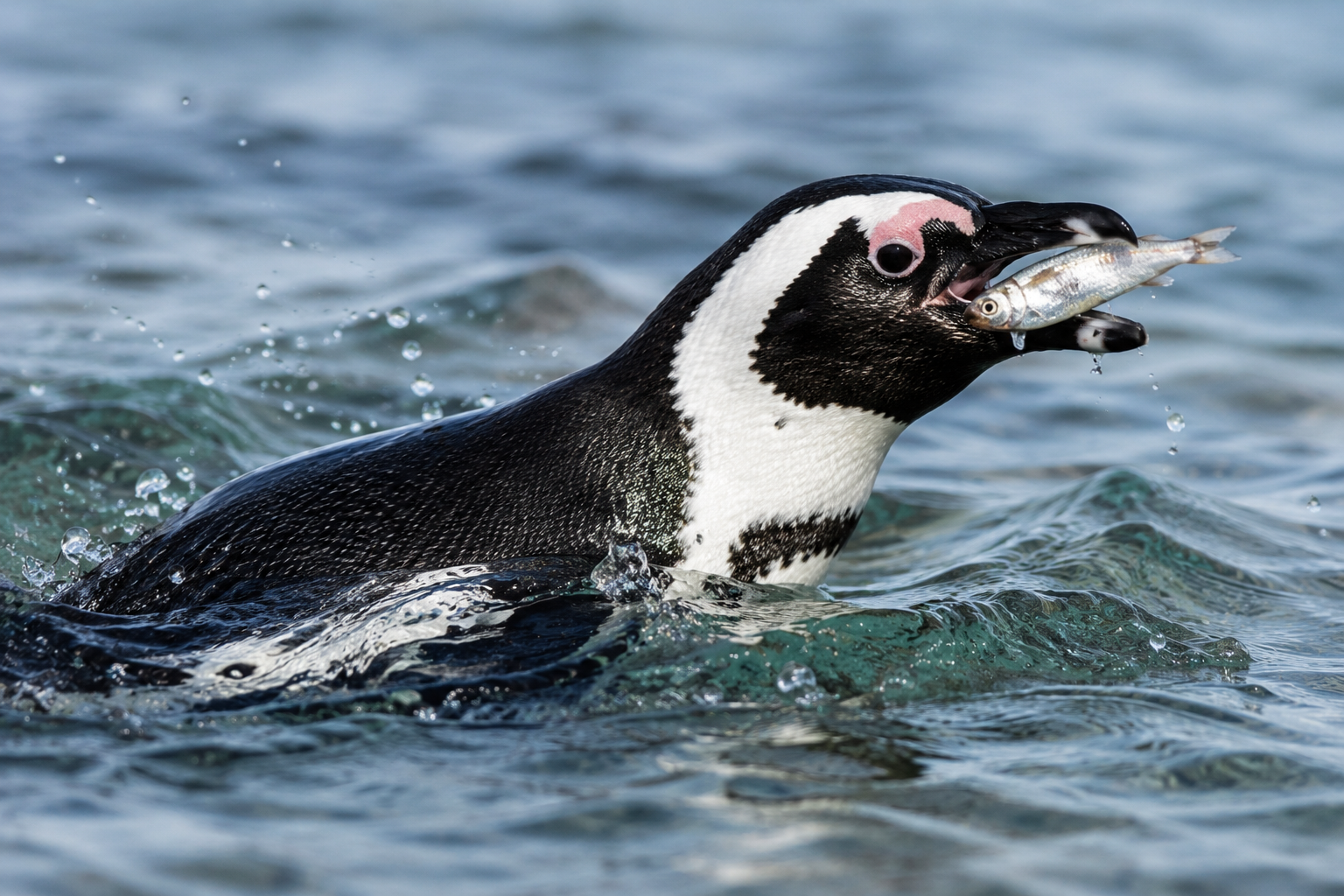
Smaller Antarctic species may depend heavily on krill, while larger penguins such as Emperor and King Penguins consume substantial amounts of fish and squid.
Penguins hunt underwater using excellent eyesight and powerful swimming abilities.
Their mouths contain backward-facing structures that help them grip slippery prey, which is generally swallowed whole rather than chewed.
Reproduction and Lifespan
Penguin breeding behaviour varies greatly between species, but parental care is one of the most fascinating parts of their lives.
Courtship can involve calling, bowing and other visual displays. Many species form strong seasonal pair bonds, and both parents often participate in caring for their offspring.
Eggs
Emperor and King Penguins normally produce a single egg, while many other species lay two.
In Emperor Penguins, the male performs one of nature's most extraordinary parenting duties. He balances the egg on his feet and covers it with a warm fold of skin known as a brood pouch.
During the Antarctic winter, males gather together and incubate their eggs while females return to the ocean to feed.
Crèches
As chicks become older, youngsters of some species gather together in groups known as crèches.
These groups allow parents to leave their growing chicks while travelling to sea to find food.
Eventually, young penguins replace their fluffy juvenile down with waterproof feathers and become capable of entering the ocean and feeding independently.
Lifespan
Penguin lifespan varies considerably according to species and environmental conditions.
Many penguins can live for 15–20 years or longer, although life in the wild is challenging and young birds face particularly high mortality.
Predators, severe weather, food shortages and changing ocean conditions all influence survival.
Threats and Conservation
Penguins may be excellent swimmers, but they still face predators both at sea and around their breeding colonies.
Marine predators can include:
- Leopard seals
- Orcas
- Other large marine predators
Eggs and chicks may also be vulnerable to predatory birds and, in some locations, introduced terrestrial predators.
Serious population pressures and threats
Climate Change
Changing ocean temperatures and currents can alter where important prey species occur. Penguins may consequently have to travel farther to find sufficient food.
Melting or changing sea-ice conditions can also affect species that depend on ice for breeding or feeding.
Overfishing
Commercial fishing can reduce populations of sardines, anchovies and other fish that penguins depend upon.
When food becomes scarce near breeding colonies, parents may need to swim greater distances, making it more difficult to feed their chicks successfully.
Pollution
Oil spills are particularly dangerous because oil damages the waterproofing and insulation provided by penguin feathers.
Plastic pollution and other forms of marine contamination also threaten penguins and their food chains.
Habitat Loss
Coastal development and disturbance can reduce suitable nesting habitat.
Historically, the removal of guano from some breeding islands also destroyed deep natural material that burrowing penguins once used for nesting.
Disease and Predators
Disease outbreaks and introduced predators can place additional pressure on already vulnerable colonies.

Protecting Penguins
Penguin conservation involves protecting both their breeding colonies on land and the marine ecosystems on which they depend.
Important conservation measures include:
- Protecting important breeding colonies.
- Establishing carefully managed marine areas.
- Maintaining healthy fish populations around colonies.
- Rescuing and rehabilitating injured or oiled penguins.
- Protecting vulnerable eggs and chicks.
- Installing artificial nests where natural nesting habitat has been lost.
- Reducing marine pollution.
- Monitoring populations and breeding success.
- Restoring important coastal habitats.

For threatened species such as the African Penguin, conservation efforts are particularly urgent. Protecting adequate food supplies close to breeding colonies is essential to giving adults and their chicks a better chance of survival.
Conclusion
Penguins are far more than charming birds dressed in natural black-and-white "tuxedos." They are extraordinary marine specialists whose bodies have been transformed for life beneath the waves.
Their powerful flippers, dense feathers, remarkable diving abilities, salt-removing glands, sophisticated communication and dedicated parenting demonstrate just how beautifully adapted they are to their environments.
Yet these remarkable birds face an uncertain future as climate change, declining fish stocks, pollution and habitat disturbance alter the ecosystems they depend upon.
Protecting penguins means protecting more than individual colonies, it means protecting healthy oceans, productive coastlines and the enormous web of marine life that supports them. With effective conservation and responsible management of our oceans, these remarkable seabirds can continue waddling along beaches, gathering on Antarctic ice and "flying" beneath the waves for generations to come.


- News & Current Affairs
- Business & Economy
- Finance & Money
- Education & Learning
- Technology & Innovation
- Science & Environment
- Health & Wellness
- Food & Drink
- Home, Garden & Lifestyle
- Travel & Tourism
- Fashion & Beauty
- Art & Culture
- Entertainment & Media
- Sports & Recreation
- Personal Growth & Lifestyle
- Careers & Work
- Tutorials & How-To Guides
- Real Estate & Property
- Automotive
- Family & Relationships
- Environment & Sustainability
- Law & Legal Matters
- Gaming & Esports
- Religion & Spirituality
- Community & Local Voices
- Miscellaneous
- History