


Aardwolf (Proteles cristatus): The Termite Specialist of the Savanna
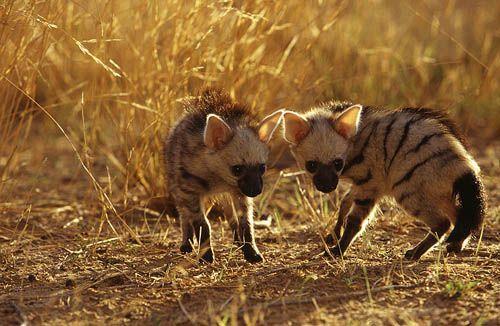
The Aardwolf is one of Africa’s most unusual carnivores. Although it resembles a small striped hyena, the aardwolf has carved out a very different ecological niche. Instead of hunting large prey, this shy, nocturnal animal survives almost entirely on termites.
Physical Description
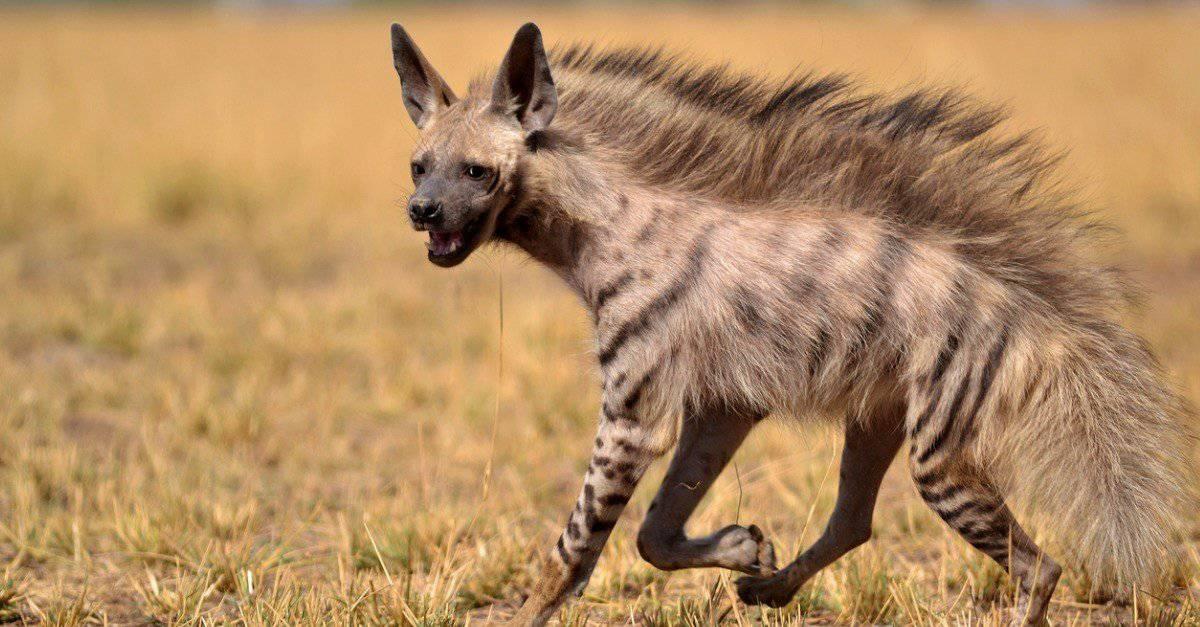
The aardwolf is a medium-sized carnivore, noticeably higher at the shoulders than at the rump. Its body is covered in long, coarse hair, with a prominent erectile mane running down the neck and back. This mane stands upright when the animal feels threatened or frightened.
Its coat ranges from pale tawny to yellowish-white, marked by bold vertical black stripes along the body and dark bands on the legs. The muzzle and feet are black, and the bushy tail is yellow-fawn at the base, turning black toward the tip. Large, pointed ears give it a highly alert appearance.
Size:
- Total length: 84–100 cm
- Tail: 20–28 cm
- Shoulder height: ~50 cm
- Weight: 6–11 kg

Distribution and Habitat
Aardwolves are widely distributed across southern Africa, extending into southern Angola and marginally into Zambia. They are largely absent from central Africa but also occur in East Africa, reaching north toward southern Egypt along the Red Sea.
They are highly adaptable to varying rainfall regions but show a clear preference for open grasslands and savannas. Wooded and forested areas are generally avoided. Their distribution is closely tied to the presence of termites, their primary food source.
Behaviour and Social Structure
Aardwolves are mainly nocturnal, though they may sometimes be active during early morning, late afternoon, or overcast days.
They are seen alone, in pairs, or in small family groups. A socially monogamous pair occupies and defends a shared territory along with their young, although both males and females may occasionally mate outside the pair bond.
Territories range from 100 to 600 hectares, depending largely on termite abundance. Both sexes mark their territory with secretions from anal glands and deposit droppings at specific latrine sites. Intruders are chased away.
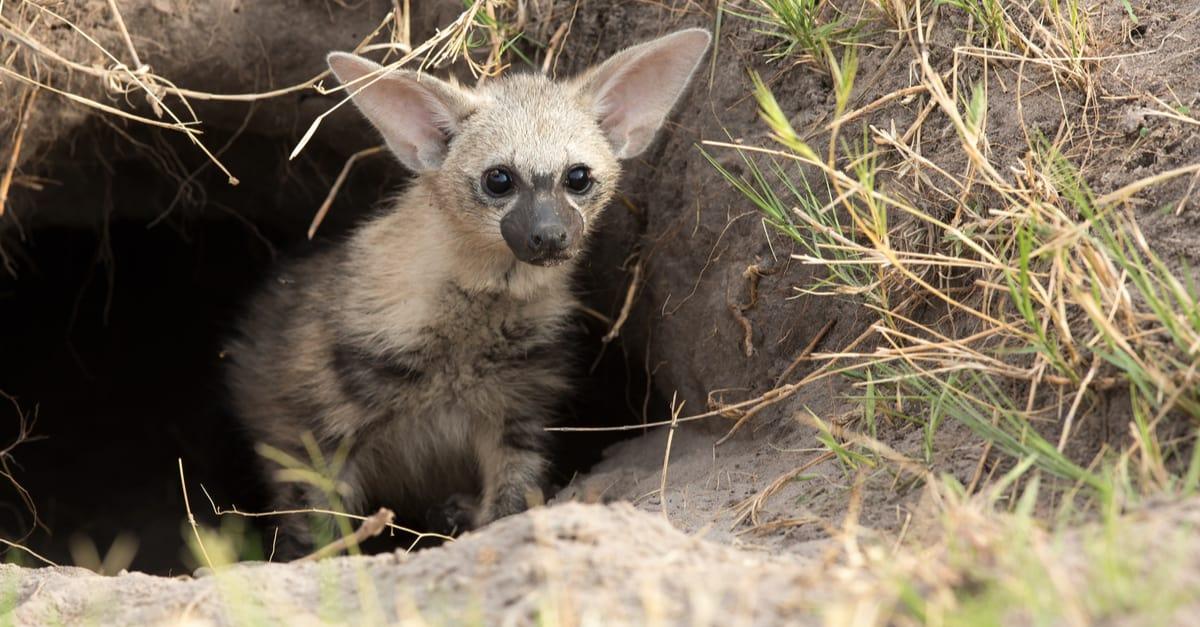
Although capable of digging their own burrows, aardwolves typically use and modify burrows made by other animals, especially springhares.
Diet and Feeding
Despite belonging to the order Carnivora, the aardwolf feeds almost exclusively on harvester termites, particularly species of the genus Trinervitermes.
Unlike other hyenas, its cheek teeth are reduced and unsuitable for tearing flesh. Instead, it uses a long, sticky tongue to lap up termites directly from the ground.
An aardwolf can consume up to 300,000 termites in a single night—approximately 1.2 kg in weight. Over the course of a year, a single individual may eat more than 100 million termites, amounting to hundreds of kilograms.
Claims that aardwolves kill livestock are unsupported, as their anatomy and dentition are not adapted for hunting large animals.
Reproduction and Lifespan
After a gestation period of about 90 days, the female gives birth to 1–4 pups in a burrow. Most births in southern Africa occur between October and February, though breeding can happen at other times.
Pups remain in the den for the first month. At 9–12 weeks, they begin accompanying adults on short foraging trips near the den. By seven months, they forage independently, and by one year, they are fully independent.
In captivity, aardwolves have lived up to nearly 19 years.
Taxonomic Debate
There has been debate about whether the aardwolf belongs within the hyena family or deserves its own family classification. Most modern classifications place it within the hyena family (Hyaenidae), considering it a highly specialized hyena both anatomically and behaviourally.
Conclusion
The aardwolf is a remarkable example of evolutionary specialization. Though classified as a carnivore and related to hyenas, it survives almost entirely on termites, making it one of Africa’s most unique predators. Quiet, efficient, and ecologically important, the aardwolf plays a vital role in controlling termite populations and maintaining balance within open savanna ecosystems.


- News & Current Affairs
- Business & Economy
- Finance & Money
- Education & Learning
- Technology & Innovation
- Science & Environment
- Health & Wellness
- Food & Drink
- Home, Garden & Lifestyle
- Travel & Tourism
- Fashion & Beauty
- Art & Culture
- Entertainment & Media
- Sports & Recreation
- Personal Growth & Lifestyle
- Careers & Work
- Tutorials & How-To Guides
- Real Estate & Property
- Automotive
- Family & Relationships
- Environment & Sustainability
- Law & Legal Matters
- Gaming & Esports
- Religion & Spirituality
- Community & Local Voices
- Miscellaneous
- History