


Abraham Lincoln: The President Who Preserved a Nation

Abraham Lincoln (1809–1865), the 16th President of the United States, led the country through its greatest crisis, the American Civil War, and emerged as the defining figure in the fight to preserve the Union and end slavery. Rising from poverty to the presidency through self-education and determination, Lincoln reshaped the nation’s future through moral leadership, political skill, and unwavering belief in democracy.
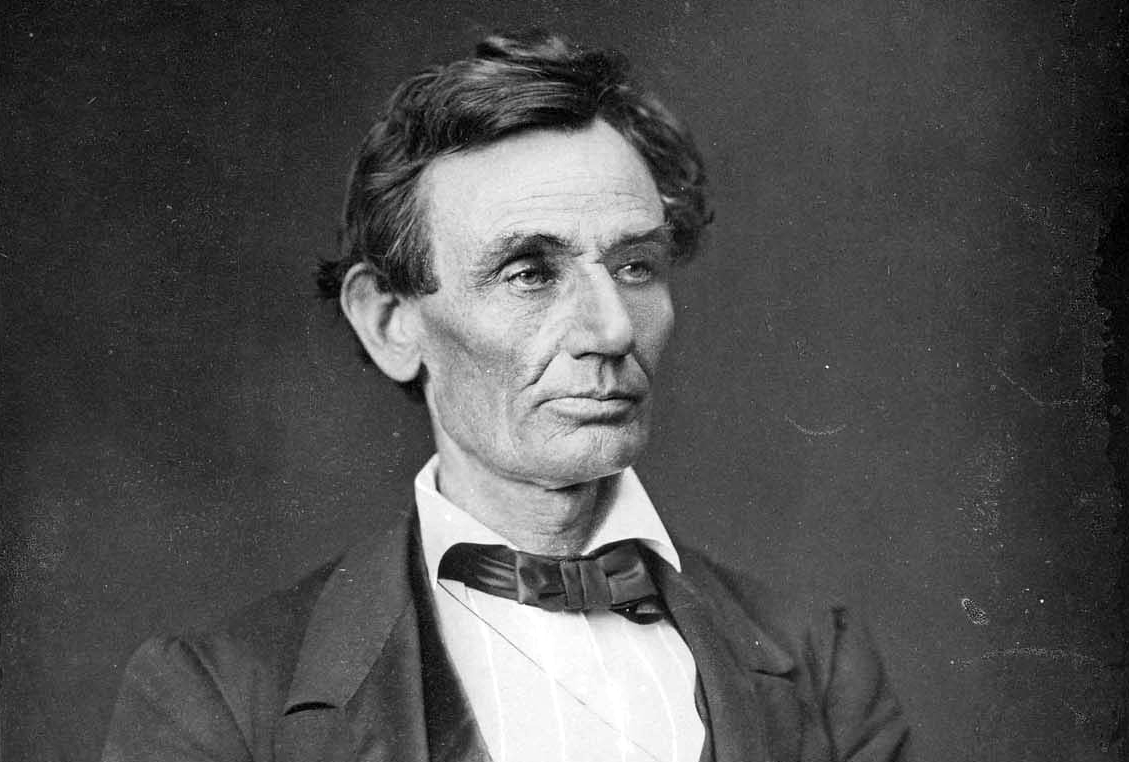
Early Life and Self-Education
Lincoln was born on February 12, 1809, in a one-room log cabin near Hodgenville, Kentucky, to Thomas and Nancy Hanks Lincoln. His childhood was marked by hardship and loss: his mother died when he was nine, and his sister later passed away as well.
Formal schooling totaled barely a year, but Lincoln was a voracious reader, teaching himself law, history, and philosophy. Raised on the frontier in Kentucky, Indiana, and later Illinois, he developed a deep empathy for ordinary people and a powerful sense of justice.
From Frontier Lawyer to Politician
After moving to Illinois in 1830, Lincoln worked as a shopkeeper, postmaster, and rail-splitter before becoming a self-taught lawyer. He served in the Illinois state legislature and later in the U.S. House of Representatives.
Originally a Whig, Lincoln joined the newly formed Republican Party in the 1850s, opposing the expansion of slavery into western territories. His national reputation grew during the Lincoln-Douglas Debates of 1858, where he warned that a nation could not survive “half slave and half free.”
Though he lost the Senate race, his ideas reached a national audience.
Election and the Road to War
In 1860, Lincoln won the presidency. His election triggered the secession of Southern states, which formed the Confederate States of America. When Confederate forces fired on Fort Sumter in April 1861, the Civil War began.
Lincoln’s primary goal was to preserve the Union, but he soon recognized that slavery lay at the heart of the conflict.

Emancipation and Moral Purpose
Despite having little military experience, Lincoln became a capable wartime leader. He replaced ineffective generals and eventually promoted Ulysses S. Grant as commander of Union forces.
On January 1, 1863, Lincoln issued the Emancipation Proclamation, freeing enslaved people in Confederate-held territory. Though limited in scope, it transformed the war into a fight for human freedom.
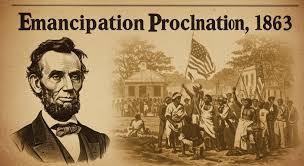
Later that year, Lincoln delivered the Gettysburg Address, redefining the war as a struggle for equality and democracy:
“That government of the people, by the people, for the people, shall not perish from the earth.”
Lincoln also pushed for the 13th Amendment, which permanently abolished slavery in the United States.
Reelection and Vision for Peace
In 1864, Lincoln won reelection despite fierce opposition. In his second inaugural address, he called for reconciliation:
“With malice toward none; with charity for all.”
He envisioned a reunited nation built on healing rather than revenge.
Assassination and National Mourning
Just days after Confederate surrender, Lincoln was assassinated on April 14, 1865, by John Wilkes Booth at Ford’s Theatre in Washington, D.C. He died the following morning.
His funeral train passed through seven states and 180 cities, allowing millions to pay their respects. Lincoln became a martyr for liberty and union.
Legacy
Lincoln is remembered for:
- Preserving the United States
- Ending slavery
- Defining democracy as government by and for the people
- Delivering some of history’s most powerful speeches
He remains one of America’s most admired presidents and moral leaders.
Final Thoughts
Abraham Lincoln’s life proves that greatness can rise from humble beginnings. Through courage, patience, and conviction, he guided a fractured nation through its darkest hour and laid the foundation for a more just future. His vision of unity and equality continues to shape American identity and democratic ideals worldwide.
Lincoln’s words and actions remind us that freedom requires both sacrifice and compassion—and that leadership is measured not by power, but by purpose.


- News & Current Affairs
- Business & Economy
- Finance & Money
- Education & Learning
- Technology & Innovation
- Science & Environment
- Health & Wellness
- Food & Drink
- Home, Garden & Lifestyle
- Travel & Tourism
- Fashion & Beauty
- Art & Culture
- Entertainment & Media
- Sports & Recreation
- Personal Growth & Lifestyle
- Careers & Work
- Tutorials & How-To Guides
- Real Estate & Property
- Automotive
- Family & Relationships
- Environment & Sustainability
- Law & Legal Matters
- Gaming & Esports
- Religion & Spirituality
- Community & Local Voices
- Miscellaneous
- History