
• Cowboy Boot Candles New
    R50.00
    Available
    Sinoville, Pretoria, South Africa
    0 Reviews
    Bring bold country charm into your space with this beautifully handcrafted cowboy boot candle. Designed with intricate scroll detailing and a classic Western silhouette, this statement piece blends rustic character with elegant craftsmanship.

    Every curve, stitch line, and embossed swirl has been carefully sculpted to create a realistic boot design that feels both authentic and decorative. Whether styled on a coffee table, shelf, office desk, or used as a unique gift, this candle instantly adds warmth and personality to any room.

    This is more than just a candle — it’s a conversation piece.

    Perfect for birthdays, housewarmings, themed events, or anyone who appreciates a touch of the Wild West.

    Saddle up your décor with a candle that stands tall and proud.
    Bring bold country charm into your space with this beautifully handcrafted cowboy boot candle. Designed with intricate scroll detailing and a classic Western silhouette, this statement piece blends rustic character with elegant craftsmanship. Every curve, stitch line, and embossed swirl has been carefully sculpted to create a realistic boot design that feels both authentic and decorative. Whether styled on a coffee table, shelf, office desk, or used as a unique gift, this candle instantly adds warmth and personality to any room. This is more than just a candle — it’s a conversation piece. Perfect for birthdays, housewarmings, themed events, or anyone who appreciates a touch of the Wild West. Saddle up your décor with a candle that stands tall and proud.
    Love
    Like
    7
    0 Comments 0 Shares 9K Views 0 Reviews
  • Spicy bean & avocado quesadillas

    Ingredients (for 2 large quesadillas / 4 servings):

    .Tortillas: 4 large flour tortillas (10-inch)

    .Black beans: 1 can (15 oz / 425 g), drained and rinsed

    .Avocado: 1 medium, ripe, diced

    .Red bell pepper: ½, finely chopped

    .Red onion: ¼ small, finely chopped

    .Jalapeño: 1, finely chopped (remove seeds for less heat)

    .Garlic: 1 clove, minced

    .Cheese: 1 cup (100 g) shredded sharp cheddar or Monterey Jack

    .Cilantro: 2 tablespoons, chopped

    .Lime juice: 1 teaspoon

    .Ground cumin: ½ teaspoon

    .Chili powder: ½ teaspoon

    .Salt: ½ teaspoon

    .Black pepper: ¼ teaspoon

    .Olive oil: 1 teaspoon for cooking

    Instructions:

    1. Prepare the filling:

    In a medium bowl, combine the drained black beans, diced avocado, chopped red bell pepper, red onion, jalapeño, and minced garlic.

    Add cumin, chili powder, salt, black pepper, lime juice, and chopped cilantro. Mix gently until well combined. Avoid mashing the avocado completely; small chunks are best.

    2. Assemble the quesadillas:

    Lay out a tortilla on a flat surface. Sprinkle ½ cup of shredded cheese evenly over one half of the tortilla.

    Spoon ½ of the bean-avocado mixture over the cheese.

    Fold the tortilla over to cover the filling. Repeat with the second tortilla.

    3. Cook the quesadillas:

    Heat ½ teaspoon of olive oil in a non-stick skillet over medium heat.

    Place one quesadilla in the skillet and cook 2–3 minutes until golden brown and crispy.

    Carefully flip and cook the other side for 2–3 minutes until the cheese is melted. Adjust heat if tortilla browns too quickly.

    Repeat with the second quesadilla, adding the remaining oil.

    4. Serve:

    Cut each quesadilla into 4 wedges.

    Serve immediately with salsa, sour cream, or extra lime wedges if desired.
    Spicy bean & avocado quesadillas Ingredients (for 2 large quesadillas / 4 servings): .Tortillas: 4 large flour tortillas (10-inch) .Black beans: 1 can (15 oz / 425 g), drained and rinsed .Avocado: 1 medium, ripe, diced .Red bell pepper: ½, finely chopped .Red onion: ¼ small, finely chopped .Jalapeño: 1, finely chopped (remove seeds for less heat) .Garlic: 1 clove, minced .Cheese: 1 cup (100 g) shredded sharp cheddar or Monterey Jack .Cilantro: 2 tablespoons, chopped .Lime juice: 1 teaspoon .Ground cumin: ½ teaspoon .Chili powder: ½ teaspoon .Salt: ½ teaspoon .Black pepper: ¼ teaspoon .Olive oil: 1 teaspoon for cooking Instructions: 1. Prepare the filling: In a medium bowl, combine the drained black beans, diced avocado, chopped red bell pepper, red onion, jalapeño, and minced garlic. Add cumin, chili powder, salt, black pepper, lime juice, and chopped cilantro. Mix gently until well combined. Avoid mashing the avocado completely; small chunks are best. 2. Assemble the quesadillas: Lay out a tortilla on a flat surface. Sprinkle ½ cup of shredded cheese evenly over one half of the tortilla. Spoon ½ of the bean-avocado mixture over the cheese. Fold the tortilla over to cover the filling. Repeat with the second tortilla. 3. Cook the quesadillas: Heat ½ teaspoon of olive oil in a non-stick skillet over medium heat. Place one quesadilla in the skillet and cook 2–3 minutes until golden brown and crispy. Carefully flip and cook the other side for 2–3 minutes until the cheese is melted. Adjust heat if tortilla browns too quickly. Repeat with the second quesadilla, adding the remaining oil. 4. Serve: Cut each quesadilla into 4 wedges. Serve immediately with salsa, sour cream, or extra lime wedges if desired.
    Love
    Like
    Yay
    6
    0 Comments 0 Shares 5K Views 0 Reviews
  • A Crime Short Story by The Cozy Nook Writer:


    The Wrong Suspect:


    Everyone in Larkspur Hollow knew who had done it.
    They said it was Jake Parker—quiet, sharp-eyed Jake who lived alone by the quarry and never came to town meetings. When the body of Mayor Eli was found at the base of the courthouse steps, Jake’s name passed from mouth to mouth like a fact instead of a guess.
    “He argued with the mayor last week,” people whispered.
    “He’s always lurking,” they said.
    “He had a reason.”
    By the time the sheriff arrived, suspicion had already settled like dust.
    Detective Mia Robertson came in from the city that evening, coat damp from the rain, notebook already open. She listened carefully as people told her what they knew. She asked calm questions, nodded at the right moments, and never contradicted anyone directly.
    Jake was brought in the next morning. He looked more tired than angry.
    “I didn’t do it,” he said, again and again. “I was at the quarry. Fixing the pump.”
    Mia checked the quarry. The pump had been fixed. Recently. She wrote that down.
    She spent the next two days walking the town with Sheriff Smith, asking about Mayor Eli’s last hours. Every trail seemed to bend back toward Jake, like the town itself was steering her there. Even the evidence felt convenient: a torn sleeve, footprints near the courthouse, a long history of arguments.
    Still, something bothered her.
    Mayor Eli had been pushed—hard—but there were no signs of a struggle. No scattered papers. No knocked-over planters. Whoever did it hadn’t been surprised.
    And then there was Deputy Andrew Cole.
    Andrew was everywhere. He fetched files before she asked. He knew which witnesses would “help” and which ones to avoid. He spoke gently about Jake, almost sadly, as if the matter were already settled.
    “He’s a troubled guy,” Andrew said one night as they reviewed notes. “Town’s safer without him.”
    Mia looked up. “You’ve known Jake a long time?”
    Andrew nodded. “Long enough.”
    Too long, she thought. And too smooth.
    She checked the courthouse security logs. The cameras had gone out that night—unusual, but not unheard of. The maintenance report was signed by Andrew Cole.
    She didn’t say anything. Not yet.
    Instead, she went back to the quarry at dusk and found Jake again. He showed her the pump, the grease still fresh under his nails. He told her about the mayor threatening to sell the land to a developer—and about Andrew’s brother, who’d lost his job when the deal fell through.
    “That’s when Andrew stopped talking to me,” Jake said quietly. “That’s when he started talking about me.”
    Mia returned to the station and asked Andrew to walk her through the timeline one more time. He did, confidently. Too confidently.
    When she asked why his boots matched the footprint pattern near the courthouse, he smiled and said, “Small town. Same brand.”
    When she asked why his key card had accessed the camera room after hours, his smile slipped.
    The room went quiet.
    Andrew’s hand twitched toward the desk drawer, then stilled when the sheriff stepped forward.
    “I was just helping,” Andrew said. “Someone had to keep things moving.”
    Mia closed her notebook. “You did. Right where you wanted them.”
    Jake was released that night. The town was slower to change its mind, but truth has a way of staying put.
    As Mia drove out of Larkspur Hollow, she glanced in the mirror at the quiet streets.
    The most dangerous suspects, she thought, are the ones everyone trusts to help.
    A Crime Short Story by The Cozy Nook Writer: The Wrong Suspect: Everyone in Larkspur Hollow knew who had done it. They said it was Jake Parker—quiet, sharp-eyed Jake who lived alone by the quarry and never came to town meetings. When the body of Mayor Eli was found at the base of the courthouse steps, Jake’s name passed from mouth to mouth like a fact instead of a guess. “He argued with the mayor last week,” people whispered. “He’s always lurking,” they said. “He had a reason.” By the time the sheriff arrived, suspicion had already settled like dust. Detective Mia Robertson came in from the city that evening, coat damp from the rain, notebook already open. She listened carefully as people told her what they knew. She asked calm questions, nodded at the right moments, and never contradicted anyone directly. Jake was brought in the next morning. He looked more tired than angry. “I didn’t do it,” he said, again and again. “I was at the quarry. Fixing the pump.” Mia checked the quarry. The pump had been fixed. Recently. She wrote that down. She spent the next two days walking the town with Sheriff Smith, asking about Mayor Eli’s last hours. Every trail seemed to bend back toward Jake, like the town itself was steering her there. Even the evidence felt convenient: a torn sleeve, footprints near the courthouse, a long history of arguments. Still, something bothered her. Mayor Eli had been pushed—hard—but there were no signs of a struggle. No scattered papers. No knocked-over planters. Whoever did it hadn’t been surprised. And then there was Deputy Andrew Cole. Andrew was everywhere. He fetched files before she asked. He knew which witnesses would “help” and which ones to avoid. He spoke gently about Jake, almost sadly, as if the matter were already settled. “He’s a troubled guy,” Andrew said one night as they reviewed notes. “Town’s safer without him.” Mia looked up. “You’ve known Jake a long time?” Andrew nodded. “Long enough.” Too long, she thought. And too smooth. She checked the courthouse security logs. The cameras had gone out that night—unusual, but not unheard of. The maintenance report was signed by Andrew Cole. She didn’t say anything. Not yet. Instead, she went back to the quarry at dusk and found Jake again. He showed her the pump, the grease still fresh under his nails. He told her about the mayor threatening to sell the land to a developer—and about Andrew’s brother, who’d lost his job when the deal fell through. “That’s when Andrew stopped talking to me,” Jake said quietly. “That’s when he started talking about me.” Mia returned to the station and asked Andrew to walk her through the timeline one more time. He did, confidently. Too confidently. When she asked why his boots matched the footprint pattern near the courthouse, he smiled and said, “Small town. Same brand.” When she asked why his key card had accessed the camera room after hours, his smile slipped. The room went quiet. Andrew’s hand twitched toward the desk drawer, then stilled when the sheriff stepped forward. “I was just helping,” Andrew said. “Someone had to keep things moving.” Mia closed her notebook. “You did. Right where you wanted them.” Jake was released that night. The town was slower to change its mind, but truth has a way of staying put. As Mia drove out of Larkspur Hollow, she glanced in the mirror at the quiet streets. The most dangerous suspects, she thought, are the ones everyone trusts to help.
    Like
    Love
    6
    0 Comments 0 Shares 7K Views 0 Reviews
  • Beyond Ourselves

    There is a quiet sadness in watching how easily we forget one another.

    At times, people show generosity, warmth, and a willingness to be part of something greater than themselves. And then, just as quickly, a shift happens. Excuses appear. Priorities change. The focus turns inward again—toward comfort, convenience, and self-preservation. Often, this happens without awareness. Not out of cruelty, but out of habit.

    It is the way of the world. And yet, it is still something worth noticing.

    Every now and then, it helps to stand still for a moment and ask a difficult, honest question:

    How will I be remembered when I am no longer here?

    Not in grand titles or achievements—but in impact.
    Did I make space for others?
    Did I help when it was inconvenient?
    Did I choose understanding over judgment, compassion over comfort?

    As this time of year arrives, the world fills with cheer, celebration, and tradition. There are gifts exchanged, tables filled, photos taken. But beneath it all, the deeper meaning quietly asks to be remembered:
    Was I part of the solution?

    Or did I only do enough to appear kind, while remaining the center of my own world?

    There are people carrying burdens far heavier than our own—silent struggles, unseen battles, challenges that do not pause for holidays or good intentions. To think beyond ourselves is not to diminish our own lives, but to enlarge them.

    The true question is not whether we can justify our actions—but whether we can rise above them.

    Will we find reasons not to help?

    Or will we choose to be a steady light, even when no one is watching?

    In the end, it is not what we owned, displayed, or proclaimed that remains.

    It is what we gave.
    It is who we lifted.

    It is how we made others feel when the world felt heavy.

    And perhaps that is the greatest gift any of us can offer—
    to live in a way that leaves warmth behind, long after we are gone.
    Beyond Ourselves There is a quiet sadness in watching how easily we forget one another. At times, people show generosity, warmth, and a willingness to be part of something greater than themselves. And then, just as quickly, a shift happens. Excuses appear. Priorities change. The focus turns inward again—toward comfort, convenience, and self-preservation. Often, this happens without awareness. Not out of cruelty, but out of habit. It is the way of the world. And yet, it is still something worth noticing. Every now and then, it helps to stand still for a moment and ask a difficult, honest question: How will I be remembered when I am no longer here? Not in grand titles or achievements—but in impact. Did I make space for others? Did I help when it was inconvenient? Did I choose understanding over judgment, compassion over comfort? As this time of year arrives, the world fills with cheer, celebration, and tradition. There are gifts exchanged, tables filled, photos taken. But beneath it all, the deeper meaning quietly asks to be remembered: Was I part of the solution? Or did I only do enough to appear kind, while remaining the center of my own world? There are people carrying burdens far heavier than our own—silent struggles, unseen battles, challenges that do not pause for holidays or good intentions. To think beyond ourselves is not to diminish our own lives, but to enlarge them. The true question is not whether we can justify our actions—but whether we can rise above them. Will we find reasons not to help? Or will we choose to be a steady light, even when no one is watching? In the end, it is not what we owned, displayed, or proclaimed that remains. It is what we gave. It is who we lifted. It is how we made others feel when the world felt heavy. And perhaps that is the greatest gift any of us can offer— to live in a way that leaves warmth behind, long after we are gone.
    Love
    Like
    9
    1 Comments 0 Shares 6K Views 0 Reviews
  • Enhance Your Positivity


    A little 6-year-old girl came home feeling defeated. She told her dad, “No one wants to play with me at school.” Wanting to lift her spirits, he took her for a walk in the peaceful hills nearby.

    As they reached a clearing, the child looked around and said, “Wow! This place is so beautiful!”
    Her dad smiled and said, “Say it louder.”
    So she shouted, “How beautiful is the place!”

    And instantly, the hills replied back:
    “How beautiful is the place!”


    The next day at school, the same thing happened again—she felt left out. So that evening, her father once again took her to the hills. This time she called out:
    “No one likes me!”

    The echo bounced back:
    “No one likes me!”

    Hearing her own words repeated, the little girl’s face fell. That was the last thing she wanted to hear.

    Seeing her sadness, her father gently encouraged her,
    “Try saying something different. Call out: ‘Everyone loves me!’”

    She hesitated, then shouted with all her might:
    “Everyone loves me!”

    And the hills answered with the same joyful words.
    Her eyes lit up. For the first time, she realised something powerful—
    what you put out is what comes back to you.


    What this teaches us

    Our mind works just like those hills.
    If we repeat negative thoughts, our mind echoes them right back—again and again. But if we fill it with uplifting beliefs, our inner world begins to reflect that positivity.


    3 Simple steps to break negativity


    Step 1: Create distance.
    When a negative thought appears, remind yourself:
    “I am not my mind. I have a mind. I am the soul.”
    Instantly, the negativity loses its grip.


    Step 2: Question it.
    Ask yourself:
    “Where is this belief coming from? What wrong knowledge has created this belief?


    Step 3: Replace it.
    Fill the mind with the right knowledge—something truthful, hopeful, and empowering.
    This reframes the situation and shifts your inner voice back to what uplifts you.


    Final Positive Thought

    Just like the echo in the hills, life reflects what we speak, think, and believe.
    Choose positive thoughts—and watch positivity echo back into your life.
    Enhance Your Positivity A little 6-year-old girl came home feeling defeated. She told her dad, “No one wants to play with me at school.” Wanting to lift her spirits, he took her for a walk in the peaceful hills nearby. As they reached a clearing, the child looked around and said, “Wow! This place is so beautiful!” Her dad smiled and said, “Say it louder.” So she shouted, “How beautiful is the place!” And instantly, the hills replied back: “How beautiful is the place!” The next day at school, the same thing happened again—she felt left out. So that evening, her father once again took her to the hills. This time she called out: “No one likes me!” The echo bounced back: “No one likes me!” Hearing her own words repeated, the little girl’s face fell. That was the last thing she wanted to hear. Seeing her sadness, her father gently encouraged her, “Try saying something different. Call out: ‘Everyone loves me!’” She hesitated, then shouted with all her might: “Everyone loves me!” And the hills answered with the same joyful words. Her eyes lit up. For the first time, she realised something powerful— what you put out is what comes back to you. What this teaches us Our mind works just like those hills. If we repeat negative thoughts, our mind echoes them right back—again and again. But if we fill it with uplifting beliefs, our inner world begins to reflect that positivity. 3 Simple steps to break negativity Step 1: Create distance. When a negative thought appears, remind yourself: “I am not my mind. I have a mind. I am the soul.” Instantly, the negativity loses its grip. Step 2: Question it. Ask yourself: “Where is this belief coming from? What wrong knowledge has created this belief? Step 3: Replace it. Fill the mind with the right knowledge—something truthful, hopeful, and empowering. This reframes the situation and shifts your inner voice back to what uplifts you. Final Positive Thought Just like the echo in the hills, life reflects what we speak, think, and believe. Choose positive thoughts—and watch positivity echo back into your life.
    Love
    1
    0 Comments 1 Shares 10K Views 0 Reviews
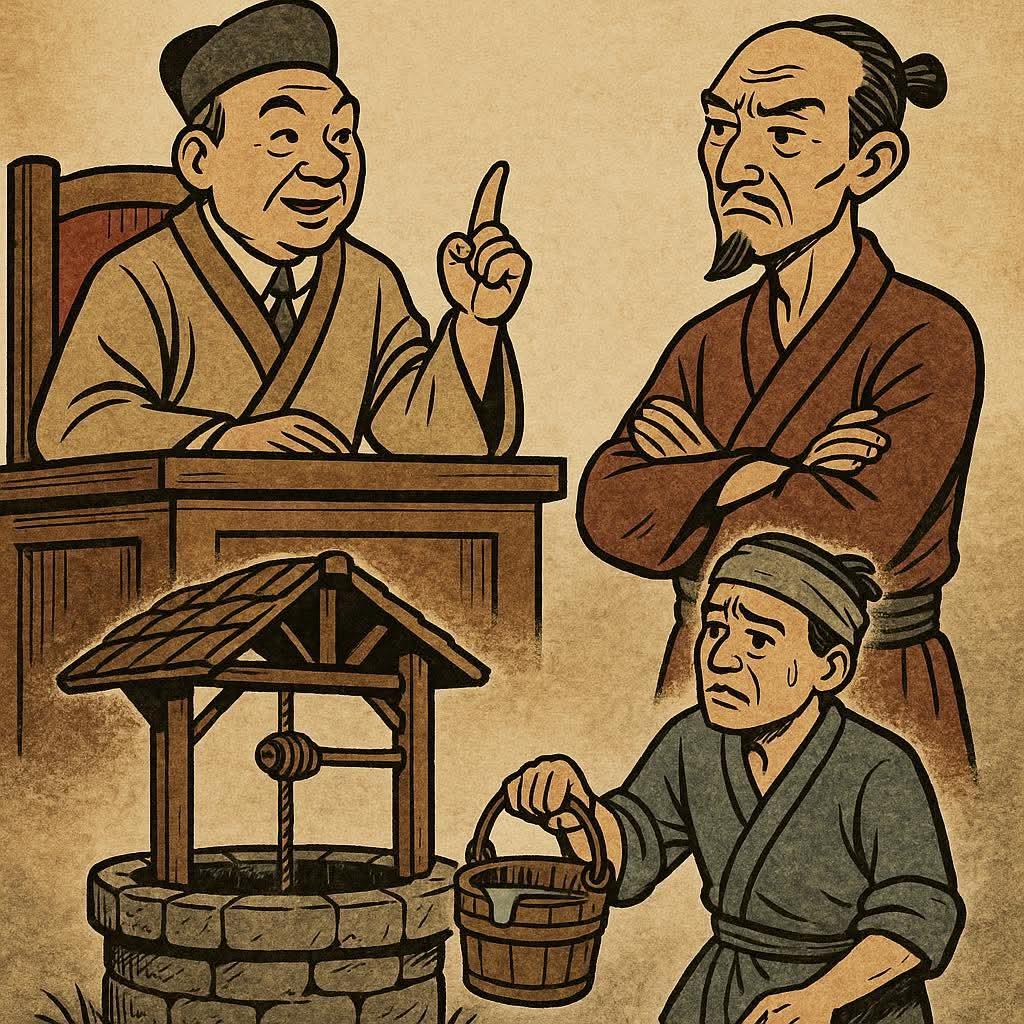
  • Once upon a time in an old Japanese village, there was a smart man who owned a well, but he didn't use it, so he decided to sell it to a nearby farmer. One day, when he passed by and saw the farmer pumping water from the well for cooking etc., the smart man immediately stopped him and did not allow him to pump water from the well.

    "I only sold you the well, I didn't sell you the water. Therefore, you cannot take water from this well," the smart man spoke up.

    The farmer was very sad and didn't know what to do. He had bought the well, but he hadn't paid for the water from the well. Now the well was full of water, but he couldn't use it, while his whole family and livestock all needed clean water from this well.

    After thinking for a long time about how to resolve the issue with the smart man, the farmer decided to bring it up to the district court, hoping to get justice. At the court, the farmer recounted the story from beginning to end, hiding nothing, in order to get justice for his family.

    The district judge called the smart man up and asked, "Why don't you let him use the water in the well? Didn't you sell the well?"

    "Well, your honor, I only sold the well to this farmer, I didn't sell him the water in it. Therefore, he has no right to take water from my property. Now, if he wants to take water, he has to pay more to buy the water," the smart man replied, firmly believing in his argument.

    The district judge looked at the smart man, smiled slightly, and replied, "Oh, you make a good point. However, when you sold the well to this farmer, the well became his property, and the water in the well is still your property. So, you have no right to store water in the farmer's well anymore."

    "Now there are only two options: One is that you have to pay the farmer to rent the well for water storage. Two is that you have to remove all the water from the well immediately," the judge looked up at the smart man and asserted firmly.

    The smart man bowed his head sadly, not knowing what to do to justify his actions. He had been harmed by his own intelligence.

    That's why in life, no matter how smart you are, there will always be others who are smarter than you.
    Once upon a time in an old Japanese village, there was a smart man who owned a well, but he didn't use it, so he decided to sell it to a nearby farmer. One day, when he passed by and saw the farmer pumping water from the well for cooking etc., the smart man immediately stopped him and did not allow him to pump water from the well. "I only sold you the well, I didn't sell you the water. Therefore, you cannot take water from this well," the smart man spoke up. The farmer was very sad and didn't know what to do. He had bought the well, but he hadn't paid for the water from the well. Now the well was full of water, but he couldn't use it, while his whole family and livestock all needed clean water from this well. After thinking for a long time about how to resolve the issue with the smart man, the farmer decided to bring it up to the district court, hoping to get justice. At the court, the farmer recounted the story from beginning to end, hiding nothing, in order to get justice for his family. The district judge called the smart man up and asked, "Why don't you let him use the water in the well? Didn't you sell the well?" "Well, your honor, I only sold the well to this farmer, I didn't sell him the water in it. Therefore, he has no right to take water from my property. Now, if he wants to take water, he has to pay more to buy the water," the smart man replied, firmly believing in his argument. The district judge looked at the smart man, smiled slightly, and replied, "Oh, you make a good point. However, when you sold the well to this farmer, the well became his property, and the water in the well is still your property. So, you have no right to store water in the farmer's well anymore." "Now there are only two options: One is that you have to pay the farmer to rent the well for water storage. Two is that you have to remove all the water from the well immediately," the judge looked up at the smart man and asserted firmly. The smart man bowed his head sadly, not knowing what to do to justify his actions. He had been harmed by his own intelligence. That's why in life, no matter how smart you are, there will always be others who are smarter than you.
    Like
    Love
    11
    0 Comments 0 Shares 4K Views 0 Reviews
  • The History of the Iron: From Hot Coals to High Tech


    Early History to the 15th Century

    Ancient China (1st century BC): Metal pans filled with hot coals were used to press clothes smooth.

    Ancient Greece (around 400 BC): Greeks used a heated, round bar called a goffering iron to create pleats on their robes.

    Ancient Rome: Romans used a hand mangle to beat wrinkles out of garments.

    10th Century (Vikings): Viking households used mushroom-shaped glass tools, known as linen smoothers, to flatten fabric.


    Charcoal and Flat Irons

    15th Century: The charcoal iron was invented — a box-shaped metal container filled with glowing coals.

    17th–19th Centuries: Charcoal irons became widespread across Europe. Around the same time, the solid metal flat iron, also called a sad iron (from the Old English word meaning “solid”), became common. These were heated directly on a fire or stove.

    Mid-19th Century: Designs improved with hollow metal boxes that held coals and vents to keep them burning. Wooden handles were added to prevent burns.


    Electric and Modern Irons

    1880s: The first electric irons appeared, revolutionizing household chores.

    1920s: Early cordless irons were introduced, though they didn’t gain popularity until decades later.

    1926: The first steam iron was invented.

    1940s: Steam irons became popular — a major improvement over the old method of ironing damp clothes or sprinkling water by hand.

    1984: The automatic shutoff feature was added for safety.

    1995: Nonstick coatings on the soleplate made ironing smoother and easier than ever.
    The History of the Iron: From Hot Coals to High Tech Early History to the 15th Century Ancient China (1st century BC): Metal pans filled with hot coals were used to press clothes smooth. Ancient Greece (around 400 BC): Greeks used a heated, round bar called a goffering iron to create pleats on their robes. Ancient Rome: Romans used a hand mangle to beat wrinkles out of garments. 10th Century (Vikings): Viking households used mushroom-shaped glass tools, known as linen smoothers, to flatten fabric. Charcoal and Flat Irons 15th Century: The charcoal iron was invented — a box-shaped metal container filled with glowing coals. 17th–19th Centuries: Charcoal irons became widespread across Europe. Around the same time, the solid metal flat iron, also called a sad iron (from the Old English word meaning “solid”), became common. These were heated directly on a fire or stove. Mid-19th Century: Designs improved with hollow metal boxes that held coals and vents to keep them burning. Wooden handles were added to prevent burns. Electric and Modern Irons 1880s: The first electric irons appeared, revolutionizing household chores. 1920s: Early cordless irons were introduced, though they didn’t gain popularity until decades later. 1926: The first steam iron was invented. 1940s: Steam irons became popular — a major improvement over the old method of ironing damp clothes or sprinkling water by hand. 1984: The automatic shutoff feature was added for safety. 1995: Nonstick coatings on the soleplate made ironing smoother and easier than ever.
    Love
    Like
    10
    0 Comments 0 Shares 4K Views 0 Reviews
  • This morning I finally went through a box of old photos that’s been sitting in the cupboard for years. It’s crazy how a single picture can pull you straight back into a memory you’d almost forgotten.

    Some faces made me smile, others made me a little sad, but it reminded me how far I’ve come. Growth really does sneak up on you.

    #memories #family
    This morning I finally went through a box of old photos that’s been sitting in the cupboard for years. It’s crazy how a single picture can pull you straight back into a memory you’d almost forgotten. Some faces made me smile, others made me a little sad, but it reminded me how far I’ve come. Growth really does sneak up on you. #memories #family
    Like
    Love
    31
    1 Comments 0 Shares 3K Views 0 Reviews
  • THE DEAD HORSE THEORY: FACING REALITY WITH WISDOM
    THE SATIRICAL METAPHOR
    The “Dead Horse Theory” is a satirical metaphor that reveals how people, institutions, and even nations deal with obvious problems as if they were unsolvable mysteries. Instead of confronting the truth, they create elaborate justifications, endless strategies, and costly distractions—yet the core issue remains the same: the horse is dead.
    THE SIMPLE IDEA
    If you realize you’re riding a dead horse, the smartest decision you can ever make is simple: get off immediately. But in reality, many refuse to accept the obvious and end up making bizarre and wasteful choices.
    THE STRANGE BEHAVIORS PEOPLE ADOPT
    Instead of accepting the truth, people often:
    1️⃣ Buy a new saddle, hoping it makes the horse useful again.
    2️⃣ Feed the horse as if it were alive, wasting resources.
    3️⃣ Change the rider, pretending the problem is leadership.
    4️⃣ Fire the caretaker, blaming the wrong person.
    5️⃣ Hold endless meetings on how to increase the speed of the dead horse.
    6️⃣ Form committees and task forces to “analyze” the problem.
    7️⃣ Spend months studying the horse, only to conclude what was already obvious: the horse is dead.
    8️⃣ Compare their horse with other dead horses to justify failure.
    9️⃣ Request training for the horse, as if skill could bring life back.
    🔟 Allocate budgets for the training course—wasting even more.
    THE HEIGHT OF DENIAL
    In the end, denial reaches absurd levels. Instead of acknowledging reality, people redefine the meaning of “dead” just to convince themselves that the horse is still alive. This mindset blinds them from progress and traps them in cycles of illusion.
    THE LESSON FOR LIFE AND LEADERSHIP
    How many individuals, companies, and governments fall into this trap? Instead of facing the bitter truth, they live in comforting illusions. The result? Time, money, and effort are wasted on what cannot produce life.
    True wisdom lies in recognizing when something no longer works, whether it’s a failing system, a toxic relationship, a broken method, or a fruitless investment. Clinging to what is dead will only keep you stuck.
    THE PRINCIPLE OF ACCEPTANCE
    Admitting the problem is not weakness; it is the first step toward real solutions. Only when you accept reality can you redirect your energy toward fresh opportunities, new strategies, and living solutions. Refusing to let go of a dead horse only guarantees stagnation, frustration, and wasted potential.
    FINAL WORD
    The Dead Horse Theory is more than a satire—it is a mirror. It asks: What dead horses are you still riding in life? Is it a habit that no longer serves you? A career path with no future? A strategy that produces no results? A relationship that drains you?
    Wisdom calls us to stop pouring life into what is already gone. Courage calls us to dismount and move on. For only then can we channel our resources, strength, and vision toward what is truly alive and fruitful.
    Remember: If the horse is dead, no amount of feeding, training, or committees will change that. Get off, and choose life over illusion.
    THE DEAD HORSE THEORY: FACING REALITY WITH WISDOM THE SATIRICAL METAPHOR The “Dead Horse Theory” is a satirical metaphor that reveals how people, institutions, and even nations deal with obvious problems as if they were unsolvable mysteries. Instead of confronting the truth, they create elaborate justifications, endless strategies, and costly distractions—yet the core issue remains the same: the horse is dead. THE SIMPLE IDEA If you realize you’re riding a dead horse, the smartest decision you can ever make is simple: get off immediately. But in reality, many refuse to accept the obvious and end up making bizarre and wasteful choices. THE STRANGE BEHAVIORS PEOPLE ADOPT Instead of accepting the truth, people often: 1️⃣ Buy a new saddle, hoping it makes the horse useful again. 2️⃣ Feed the horse as if it were alive, wasting resources. 3️⃣ Change the rider, pretending the problem is leadership. 4️⃣ Fire the caretaker, blaming the wrong person. 5️⃣ Hold endless meetings on how to increase the speed of the dead horse. 6️⃣ Form committees and task forces to “analyze” the problem. 7️⃣ Spend months studying the horse, only to conclude what was already obvious: the horse is dead. 8️⃣ Compare their horse with other dead horses to justify failure. 9️⃣ Request training for the horse, as if skill could bring life back. 🔟 Allocate budgets for the training course—wasting even more. THE HEIGHT OF DENIAL In the end, denial reaches absurd levels. Instead of acknowledging reality, people redefine the meaning of “dead” just to convince themselves that the horse is still alive. This mindset blinds them from progress and traps them in cycles of illusion. THE LESSON FOR LIFE AND LEADERSHIP How many individuals, companies, and governments fall into this trap? Instead of facing the bitter truth, they live in comforting illusions. The result? Time, money, and effort are wasted on what cannot produce life. True wisdom lies in recognizing when something no longer works, whether it’s a failing system, a toxic relationship, a broken method, or a fruitless investment. Clinging to what is dead will only keep you stuck. THE PRINCIPLE OF ACCEPTANCE Admitting the problem is not weakness; it is the first step toward real solutions. Only when you accept reality can you redirect your energy toward fresh opportunities, new strategies, and living solutions. Refusing to let go of a dead horse only guarantees stagnation, frustration, and wasted potential. FINAL WORD The Dead Horse Theory is more than a satire—it is a mirror. It asks: What dead horses are you still riding in life? Is it a habit that no longer serves you? A career path with no future? A strategy that produces no results? A relationship that drains you? Wisdom calls us to stop pouring life into what is already gone. Courage calls us to dismount and move on. For only then can we channel our resources, strength, and vision toward what is truly alive and fruitful. Remember: If the horse is dead, no amount of feeding, training, or committees will change that. Get off, and choose life over illusion.
    Like
    Love
    6
    0 Comments 0 Shares 5K Views 0 Reviews
  • Had the fun this morning of hitting a nail in the road whilst driving to the shops that destroyed my tire.

    When they replaced the tire (which was an real unplanned expense this month ) they showed me its was a brand new nail.

    So if anyone lost one of their new nails on the N2, I have it with me and you can have it back if you pay for my R1378 tire replacement cost.

    I had a look, your nail has no scratches on it a my tire protected it from the road surface

    #finances
    #tires
    #SadDay
    Had the fun this morning of hitting a nail in the road whilst driving to the shops that destroyed my tire. When they replaced the tire (which was an real unplanned expense this month ) they showed me its was a brand new nail. So if anyone lost one of their new nails on the N2, I have it with me and you can have it back if you pay for my R1378 tire replacement cost. I had a look, your nail has no scratches on it a my tire protected it from the road surface #finances #tires #SadDay
    Like
    Sad
    5
    0 Comments 0 Shares 3K Views 0 Reviews
More Results
MySA - South Africa https://mysa.social