


Did you know your gut is often called the “second brain” — and science fully supports it?
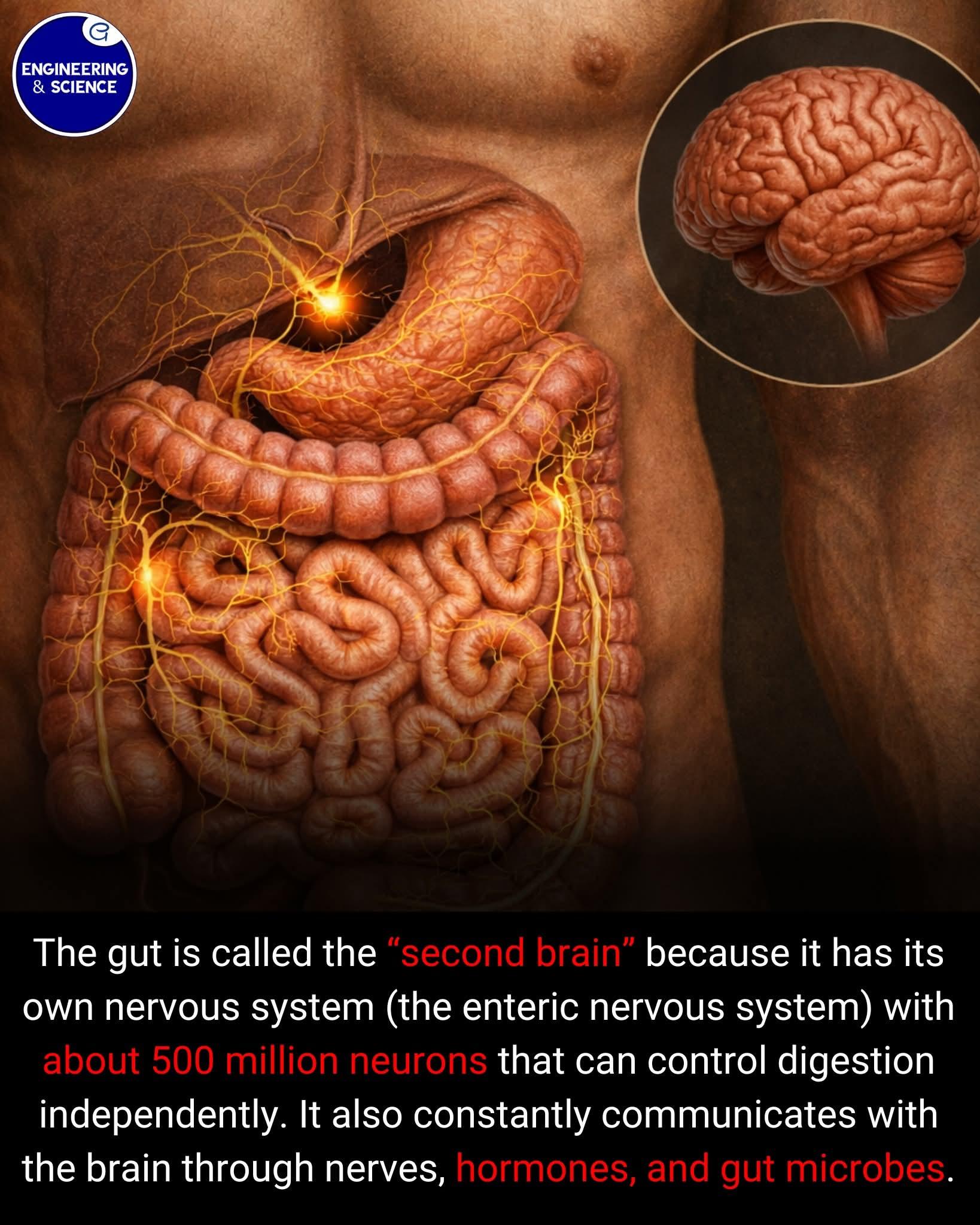
Inside your digestive system lives the Enteric Nervous System (ENS), a powerful network of around 500 million neurons. That’s more neurons than in the spinal cord. This system can control digestion independently, regulating movement, enzyme release, nutrient absorption, and blood flow — even without direct input from the brain.
What makes this even more fascinating is the gut–brain connection, one of the most important discoveries in modern neuroscience. Your gut and brain are in constant two-way communication through the vagus nerve, hormones, immune signals, and gut microbiome. This is why stress can cause stomach pain, and why gut health plays a major role in mental health, mood regulation, anxiety, and depression.
In fact, the gut produces up to 90% of the body’s serotonin, a key neurotransmitter responsible for happiness, emotional balance, and sleep quality. This is why researchers now link digestive health to conditions like IBS, brain fog, chronic inflammation, autoimmune disorders, and even neurodegenerative diseases.
Your gut doesn’t “think” like your brain — but it acts autonomously, constantly gathering information and sending signals that influence how you feel, think, and perform daily.
That’s why optimizing gut health, digestive wellness, and microbiome balance is now a top priority in functional medicine, holistic health, biohacking, longevity science, and preventive healthcare.
Inside your digestive system lives the Enteric Nervous System (ENS), a powerful network of around 500 million neurons. That’s more neurons than in the spinal cord. This system can control digestion independently, regulating movement, enzyme release, nutrient absorption, and blood flow — even without direct input from the brain.
What makes this even more fascinating is the gut–brain connection, one of the most important discoveries in modern neuroscience. Your gut and brain are in constant two-way communication through the vagus nerve, hormones, immune signals, and gut microbiome. This is why stress can cause stomach pain, and why gut health plays a major role in mental health, mood regulation, anxiety, and depression.
In fact, the gut produces up to 90% of the body’s serotonin, a key neurotransmitter responsible for happiness, emotional balance, and sleep quality. This is why researchers now link digestive health to conditions like IBS, brain fog, chronic inflammation, autoimmune disorders, and even neurodegenerative diseases.
Your gut doesn’t “think” like your brain — but it acts autonomously, constantly gathering information and sending signals that influence how you feel, think, and perform daily.
That’s why optimizing gut health, digestive wellness, and microbiome balance is now a top priority in functional medicine, holistic health, biohacking, longevity science, and preventive healthcare.
Did you know your gut is often called the “second brain” — and science fully supports it?
Inside your digestive system lives the Enteric Nervous System (ENS), a powerful network of around 500 million neurons. That’s more neurons than in the spinal cord. This system can control digestion independently, regulating movement, enzyme release, nutrient absorption, and blood flow — even without direct input from the brain.
What makes this even more fascinating is the gut–brain connection, one of the most important discoveries in modern neuroscience. Your gut and brain are in constant two-way communication through the vagus nerve, hormones, immune signals, and gut microbiome. This is why stress can cause stomach pain, and why gut health plays a major role in mental health, mood regulation, anxiety, and depression.
In fact, the gut produces up to 90% of the body’s serotonin, a key neurotransmitter responsible for happiness, emotional balance, and sleep quality. This is why researchers now link digestive health to conditions like IBS, brain fog, chronic inflammation, autoimmune disorders, and even neurodegenerative diseases.
Your gut doesn’t “think” like your brain — but it acts autonomously, constantly gathering information and sending signals that influence how you feel, think, and perform daily.
That’s why optimizing gut health, digestive wellness, and microbiome balance is now a top priority in functional medicine, holistic health, biohacking, longevity science, and preventive healthcare.
0 Comments
0 Shares
3K Views
0 Reviews

