


How Archaeologists Reconstruct the Past
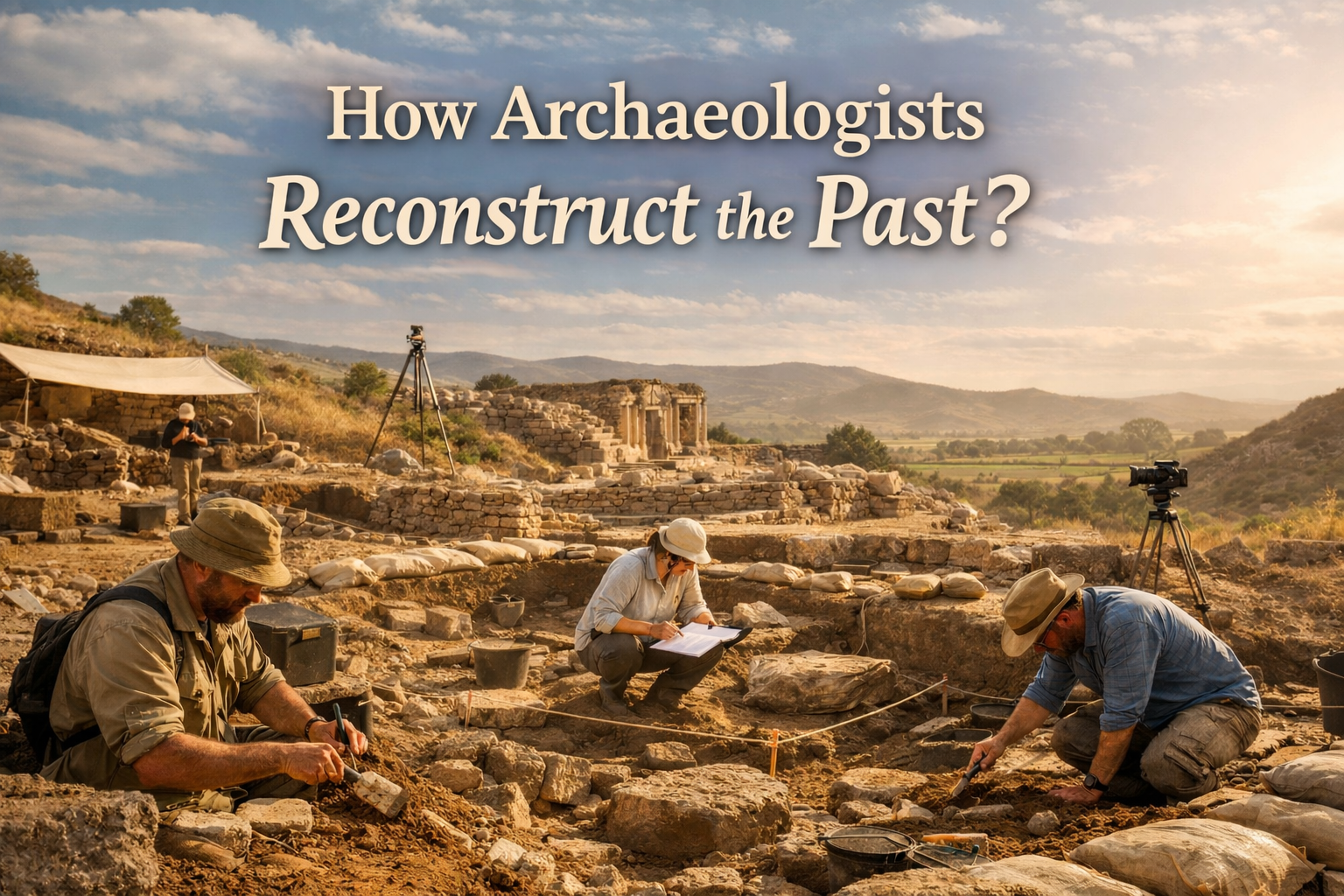
Archaeology is often imagined as treasure hunting, but in reality it is a careful, methodical science focused on understanding how people lived long ago. Archaeologists reconstruct the past by uncovering, analyzing, and interpreting material remains—artifacts, buildings, landscapes, and even microscopic traces left in soil. Each discovery, no matter how small, becomes a clue in a much larger story about human history.

Reading the Ground: Excavation and Context
The foundation of archaeological research is excavation. Sites are dug slowly and systematically, layer by layer, following the principle of stratigraphy—the idea that deeper layers are usually older than those above them. This allows archaeologists to build a timeline of human activity at a site.
Just as important as the object itself is its context. A pot found in a hearth tells a very different story from the same pot found in a grave. For this reason, everything is meticulously recorded using photographs, drawings, measurements, and written notes. Once a site is excavated, it cannot be replaced, so detailed documentation preserves its information for future study.

Objects That Speak: Artifact Analysis
Artifacts are then analyzed to understand their purpose and meaning. Archaeologists classify objects by material—stone, metal, bone, or ceramic—and by function, such as tools, weapons, or ornaments.
Wear analysis can reveal how tools were used. Tiny scratches or polished edges may show whether a stone tool cut meat, scraped hides, or worked wood. In experimental archaeology, researchers recreate ancient tools and techniques to better understand the skills and knowledge required to make and use them. Pioneering work by researchers such as Lynn Wadley has shown that early humans possessed advanced planning and cognitive abilities far earlier than once believed.

Placing the Past in Time: Dating Techniques
To understand when people lived and how cultures changed, archaeologists rely on dating methods.
- Relative dating uses stratigraphy and changes in artifact styles to place finds in sequence.
- Absolute dating, such as radiocarbon (Carbon-14) dating, provides calendar ages for organic materials like wood, bone, and charcoal.

Together, these techniques allow archaeologists to build reliable timelines stretching back tens of thousands of years.
Reconstructing Lives: Interpreting Clues
Not all evidence is obvious. Archaeologists also rely on indirect clues such as ancient art, written records (where available), and comparisons with modern traditional societies.
Environmental evidence is especially valuable. Pollen grains reveal past vegetation and climate, animal bones show what people hunted and ate, and soil analysis can indicate farming or seasonal occupation. These studies—known as archaeo-botany and zooarchaeology—help reconstruct entire ecosystems alongside human activity.

Working Together: An Interdisciplinary Science
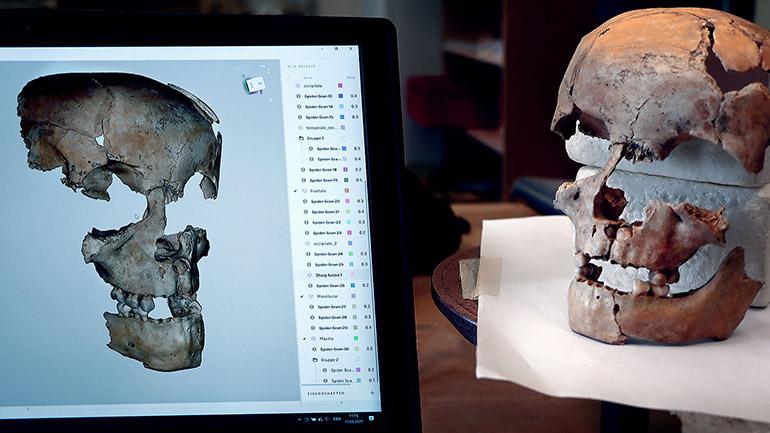
Modern archaeology is highly collaborative. Geologists help interpret landforms, botanists identify ancient plant remains, and zoologists analyze animal bones. Increasingly, digital tools such as 3D scanning, modeling, and virtual reality are used to visualize sites and artifacts, making it possible to study and share discoveries without damaging fragile remains.
From Stone Tools to Buried Cities
Preservation varies enormously. In rare cases, such as the Roman city of Pompeii, entire towns and even wall graffiti survive, offering vivid snapshots of daily life. More commonly, especially for the Stone Age, archaeologists work with far simpler remains—flint tools, weapons, and animal bones. Yet even these humble objects can reveal hunting strategies, diet, technology, and social organization.

Final Thoughts
Archaeology is a process of careful reconstruction rather than dramatic discovery. By piecing together physical evidence, environmental data, and cultural clues, archaeologists move from isolated objects to rich narratives about human behavior, belief systems, and adaptation. Each excavation adds another chapter to the long and complex story of humanity, reminding us that even the smallest fragment can hold profound insights into our shared past.


- News & Current Affairs
- Business & Economy
- Finance & Money
- Education & Learning
- Technology & Innovation
- Science & Environment
- Health & Wellness
- Food & Drink
- Home, Garden & Lifestyle
- Travel & Tourism
- Fashion & Beauty
- Art & Culture
- Entertainment & Media
- Sports & Recreation
- Personal Growth & Lifestyle
- Careers & Work
- Tutorials & How-To Guides
- Real Estate & Property
- Automotive
- Family & Relationships
- Environment & Sustainability
- Law & Legal Matters
- Gaming & Esports
- Religion & Spirituality
- Community & Local Voices
- Miscellaneous
- History