


The Rich History of Coffee: From Ancient Ethiopia to Your Morning Brew
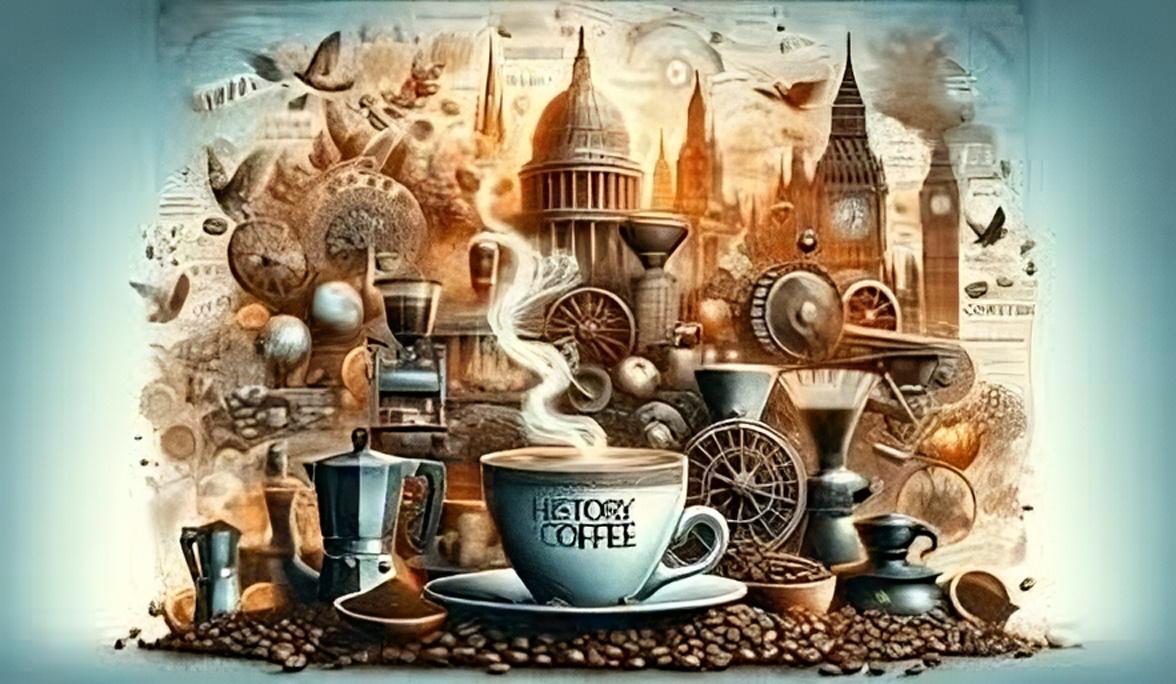
Coffee — the world’s favourite pick-me-up — has a story as rich as its aroma. Its journey spans centuries and continents, touching nearly every culture on Earth. Yet, many of us sip our daily cup without knowing how this humble bean came to rule the world.
Let’s take a journey through coffee’s incredible history, from its mysterious origins in Ethiopia to its global rise as a cultural and economic powerhouse.

🌿 The Ethiopian Legend: Where Coffee Was Born
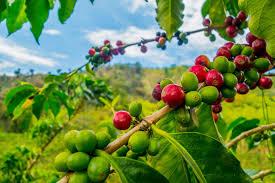
According to legend, coffee’s story began in 9th-century Ethiopia with a curious goatherd named Kaldi. One day, Kaldi noticed his goats dancing energetically after nibbling on red berries from a wild shrub. Intrigued, he tried the berries himself — and soon felt their invigorating effects.

He shared his discovery with local monks, who brewed the berries into a drink to stay awake during long prayers. And just like that, coffee was born — though no one could have predicted the worldwide journey ahead.

The coffee plant, Coffea arabica, grows wild in Ethiopia’s Kefa region, where it’s still called “buna.” From there, Somali merchants carried it across the Red Sea to Yemen, setting the stage for coffee’s next great chapter.
🕌 Coffee Crosses the Red Sea: Yemen and the Arabian Peninsula
By the 15th century, coffee had taken root in southern Arabia, especially in Yemen’s Sufi monasteries, where monks drank it to aid concentration during prayers. The Yemeni port of Mocha soon became a vital trading hub — and yes, that’s where the name “mocha” comes from!

By 1414, coffee reached Mecca, then Cairo and North Africa. Coffeehouses began to flourish, becoming lively social spaces where people gathered for conversation, music, and debate — the early versions of today’s cafés.
The Ottoman Empire later propelled coffee into the global spotlight, with Constantinople (modern Istanbul) emerging as a vibrant centre for trade and culture.

☕ The Ottoman Coffeehouse Revolution
When the first coffeehouse opened in Istanbul in the mid-1500s, it sparked a social revolution. These bustling spaces became meeting places for artists, scholars, merchants, and philosophers, all sipping dark, aromatic coffee while discussing life and politics.

Of course, not everyone approved. In 1511 coffee was banned in Mecca. The governor of Mecca was paranoid about coffee. He believed that drinking too much coffee stimulated radical thinking. The governor was scared that this thinking would result in the people uniting and turning against him. He also believed that coffee’s effects were similar to those of alcohol. He also mistakenly believed it was an intoxicant like wine, which is forbidden in Islam. Luckily, Sultan Suleiman I lifted the ban in 1524 — and coffee culture flourished once again.

Despite controversies, coffeehouses cemented their role as symbols of intellectual freedom and social connection throughout the Ottoman world.

🇮🇹☕ Coffee Arrives in Europe: A Cultural Awakening
By the 16th century, coffee had reached Venice, introduced by Italian merchants who traded with the Middle East. Venice opened Europe’s first coffeehouse in 1645, followed by Paris, London, and beyond.
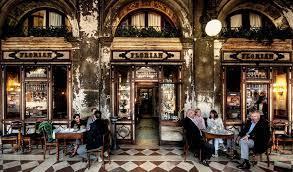
In France, coffee became the drink of philosophers and poets. In England, over 3,000 coffeehouses were serving by 1675 — buzzing with energy, gossip, and innovation. These were called “penny universities,” since for the price of a cup, one could learn more than in any classroom.

Coffee quickly replaced ale and wine as the beverage of choice for clear-headed conversation. It fueled the Age of Enlightenment, inspiring ideas that shaped modern Europe.

🌎 Coffee Conquers the Americas
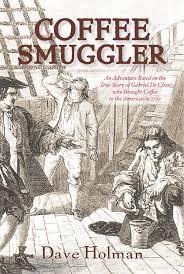
Coffee’s next great leap came across the Atlantic. In 1720, French naval officer Gabriel de Clieu smuggled coffee seedlings to Martinique, sparking coffee cultivation throughout the Caribbean.

By the late 1700s, Saint-Domingue (Haiti) produced half the world’s coffee supply. Meanwhile, Brazil’s coffee empire began in the 1820s when Francisco de Melo Palheta brought seedlings from French Guiana — a move that made Brazil the coffee capital of the world.

In America, the Boston Tea Party of 1773 shifted public preference from tea to coffee, solidifying its place in American culture forever.

🌏 Coffee in Asia: From Sacred Seeds to Global Exports
Coffee arrived in India around 1670, thanks to the legendary Baba Budan, who smuggled seven precious coffee beans in his beard from Yemen. Today, over 250,000 growers in southern India continue this legacy.

The Dutch later introduced coffee to Indonesia, where islands like Java and Sumatra became iconic coffee regions. Japan embraced the drink through Dutch traders, and by the 1930s, Tokyo boasted more than 30,000 coffeehouses!

In more recent decades, Vietnam emerged as a global coffee giant, especially after the 1990s. Today, it’s the second-largest coffee producer in the world.

🏛️ The Rise of Coffeehouses Around the World
From Mecca to Milan and London to New York, coffeehouses have shaped history.
In 17th-century England, coffeehouses were the original co-working spaces — where journalists, merchants, and philosophers gathered to exchange ideas. Vienna’s coffeehouses gave birth to a distinct European tradition, blending art, conversation, and music.
Even in colonial America, coffeehouses became hubs of political debate, playing a role in the revolutionary spirit that shaped the nation.

🌍 Coffee’s Colonial Legacy
Coffee’s rise wasn’t without dark chapters. During the 18th and 19th centuries, European colonial powers exploited coffee cultivation across Africa, the Caribbean, and Latin America.

Plantations depended heavily on enslaved and indigenous labour, turning coffee into both a symbol of progress and oppression. Still, its global trade reshaped economies and societies, laying the groundwork for today’s massive coffee industry.
☕ Modern Coffee Culture: Sustainability, Craft, and Connection
Fast forward to today — and the world of coffee looks very different. The third-wave coffee movement celebrates quality, origin, and craftsmanship.

From single-origin beans to pour-over and cold brew, coffee has evolved into an art form. Ethical sourcing and fair-trade practices are now at the heart of coffee culture, as consumers seek transparency and sustainability.

With climate change threatening coffee-growing regions, innovation in climate-resilient farming and eco-friendly roasting is shaping the future of your morning cup.

💰 Coffee’s Global Economic Impact
Coffee isn’t just a beverage — it’s a global powerhouse. In 2022, the U.S. coffee industry contributed more than £343 billion to the economy and supported over 2 million jobs.
Globally, coffee is the second most traded commodity after crude oil, linking millions of farmers, traders, and baristas in one massive ecosystem.

So yes — that latte you’re holding connects you to a global story centuries in the making.
☕ More Curious and Strange Coffee Bans
Believe it or not, there was a time when coffee was feared, banned, and even declared “satanic.” Let’s take a trip back in time to the 16th–18th centuries, when rulers, popes, and kings had strong opinions about the humble coffee bean.
👨⚖️ The Clergymen of Italy in the 16th Century
When coffee first made its way into Europe, not everyone welcomed it with open arms. Italian clergymen, for instance, were far from pleased. They called coffee a “satanic beverage” — though no one really knows why — and even pushed for it to be banned.
The matter eventually reached Pope Clement VIII, who, curious as ever, decided to try this so-called “evil” drink himself.
To everyone’s surprise, the Pope loved it! In fact, he famously quipped,
“This drink is so delicious it should be baptized!”
With the Pope’s blessing, coffee spread like wildfire across Europe, and coffee houses began popping up in every city.
🕌 Murad IV of Constantinople (1623)
Fast forward to the Ottoman Empire under Murad IV Ghazi. This ruler often roamed his empire in disguise, listening to what people said about him in coffee houses.
He soon noticed something interesting: people who drank alcohol were cheerful and sang songs, while coffee drinkers… complained about politics. Not a great look for a ruler!
So, Murad IV decided to make coffee drinking a capital offence — yes, punishable by death.
Luckily, his successor didn’t share the same strict view and lifted the ban. Coffee survived once again!
👑 King Gustav III of Sweden (1746)
Now this one is wild. King Gustav III believed that coffee and tea were dangerous to public health. Determined to prove it, he conducted one of history’s strangest experiments.
Two identical twins sentenced to death were instead given life in prison — on one condition: one had to drink three pots of coffee a day, and the other three pots of tea. Each twin even had a personal physician to observe the effects.
But fate had other plans — the king was assassinated before the experiment ended. The physicians died too, but the tea-drinking twin passed away first… at the age of 83! The coffee drinker outlived him, and coffee once again came out victorious.
🍺 Frederick II of Prussia (1781)
Frederick the Great had a bone to pick with coffee. He thought it was a luxury meant only for nobles — not the common folk — and was frustrated by how much money Prussia spent importing it.
To promote a “healthier” and more patriotic alternative, he encouraged people to drink beer instead, proudly declaring:
“His Majesty was brought up on beer.”
But coffee had already won people’s hearts. Despite his ban on coffee imports, smuggling skyrocketed — to the point that more coffee was being smuggled than ever legally imported before! Eventually, Frederick gave up and lifted the ban.
💃 The 18th-Century Women’s Coffee Protests
And it wasn’t just kings and clergymen who had opinions about coffee — even women’s groups across Europe began protesting against it! Many believed coffee made men “impotent” and wanted it banned.
Luckily, their efforts came too late. Europe was already deeply addicted to the bean water, and coffee culture was here to stay.
🌍 Imagine a World Without Coffee...
If any of these bans had succeeded, our mornings would look very different today. No comforting aroma, no café culture, no espresso martinis.
So next time you enjoy your morning brew, raise your cup to the brave coffee lovers of the past who helped keep the world caffeinated! ☕💪
☕ Final Thoughts
From Ethiopian hillsides to bustling city cafés, coffee has journeyed across continents, shaping cultures, conversations, and economies.
Next time you enjoy your brew, take a moment to appreciate the centuries-old heritage behind it. Whether it’s a strong espresso, creamy cappuccino, or smooth cold brew, you’re sipping on a piece of world history.
So go ahead — savour every sip of this remarkable beverage.

🔍 FAQs
Where did coffee originate?
Coffee originated in Ethiopia, where legend says a goatherd named Kaldi discovered its energising effects.
How did coffee influence European culture?
Coffeehouses in Venice, London, and Paris became intellectual and political hubs, shaping modern thought and society.
When did coffee reach the Americas?
Coffee arrived in the 17th century and flourished in the Caribbean, Central America, and Brazil — changing trade and culture forever.
What role did religion play in coffee’s spread?
Although once controversial, both Islamic scholars and Pope Clement VIII eventually approved of coffee, boosting its global popularity.
Which countries produce the most coffee today?
Brazil remains the largest producer, followed by Vietnam and Colombia, with Ethiopia still prized for its unique Arabica beans.


- News & Current Affairs
- Business & Economy
- Finance & Money
- Education & Learning
- Technology & Innovation
- Science & Environment
- Health & Wellness
- Food & Drink
- Home, Garden & Lifestyle
- Travel & Tourism
- Fashion & Beauty
- Art & Culture
- Entertainment & Media
- Sports & Recreation
- Personal Growth & Lifestyle
- Careers & Work
- Tutorials & How-To Guides
- Real Estate & Property
- Automotive
- Family & Relationships
- Environment & Sustainability
- Law & Legal Matters
- Gaming & Esports
- Religion & Spirituality
- Community & Local Voices
- Miscellaneous
- History