


Hypothermia: Signs, Symptoms, First Aid and Prevention
Hypothermia is a serious medical emergency that occurs when your body's core temperature drops below 35°C (95°F). It develops when your body loses heat faster than it can produce it, causing the heart, brain, and other organs to slow down. Without prompt treatment, hypothermia can lead to heart failure, respiratory failure, and even death.
Although it is often linked to freezing weather, hypothermia can occur in any cold environment, especially when clothing is wet or a person is exposed to cold water for an extended period.
What Causes Hypothermia?
Hypothermia occurs when prolonged exposure to cold overwhelms your body's ability to stay warm.
Common causes include:
- Spending too much time in cold or windy weather.
- Falling into cold water.
- Wearing wet or inadequate clothing.
- Remaining in damp conditions without shelter.
- Living in poorly heated homes.

Stages and Symptoms
Recognising the symptoms early can save a life.
Mild Hypothermia (32°C–35°C / 90°F–95°F)
The body is still trying to warm itself.
- Intense shivering
- Cold, pale skin
- Fast breathing
- Fatigue
- Clumsy hands
- Difficulty concentrating
Moderate Hypothermia (28°C–32°C / 82°F–89°F)
As body temperature continues to fall, normal body functions begin to fail.
- Shivering may stop
- Slow heart rate
- Slow breathing
- Cyanosis (skin turns blue)
- Confusion
- Slurred speech
- Slow movements
- Drowsiness
- Poor coordination
- Weak pulse
Severe Hypothermia (Below 28°C / 82°F)
This is a life-threatening emergency requiring immediate medical care.
- Loss of consciousness
- Very slow or shallow breathing
- Weak or absent pulse
- Stiff muscles
- Dilated pupils
- Cardiac arrest
Who Is Most at Risk?
Several factors increase the likelihood of developing hypothermia, including:
- Advanced age
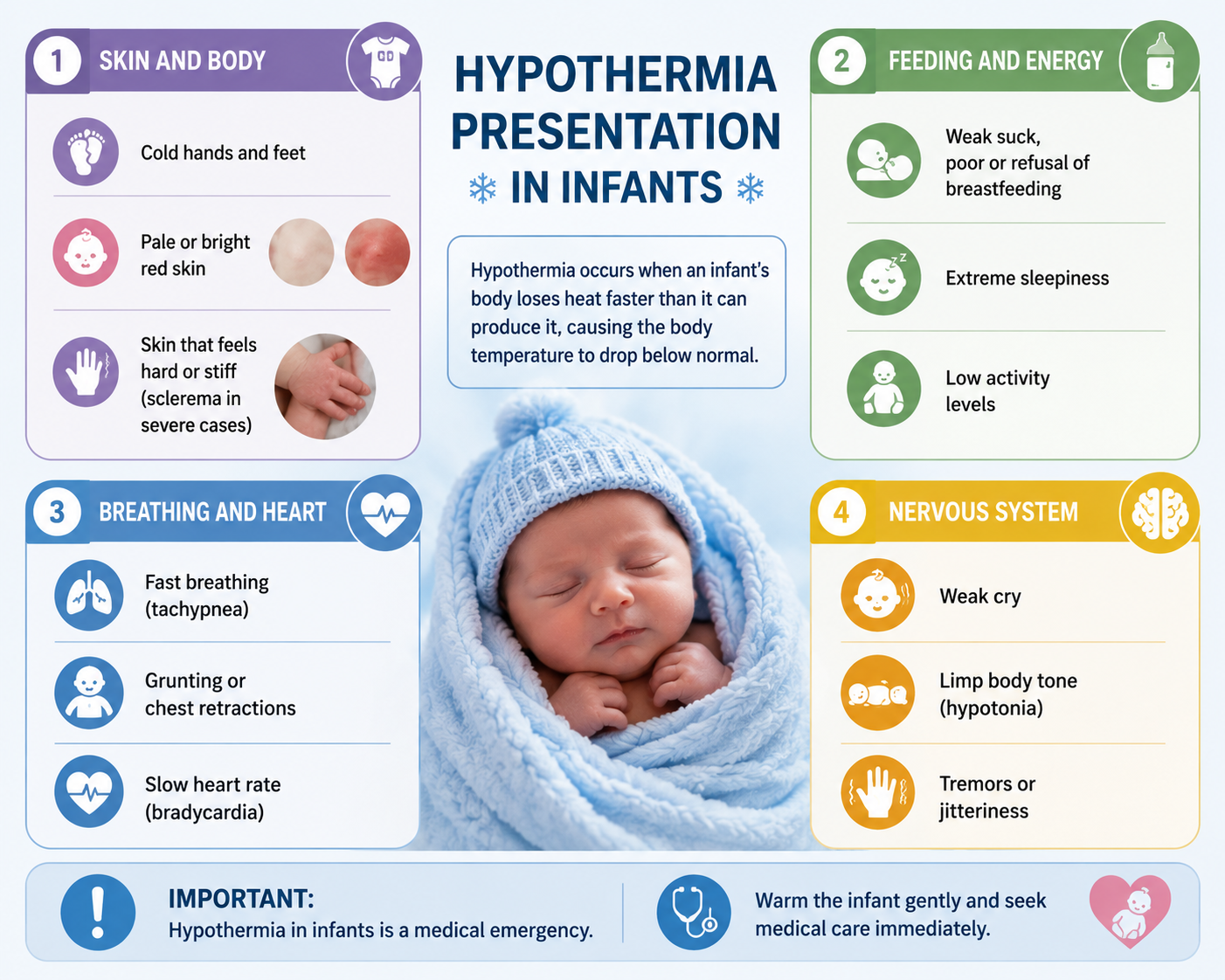
- Infancy and young childhood
- Exhaustion
- Alcohol or drug use
- Diabetes
- Hypothyroidism
- Parkinson's disease
- Stroke
- Dementia
- Spinal cord injuries
- Poor nutrition
Possible Complications
Without treatment, hypothermia can lead to serious complications, including:
- Heart rhythm disturbances
- Respiratory failure
- Frostbite
- Gangrene
- Organ failure
- Cardiac arrest
- Death
First Aid for Hypothermia
If you suspect someone has hypothermia, seek emergency medical help immediately.
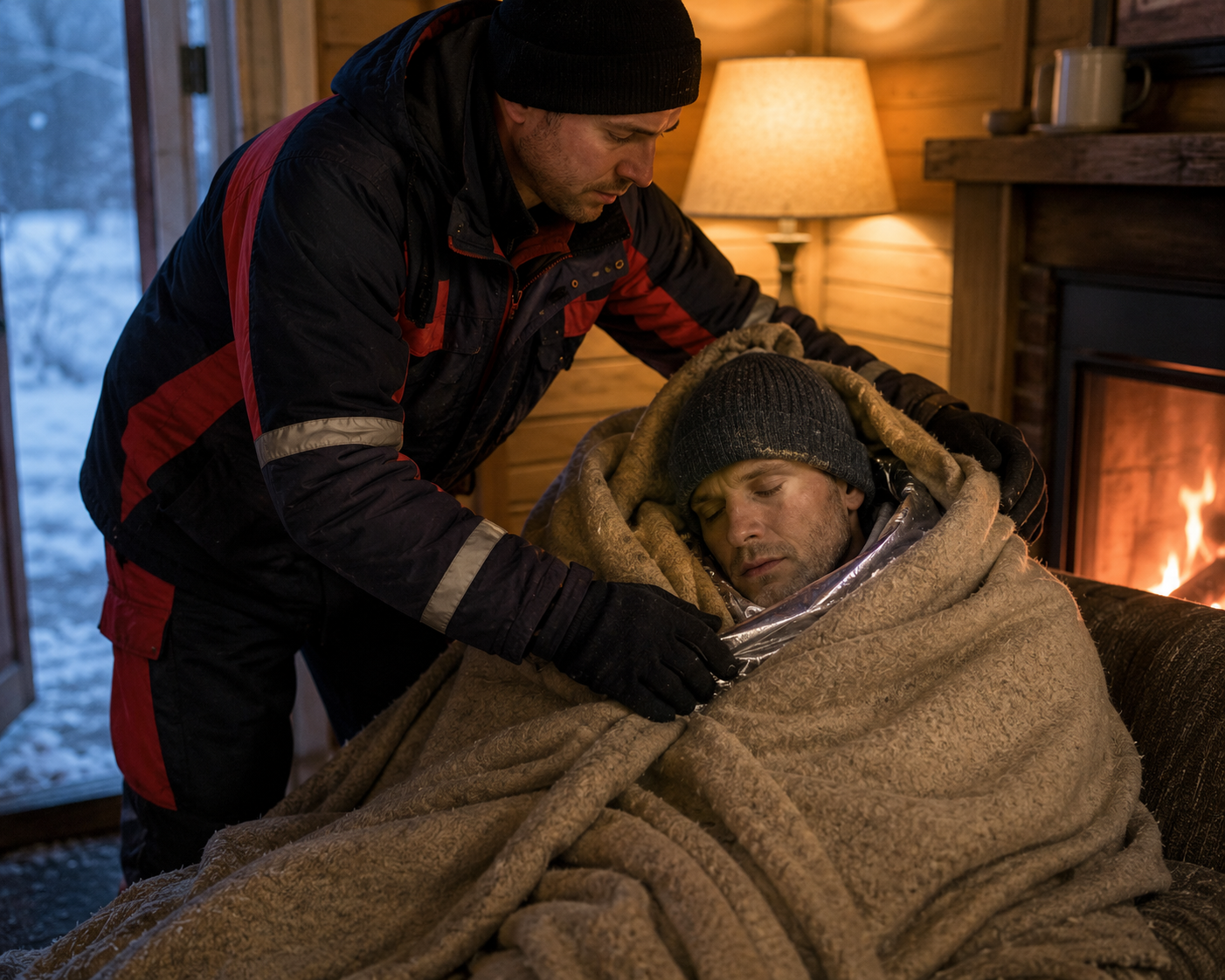
While waiting for help: Gentleness is of utmost importance looking after a hypothermic victim:
- Move the person into a warm, dry shelter.
- Remove wet clothing carefully.
- Wrap them in warm blankets, towels, or dry clothing, covering the head.
- Apply warm (not hot) compresses to the neck, chest, and groin.
- Offer warm, non-alcoholic drinks only if they are fully awake and able to swallow.
- Handle the person gently, avoid massaging arms or legs. Rough movement can trigger dangerous irregular heart rhythms.
Avoid:
- Hot baths
- Heating pads
- Direct heat sources
- Massaging or rubbing arms and legs
- Giving alcohol
Cold Water Survival Tips
If you fall into cold water:
- Wear a life jacket if available.
- Try to climb onto a floating object.
- Avoid unnecessary swimming unless safety is very close.
- Curl into the Heat Escape Lessening Position (HELP) by pulling your knees toward your chest.
- If with others, huddle together to conserve heat.
- Keep your clothing on until you are safely out of the water.
Preventing Hypothermia
A simple way to remember cold-weather safety is COLD:
C – Cover up
Wear a warm hat, scarf, and mittens to reduce heat loss.
O – Overexertion
Avoid excessive sweating, as wet clothing speeds up heat loss.
L – Layers
Wear several loose-fitting layers instead of one thick layer. Wool and synthetic fabrics provide better insulation than cotton.
D – Dry
Stay as dry as possible and change out of wet clothing immediately.
Keeping Children Safe
Children lose body heat much faster than adults.
To help protect them:
- Dress them in one extra clothing layer than an adult would wear.
- Bring them indoors as soon as they begin shivering.
- Allow frequent warm-up breaks indoors during outdoor play.
- Never let babies sleep in a cold room.

When Should You Seek Emergency Care?
Call emergency services immediately if someone has:
- Severe or uncontrollable shivering
- Confusion or unusual behaviour
- Difficulty speaking
- Extreme drowsiness
- Loss of consciousness
- Slow or shallow breathing
- A very weak pulse
- Blue or pale skin
Early treatment greatly improves the chances of a full recovery.
Final Thoughts
Hypothermia is a preventable but potentially fatal condition. Understanding the warning signs, knowing how to respond, and dressing appropriately in cold conditions can save lives. Whether you're hiking, camping, boating, or simply spending time outdoors during winter, preparation is your best protection. If you suspect hypothermia, don't delay, seek emergency medical care immediately.


- News & Current Affairs
- Business & Economy
- Finance & Money
- Education & Learning
- Technology & Innovation
- Science & Environment
- Health & Wellness
- Food & Drink
- Home, Garden & Lifestyle
- Travel & Tourism
- Fashion & Beauty
- Art & Culture
- Entertainment & Media
- Sports & Recreation
- Personal Growth & Lifestyle
- Careers & Work
- Tutorials & How-To Guides
- Real Estate & Property
- Automotive
- Family & Relationships
- Environment & Sustainability
- Law & Legal Matters
- Gaming & Esports
- Religion & Spirituality
- Community & Local Voices
- Miscellaneous
- History