

The History of Calendars: Evolution from Ancient to Digital Timekeeping
Discover how calendars evolved from ancient lunar systems to today’s AI-driven digital planners. Learn about the Sumerian, Egyptian, Julian, and Gregorian calendars and the future of timekeeping.
📖 Introduction
From the moonlit rituals of ancient civilizations to the AI-powered scheduling tools on our phones, the calendar has always been a reflection of human innovation. Our ability to measure and organize time has shaped agriculture, religion, science, and daily life.
Let’s explore the fascinating history of calendars — how they began, evolved, and continue to adapt in our digital world.
🌒 Ancient Calendars — The Birth of Timekeeping
The earliest known calendars emerged thousands of years ago. Civilizations such as the Sumerians, Egyptians, and Mayans built systems to track lunar and solar cycles, often for farming, rituals, and celestial observation.
- Sumerian Calendar (c. 3100 BC): The world’s oldest calendar, divided the year into 12 lunar months of 29–30 days each.
- Egyptian or Sothic Calendar: Consisted of 365 days divided into 12 months of 30 days, plus 5–6 “epagomenal” days. It was among the first solar calendars and heavily influenced by astronomy.
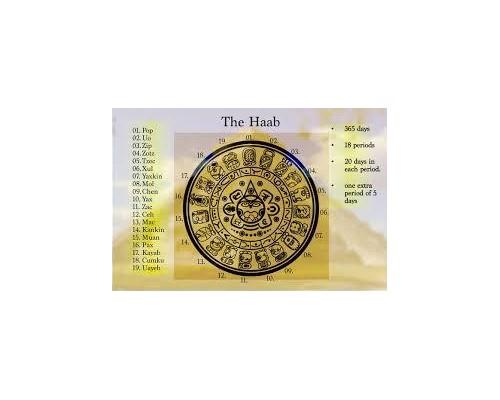
- Mayan Long Count Calendar: An extremely accurate calendar combining lunar and solar cycles. It featured 18 months of 20 days plus a 5-day “Wayeb” period for transitions.
These early systems laid the foundation for the evolution of modern calendars, linking astronomy with human activity.

🏛️ The Roman Calendar and Julian Reform
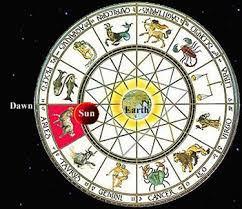
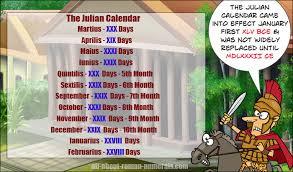
The Roman calendar was originally lunisolar, but it often drifted out of sync with the seasons. To fix this, Julius Caesar introduced the Julian Calendar in 46 BC, marking a major milestone in calendar evolution.
🗓️ Key Features of the Julian Calendar:
- A year had 365.25 days — with a leap year every four years.
- February gained an extra day during leap years.
- The new year officially started on January 1.
- Months were named after Roman gods and leaders.
The Julian reform aligned the Roman calendar with the solar year, making it easier to track time accurately. This calendar remained the world’s standard for over 1,600 years, influencing many cultures globally.

⛪ The Gregorian Calendar — A New Era of Accuracy
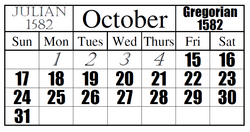
By the 16th century, the Julian calendar was misaligned with the solar year by about ten days. In 1582, Pope Gregory XIII introduced the Gregorian Calendar, now the most widely used calendar system worldwide.
🔧 Key Adjustments:
- Leap years occur every 4 years, except for years divisible by 100 but not 400.
- This correction improved seasonal accuracy and reduced drift.
🌍 Global Adoption:
- Catholic nations adopted it in 1582.
- Protestant countries followed in the 17th and 18th centuries.
- Today, over 190 countries use the Gregorian calendar for civil and global purposes.
✅ Advantages:
- Highly accurate and solar-based.
- Globally standardized for trade, travel, and communication.
- The foundation of ISO 8601 and modern timekeeping systems like Unix timestamps.
💻 The Digitization of Calendars
With the dawn of the computer age, timekeeping entered the digital realm.
🖥️ The Birth of Digital Calendars
In the 1960s, scientists developed the first computer-based calendars.
By the 1970s and 1980s, personal computers made them accessible:
- 1979: The Planner app for Apple II introduced electronic scheduling.
- 1983: Apple Lisa included the first “Calendar” interface.
- 1990s: Microsoft Outlook integrated email, contacts, and calendars into one system — revolutionizing personal and professional scheduling.
🌐 Internet and Mobile Revolution
The rise of the internet brought web-based calendars like:
- Yahoo Calendar (1998)
- Google Calendar (2006)
The smartphone era of the 2000s made calendars mobile, offering synchronization, push notifications, and AI suggestions for effortless time management.


☁️ Modern Cloud & AI-Driven Calendars
Today’s calendars live in the cloud, syncing across devices in real-time. They use artificial intelligence to schedule events, detect conflicts, and automate reminders.
🌟 Modern Features:
- Smart scheduling based on priorities.
- Integration with emails, to-do lists, and smart devices.
- Natural language processing for easy event creation.
- Enhanced privacy and data security.
AI-driven calendars are transforming how we manage time—moving from passive tools to active digital assistants.
🔮 The Future of Calendars
As technology advances, the future of calendars looks increasingly intelligent, adaptive, and immersive.
Expected Trends:
- AI-Powered Scheduling: Automatic conflict resolution and smart event suggestions.
- Personalized Calendars: Adaptation to user habits and lifestyle.
- Integration with IoT & AR: Real-time visual scheduling through augmented reality.
- Increased inclusivity: Recognition of non-Western calendar systems alongside the Gregorian model.
In the coming decades, calendars may blend seamlessly with virtual assistants, wearables, and even our physical environments.

📚 FAQs
1. What is the oldest known calendar?
The Sumerian calendar from around 3100 BC is the oldest known, based on lunar cycles.
2. How did calendars evolve over time?
Calendars evolved from lunar-based systems to solar and digital ones, improving accuracy with each reform — from the Julian (46 BC) to the Gregorian (1582) calendar.
3. What are the main types of calendars?
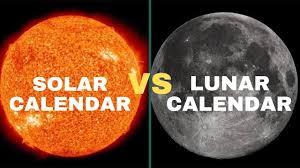
- Solar: Based on Earth’s orbit around the Sun (e.g., Gregorian).
- Lunar: Based on moon cycles (e.g., Islamic).
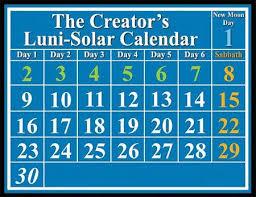
- Lunisolar: Combination of both (e.g., Hebrew, Chinese).
4. Why did calendars change over time?
To stay seasonally accurate, align with religious or cultural needs, and simplify global timekeeping.
5. What does the future of calendars look like?
Expect AI integration, AR visualization, and greater personalization, making calendars more intuitive and efficient than ever before.
🕰️ Conclusion
From the lunar markings of ancient temples to the AI algorithms in your smartphone, calendars have mirrored human progress for millennia.
They are more than time trackers — they are symbols of civilization’s journey to understand and master the rhythm of time.


- News & Current Affairs
- Business & Economy
- Finance & Money
- Education & Learning
- Technology & Innovation
- Science & Environment
- Health & Wellness
- Food & Drink
- Home, Garden & Lifestyle
- Travel & Tourism
- Fashion & Beauty
- Art & Culture
- Entertainment & Media
- Sports & Recreation
- Personal Growth & Lifestyle
- Careers & Work
- Tutorials & How-To Guides
- Real Estate & Property
- Automotive
- Family & Relationships
- Environment & Sustainability
- Law & Legal Matters
- Gaming & Esports
- Religion & Spirituality
- Community & Local Voices
- Miscellaneous
- History