


Architects of Rock and Roll: How Chuck Berry and Little Richard Changed Music Forever
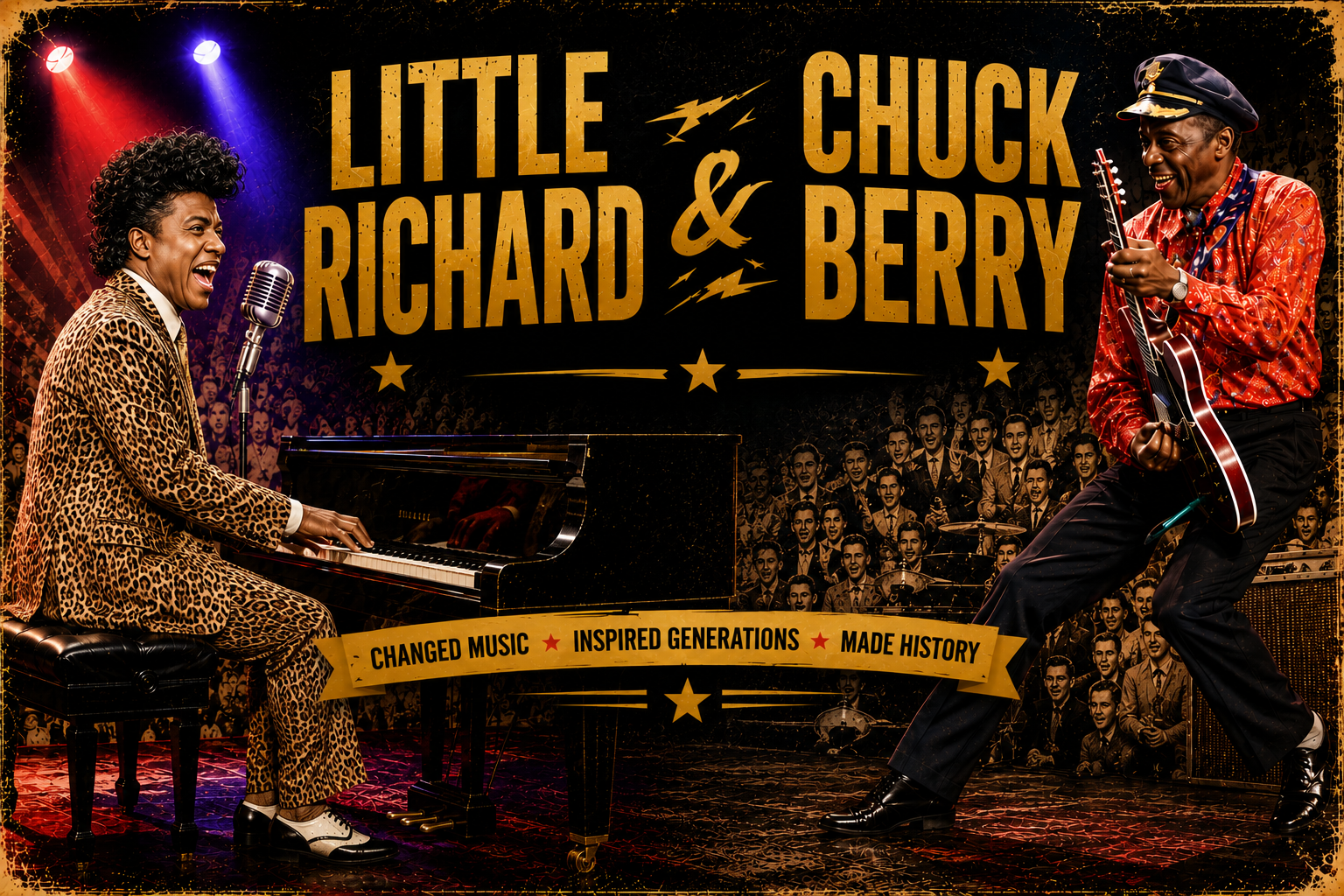
Rock and roll did not simply appear overnight. It grew from the rich traditions of blues, gospel, rhythm and blues, boogie-woogie, and country music, shaped by musicians who were willing to experiment with sound, performance, and identity.
Among its most important pioneers were Chuck Berry and Little Richard.
During the 1950s, these two Black American performers helped create much of the musical language that generations of rock musicians would follow. Berry made the electric guitar central to rock and wrote songs that captured teenage life. Little Richard brought explosive piano playing, extraordinary vocal energy, and a stage presence unlike almost anything mainstream audiences had seen before.
Together, they didn't just help create a new style of music. They helped ignite a cultural revolution.
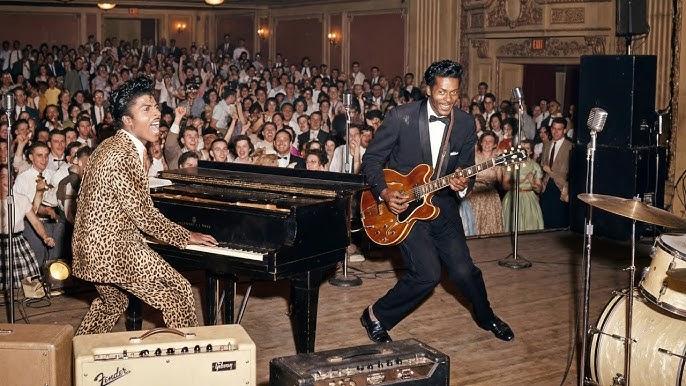
Before Rock and Roll
The roots of rock and roll stretched back decades before the 1950s.
African American blues, gospel, jump blues and R&B combined with influences from country, western swing and other popular styles. By the early 1950s, these sounds were increasingly reaching young audiences through records and radio.
Many musicians contributed to rock's development, including Sister Rosetta Tharpe, Fats Domino, Bo Diddley and others. But Chuck Berry and Little Richard became especially influential because they brought together several crucial ingredients of the emerging genre.
Berry helped establish its guitar-driven structure and storytelling, while Richard intensified its rhythm, vocals and theatrical excitement.
Chuck Berry: Building the Guitar Blueprint
When Chuck Berry emerged nationally during the mid-1950s, the electric guitar was already important in blues and R&B. Berry, however, helped transform it into the defining instrument of rock and roll.
His guitar introductions were immediately recognizable. Combining blues phrasing with rhythmic ideas influenced by boogie-woogie, Berry developed energetic riffs and double-stop guitar passages that became fundamental parts of rock vocabulary.
Songs such as Maybellene, Roll Over Beethoven and Johnny B. Goode demonstrated how effectively a guitar could drive an entire rock song.
Soon, countless young musicians were trying to reproduce Berry's sound.
Giving Teenagers Their Own Music
Berry's influence extended far beyond guitar playing.
He understood the rapidly developing teenage culture of post-war America and wrote about subjects young listeners recognized: school, dancing, cars, relationships, music, freedom and the desire for independence.
His songs were often miniature stories.
Instead of simply singing about love, Berry created characters and situations. His sharp observations helped establish one of rock music's most enduring traditions, the idea that popular music could speak directly about the experiences of young people.
Rock and roll was becoming more than entertainment.
It was becoming the soundtrack of youth.
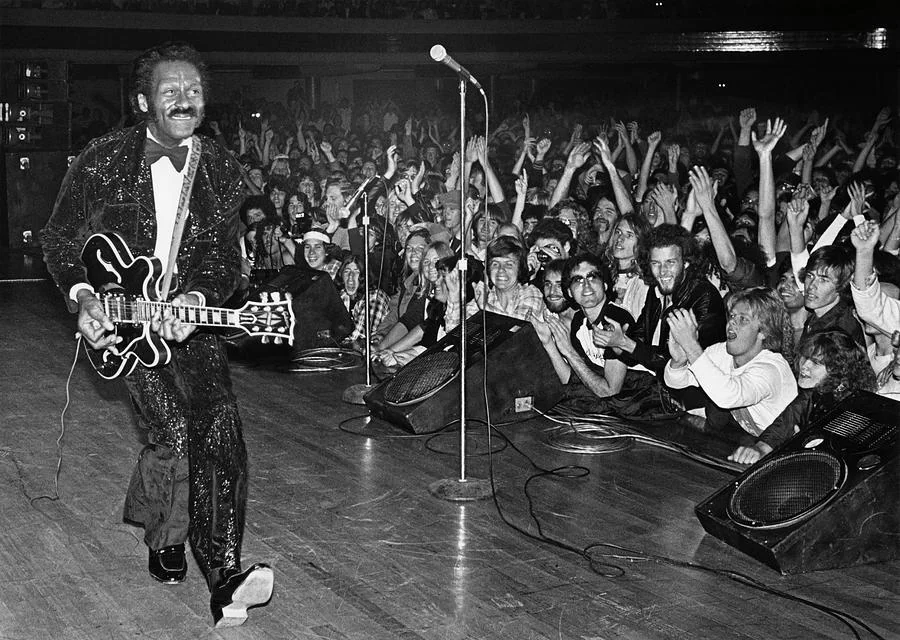
The Famous Duckwalk
Berry also understood that rock music needed to be seen as well as heard.
His famous duckwalk, performed while playing guitar, became one of the most recognizable stage moves in popular music.
The guitar was no longer simply an instrument held by a musician standing quietly onstage. Berry turned it into part of the performance itself.
Decades of guitar heroes, from blues-rock performers to heavy-metal stars, would follow that example.
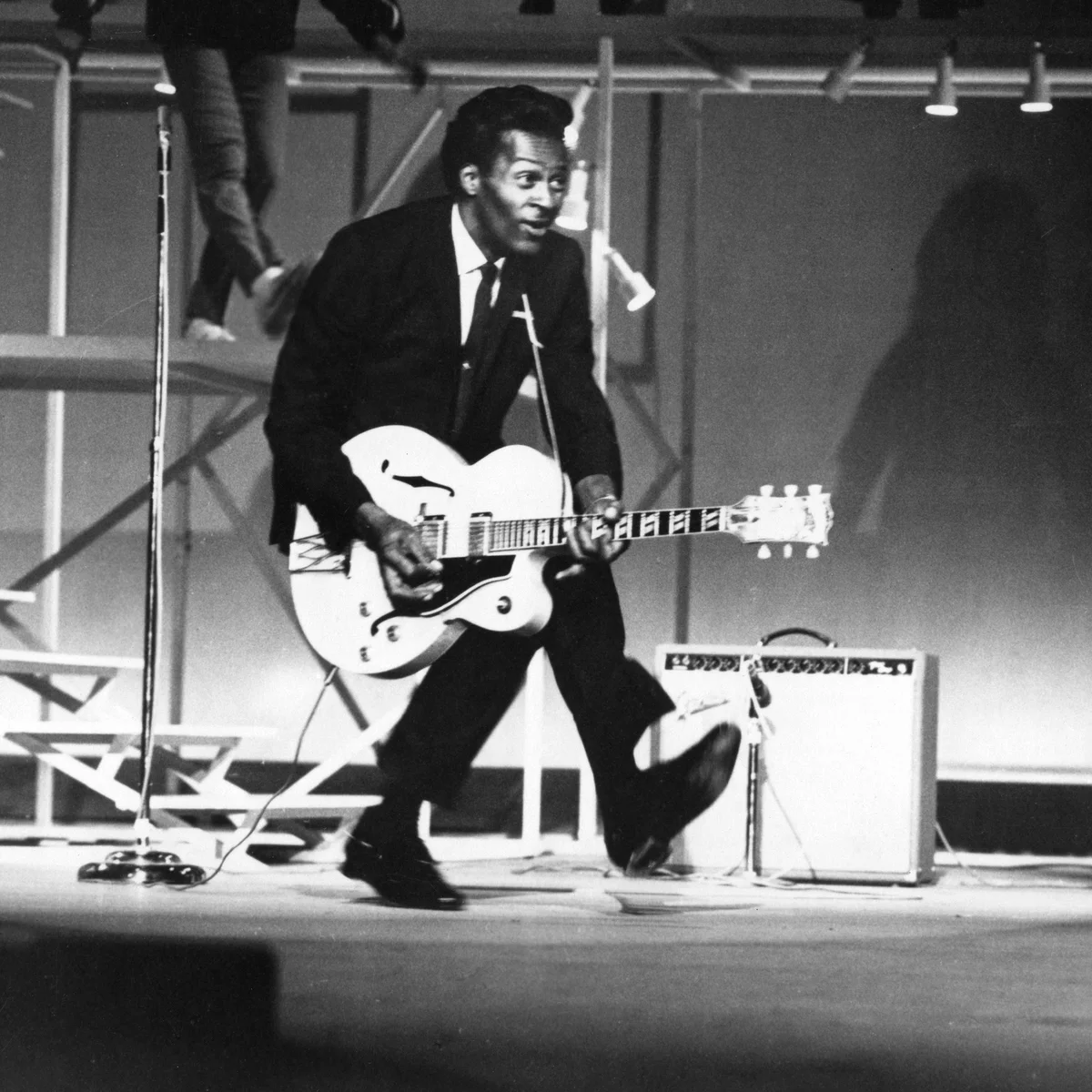
Little Richard: The Explosion Rock Needed
If Berry gave rock and roll much of its guitar vocabulary, Little Richard gave it an unforgettable burst of energy.
His arrival sounded almost dangerous compared with much of the mainstream popular music of the period.
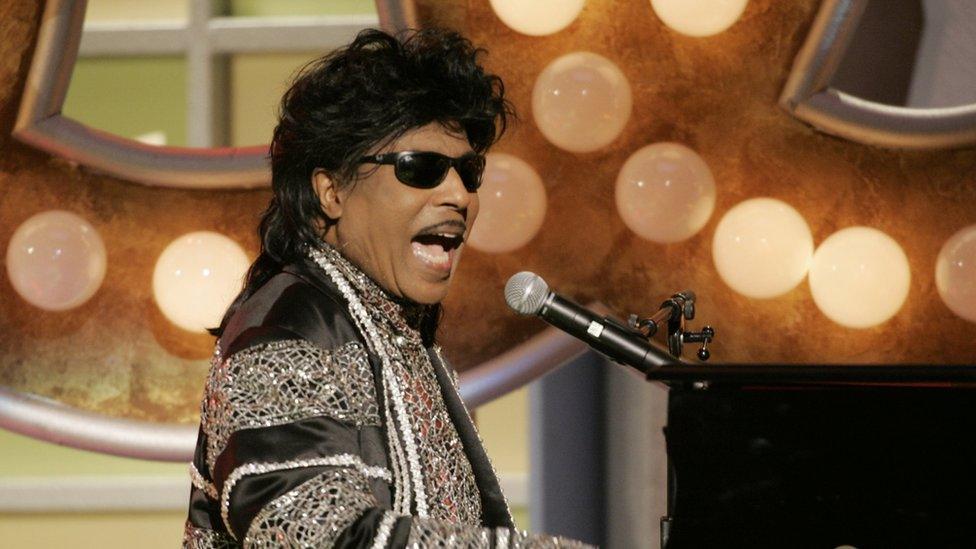
Behind a piano, Richard performed with relentless rhythm, powerful vocals and an almost uncontrollable sense of excitement.
Tutti Frutti, released in 1955, became one of the defining recordings of early rock and roll. It was followed by classics including Long Tall Sally, Rip It Up, Lucille and Good Golly, Miss Molly.
His performances were fast, loud and thrilling.
Rock and roll suddenly sounded as though it could burst out of the speakers.
A Voice That Changed Rock Singing
Little Richard's singing was another revolution.
Rather than following the smooth vocal style common in mainstream popular music, he drew heavily from gospel traditions while pushing his performances toward extraordinary intensity.
His soaring cries, falsetto exclamations and rhythmic vocal improvisations became part of rock's vocabulary.
Later singers learned that a rock performance didn't always have to sound controlled or polished. Sometimes its power came from creating the impression that the performer was giving absolutely everything to the song.
That influence would eventually stretch across rock, soul, funk and pop.
Turning the Piano Into a Rock Instrument
Little Richard's piano playing was equally important.
He attacked the instrument rhythmically, using driving patterns that helped propel his songs forward. The piano became both a melodic and percussion-like force.
His approach influenced generations of performers and helped establish piano as an important instrument in early rock and roll alongside the increasingly dominant electric guitar.
Breaking the Rules on Stage
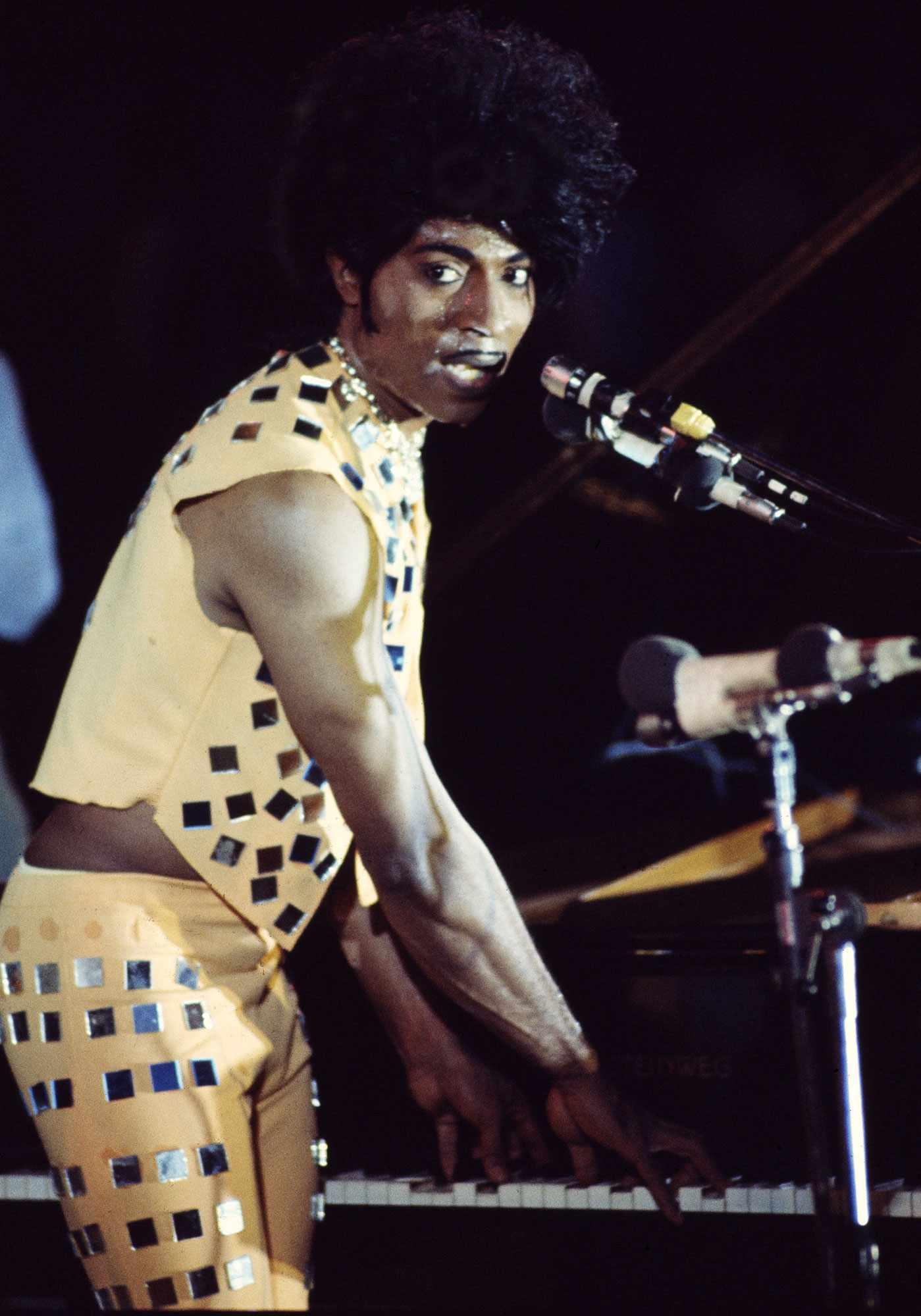
Little Richard's appearance was nearly as revolutionary as his music.
His towering pompadour, dramatic clothing, makeup and uninhibited performances challenged the conservative expectations of 1950s America.
He refused to disappear quietly into the background.
Richard demonstrated that a rock performer could be theatrical, extravagant, unpredictable and larger than life.
That tradition can later be seen in artists ranging from David Bowie and Elton John to Prince.
Two Different Architects of the Same Revolution
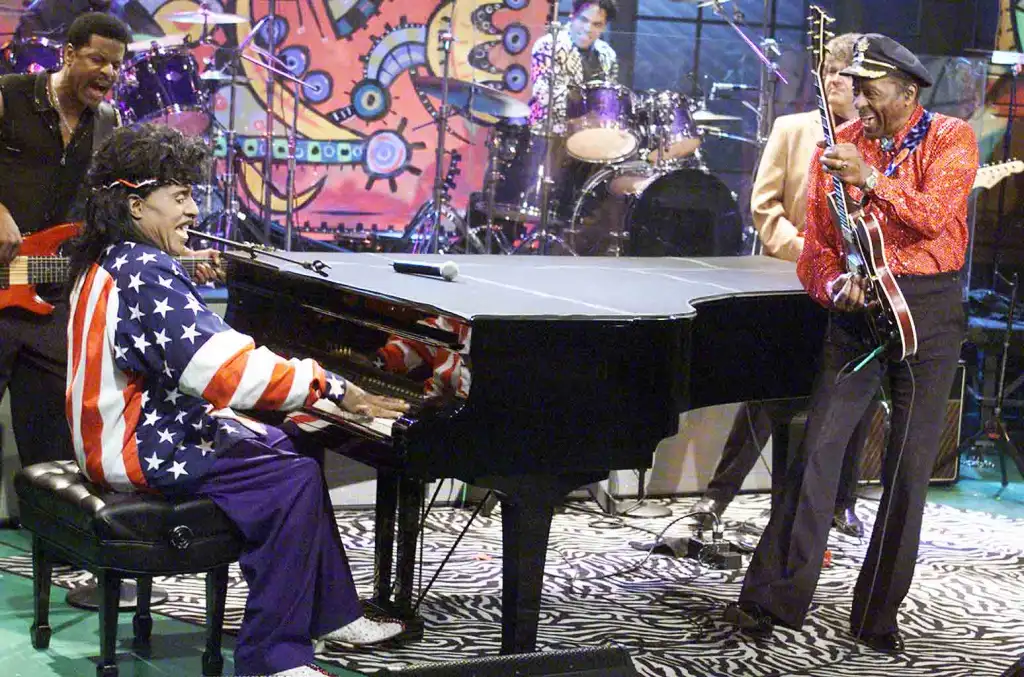
Chuck Berry and Little Richard approached rock and roll differently.
Berry was the guitar-playing storyteller, the musician who could transform teenage experiences into clever songs built around unforgettable riffs.
Richard was the musical fireball, the pounding pianist and electrifying singer who demonstrated how wild and theatrical rock could become.
Berry helped establish the structure.
Richard amplified the energy.
Their differences were precisely what made their combined influence so powerful.
The British Invasion Takes Notice
Their music soon crossed the Atlantic.
Young British musicians listened carefully to American rock-and-roll records, and Berry and Richard became particularly important influences.
The Beatles performed songs associated with both musicians during their early career and later recorded several of them. Little Richard and the Beatles also appeared on the same bills during the early 1960s.
Meanwhile, The Rolling Stones drew heavily from American blues, R&B and Chuck Berry's guitar-driven rock and roll.
The influence then came full circle: British rock groups inspired by Black American musicians became international stars and helped introduce those musical traditions to enormous new audiences.
Their Influence Never Disappeared
Berry and Richard helped establish ideas that became almost inseparable from rock music:
the electric-guitar riff, the energetic backbeat, the rebellious performer, songs written for young audiences, extravagant stagecraft and the idea that popular music could challenge social expectations.
Their musical fingerprints can be found across later rock, hard rock, glam, punk, soul, funk and pop.
Both men eventually received recognition as foundational figures in popular music, but their greatest legacy exists in the countless performers who continued building upon what they started.
Final Thoughts
Calling Chuck Berry and Little Richard architects of rock and roll captures something important about their place in music history, even though rock itself was created through the contributions of many pioneering musicians.
Chuck Berry helped give rock its guitar language, storytelling and teenage identity.
Little Richard gave it velocity, vocal fire and fearless showmanship.
More than seventy years after their breakthrough recordings, the sounds they pioneered remain embedded in modern music.
One helped draw the blueprint; the other helped blow the doors open.


- News & Current Affairs
- Business & Economy
- Finance & Money
- Education & Learning
- Technology & Innovation
- Science & Environment
- Health & Wellness
- Food & Drink
- Home, Garden & Lifestyle
- Travel & Tourism
- Fashion & Beauty
- Art & Culture
- Entertainment & Media
- Sports & Recreation
- Personal Growth & Lifestyle
- Careers & Work
- Tutorials & How-To Guides
- Real Estate & Property
- Automotive
- Family & Relationships
- Environment & Sustainability
- Law & Legal Matters
- Gaming & Esports
- Religion & Spirituality
- Community & Local Voices
- Miscellaneous
- History