



Squirrels are among the world's most agile and intelligent rodents. Whether darting through treetops, gliding between forest canopies, or digging intricate underground burrows, these energetic mammals have developed remarkable adaptations that help them thrive in a wide variety of habitats.
Found on almost every continent, squirrels are famous for their bushy tails, impressive climbing abilities, and incredible memory for locating hidden food caches.

Physical Description
Squirrels are small to medium-sized rodents with slender bodies, soft fur, large expressive eyes, and long bushy tails that serve several important purposes.
Size and Weight
- Body length: 20–51 cm (8–20 inches)
- Tail length: 15–24 cm (6–9.5 inches)
- Weight: 450–680 g (1–1.5 pounds) on average
Head and Face
Squirrels have:
- Large, dark eyes positioned high on the head to detect predators.
- Short, rounded ears that may have decorative tufts in some species.
- Four continuously growing front incisors that allow them to crack hard nuts and seeds throughout their lives.
Fur and Colour
Their soft coats vary depending on the species and habitat, ranging from:
- Grey
- Brown
- Reddish-brown
- Black
Many species also have pale or white underbellies.
Feet and Tail
Their front feet have four toes, while the hind feet have five. Sharp curved claws provide excellent grip for climbing trees.
Their long, fluffy tails help them:
- Balance while climbing
- Keep warm during cold weather
- Communicate with other squirrels
- Slow themselves during long jumps
Unique Adaptations
Squirrels possess several fascinating adaptations that make them expert survivors.
Rotating Ankles
Their hind ankles can rotate nearly 180 degrees, allowing them to run headfirst down tree trunks with incredible speed.
Natural Parachutes
Their bushy tails act as stabilizers while jumping and help reduce the impact of falls by functioning like parachutes.
Ever-Growing Teeth
Their front incisors never stop growing, preventing excessive wear from chewing tough nuts, seeds, and bark.
Sensitive Whiskers
Long facial whiskers help squirrels judge whether they can fit through narrow spaces.

Distribution and Habitat
Squirrels are found across much of the world.
Native Range
They naturally occur throughout:
- North America
- South America
- Europe
- Asia
- Africa
They are absent from Antarctica, Australia, and the southernmost parts of South America, although some species have been introduced by humans into new regions, including parts of Europe and South Africa.
Habitat Types
Different squirrel species occupy different habitats.
Tree squirrels live in forests, woodlands, and city parks, building leafy nests called dreys high in trees.
Ground squirrels dig extensive tunnel systems beneath grasslands, meadows, and open plains.
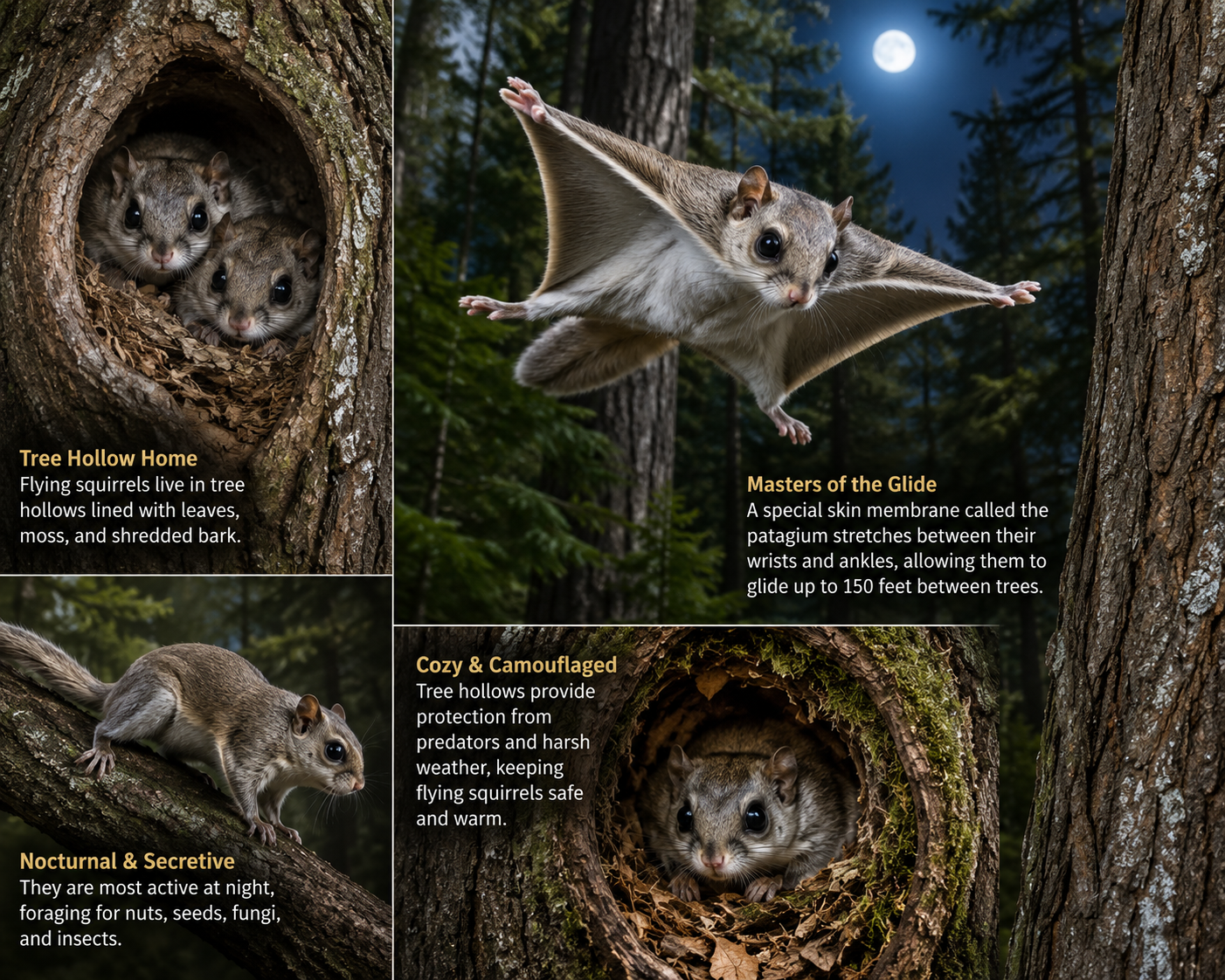
Flying squirrels inhabit mature forests, living inside tree hollows and gliding between trees using special skin membranes.
Social Structure and Behaviour
Squirrel behaviour varies greatly between species.
Tree Squirrels
Most tree squirrels are solitary but tolerant of neighbours. During winter, some may share nests to conserve warmth.
Certain species, such as red squirrels, become highly territorial and aggressively defend food stores.
Ground Squirrels
Ground squirrels are far more social and often live in colonies or extended family groups. Individuals work together by watching for predators and warning the colony with alarm calls.
Communication
Squirrels communicate through:
- Bird-like alarm calls
- Tail flicking
- Foot stomping
- Scent marking
- Grooming behaviours
Many alarm calls even distinguish between aerial predators such as hawks and owls, and ground predators like foxes or cats.
Diet and Feeding
Squirrels are opportunistic omnivores, although plant material makes up most of their diet.
Favourite Foods
Their natural diet includes:
- Acorns
- Walnuts
- Pecans
- Hazelnuts
- Seeds
- Mushrooms
- Tree buds
- Flowers
- Fruits
- Bark

They also eat insects, grubs, bird eggs, and occasionally small animals when extra protein is needed.
Feeding Backyard Squirrels
If you choose to feed wild squirrels, offer:
- Raw, unsalted nuts
- Apples
- Carrots
Avoid:
- Bread
- Chocolate
- Salty snacks
- Sugary foods
- Garlic
- Onion
- Processed foods
Reproduction and Lifespan
Most squirrels breed twice each year.
Breeding
- Mating seasons: Late winter and early summer
- Gestation: 30–44 days
- Litter size: 2–5 kits (also called kittens)
Newborn squirrels are blind, hairless, and completely dependent on their mother.
Young squirrels are usually weaned at 10–12 weeks and become fully independent between 9 and 12 months of age.

Lifespan
- Wild: 3–6 years on average (some species up to 8 years)
- Captivity: 15–20 years
Threats and Survival
Despite their adaptability, squirrels face numerous challenges.
Main Threats
- Habitat destruction
- Deforestation
- Road traffic
- Predators including foxes, snakes, birds of prey, pine martens, and coyotes
- Diseases such as squirrelpox (particularly devastating to native red squirrels)
Clever Survival Strategies
Squirrels survive by:
- Hiding thousands of food caches each autumn
- Pretending to bury food to fool thieves
- Detecting buried nuts beneath deep snow using their excellent sense of smell
- Escaping predators using zigzag running patterns
- Remaining alert to predators
- Adjusting their behaviour in areas with increased danger
- Using remarkable spatial memory
Conservation efforts, habitat restoration, and responsible wildlife management continue to help many squirrel populations recover.
Conclusion
Squirrels are far more than energetic animals that gather nuts. Their intelligence, agility, and remarkable problem-solving skills make them some of nature's most successful small mammals. From rotating ankles and parachute-like tails to impressive memories and clever food-hiding strategies, squirrels have evolved an extraordinary set of adaptations that allow them to thrive in forests, grasslands, and even busy cities around the world.
Whether leaping effortlessly between trees or carefully burying food for winter, squirrels continue to amaze scientists and wildlife enthusiasts alike.