


Ants: Tiny Architects with Extraordinary Superpowers

Ants are among the most successful and fascinating creatures on Earth. Although each ant is tiny, together they form highly organized societies capable of incredible teamwork, engineering, farming, and problem-solving. Found almost everywhere on the planet, ants have thrived for millions of years thanks to their remarkable adaptations, complex communication, and cooperative lifestyles.
From building vast underground cities to carrying objects many times their own weight, ants prove that even the smallest animals can accomplish extraordinary feats.
Physical Characteristics
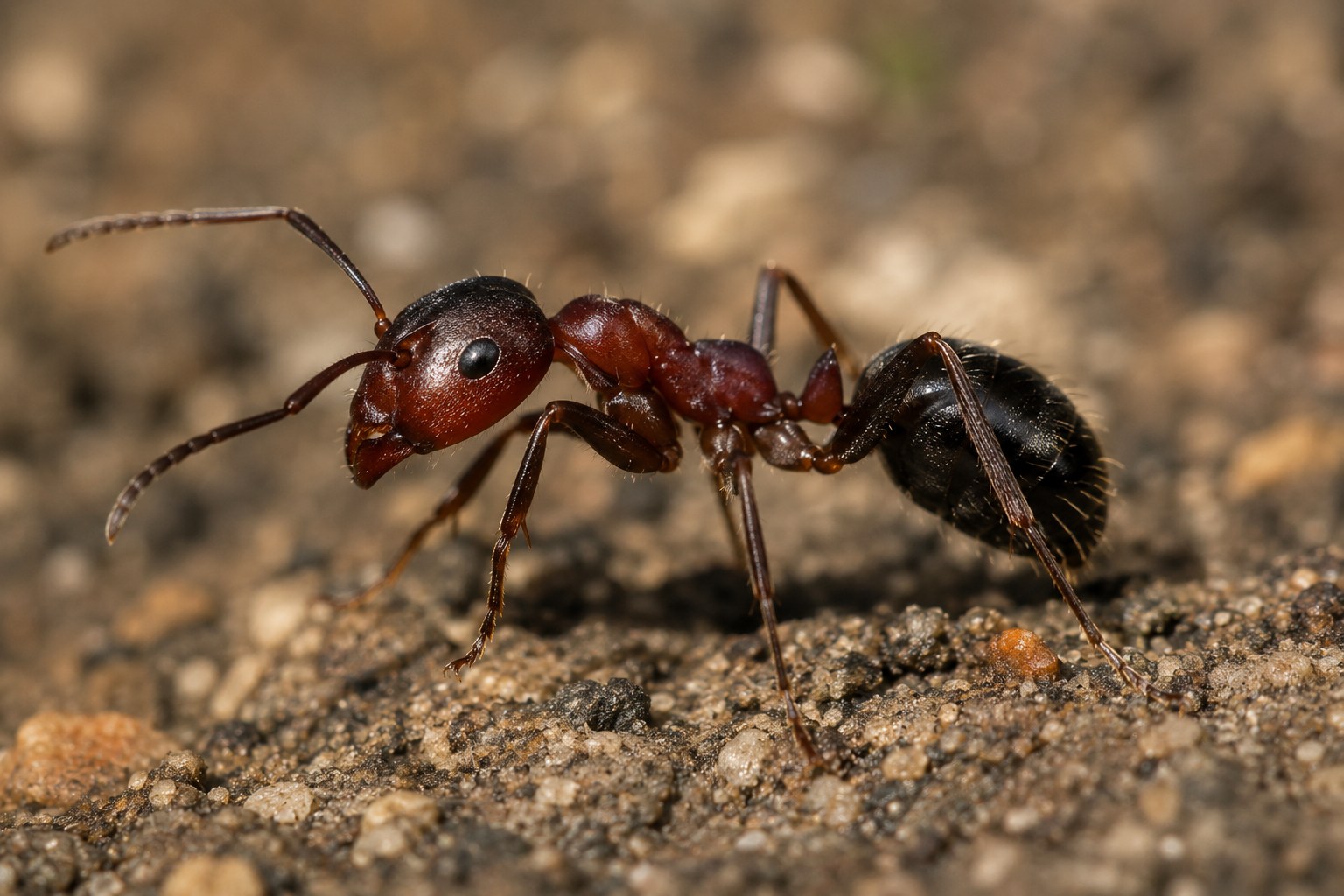
Ants are small insects easily recognized by their three distinct body segments, elbowed antennae, and narrow, pinched waist. Their colours vary from black and brown to red and yellow.
Size and Weight
Depending on the species, they range in size from just 1 millimetre to more than 25 millimetres long. An average worker ant weighs just 1–5 milligrams (0.001–0.005 grams).
Body Structure
Head
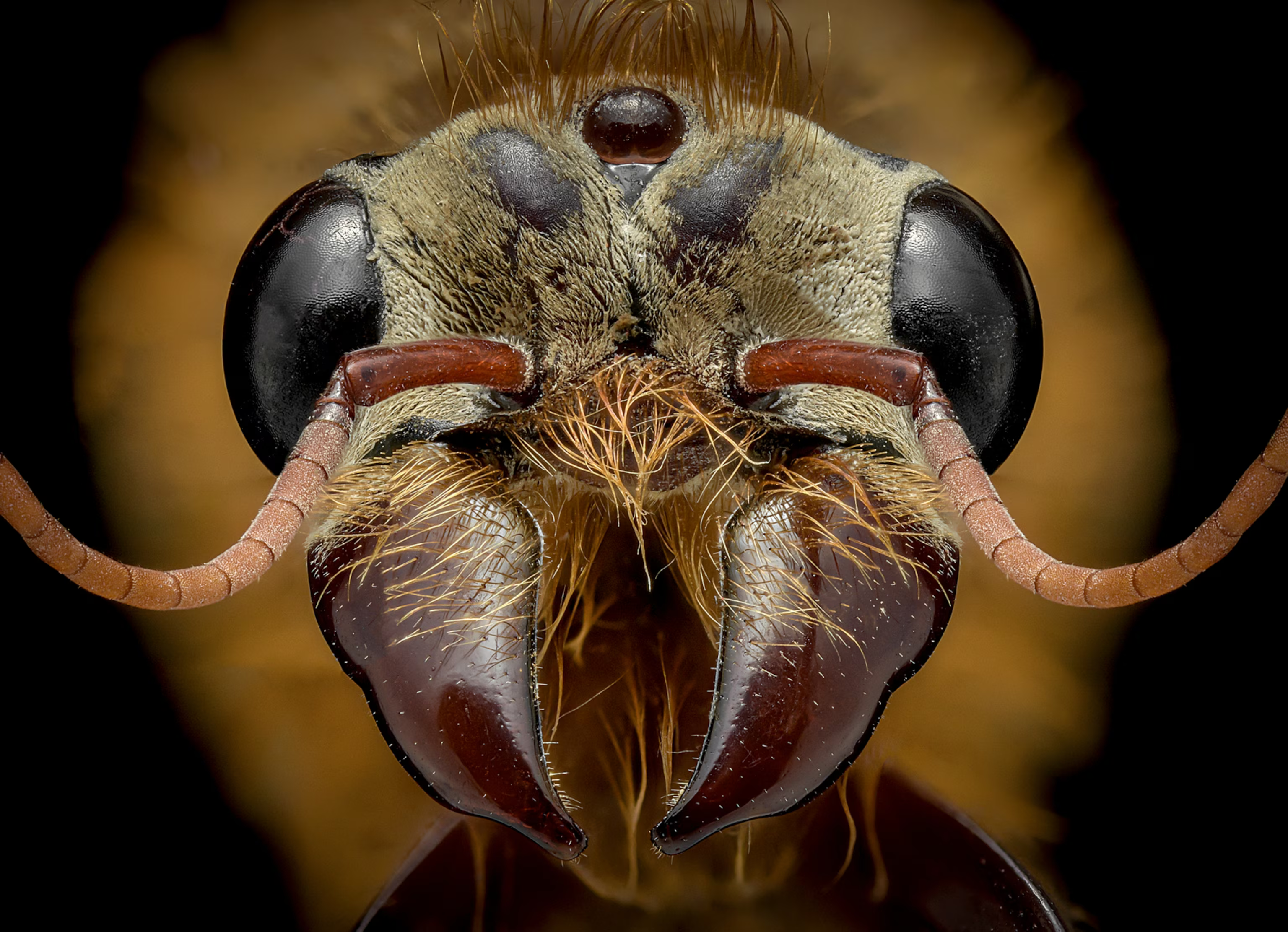
The head contains:
- Two compound eyes
- Small light-sensing eyes (ocelli) in some species
- Powerful jaws called mandibles, used for carrying food, cutting leaves, digging, and defending the colony.
Thorax (Mesosoma)
The middle section supports six jointed legs, each ending in tiny hooked claws that allow ants to climb rough surfaces with ease.
Abdomen (Gaster)
The abdomen contains the digestive and reproductive organs and is connected to the thorax by a narrow waist with one or two small nodes, giving ants their distinctive appearance.
Unique Adaptations
Ants possess some of the most impressive adaptations in the animal kingdom.
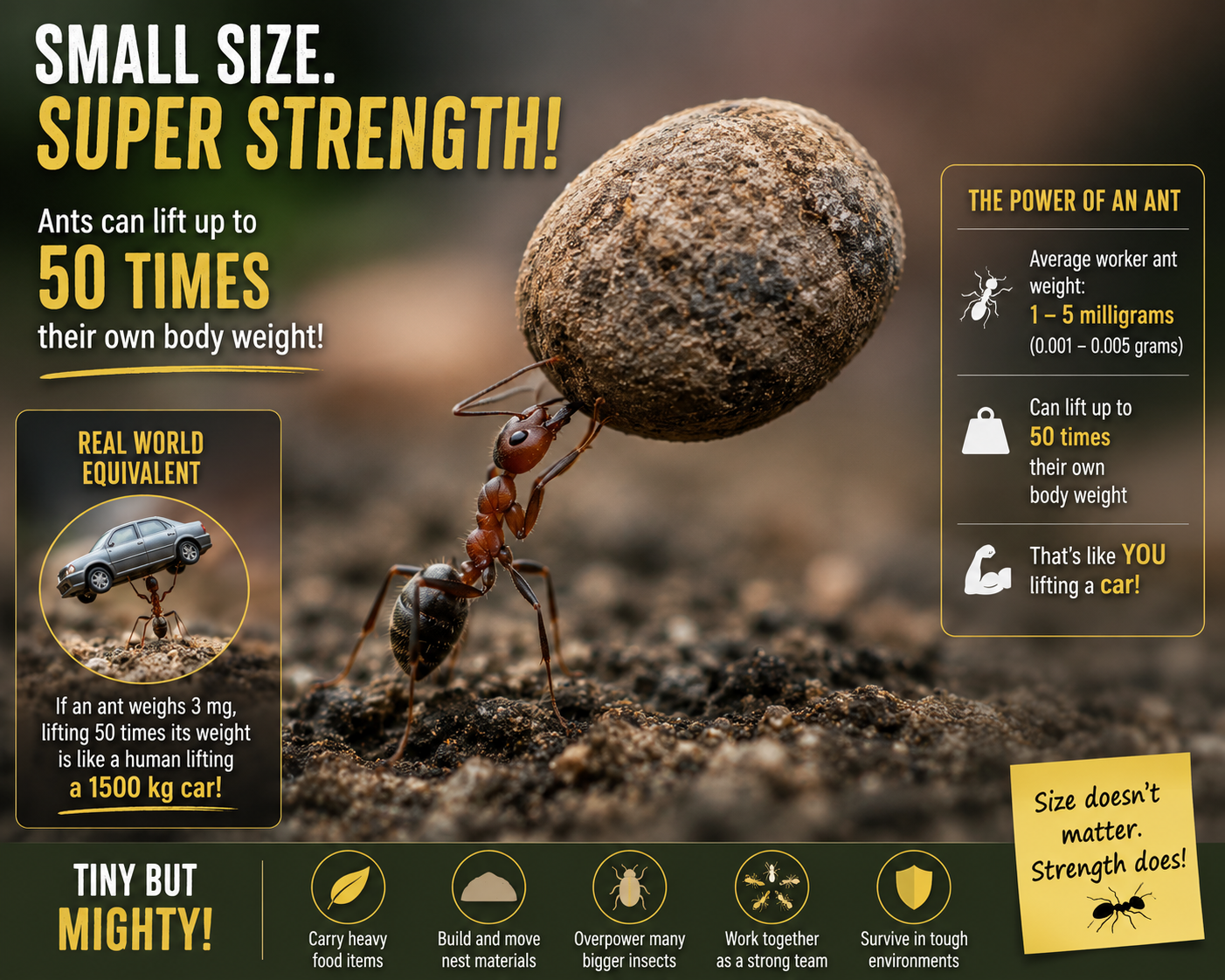
Incredible Strength
Thanks to their lightweight bodies and strong exoskeletons, many ants can lift up to 50 times their own body weight.
Elbowed antennae
Their elbowed antennae are highly sensitive and allow them to smell, touch, communicate, and navigate.
Heat Specialists
Saharan silver ants survive some of the hottest temperatures on Earth by using reflective hairs that reduce heat absorption while they forage across scorching desert sands.
Living Food Storage
Honeypot ants have special workers called repletes that store nectar inside their swollen abdomens, creating living food reserves for the colony during droughts.
Chemical Communication
Rather than speaking, ants communicate using chemicals called pheromones. These scent trails guide nestmates to food, warn of danger, and coordinate colony activities.
Farmers and Builders
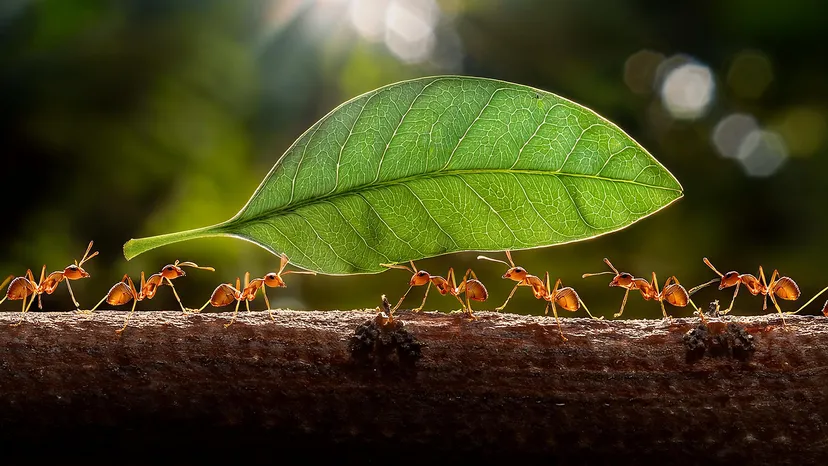
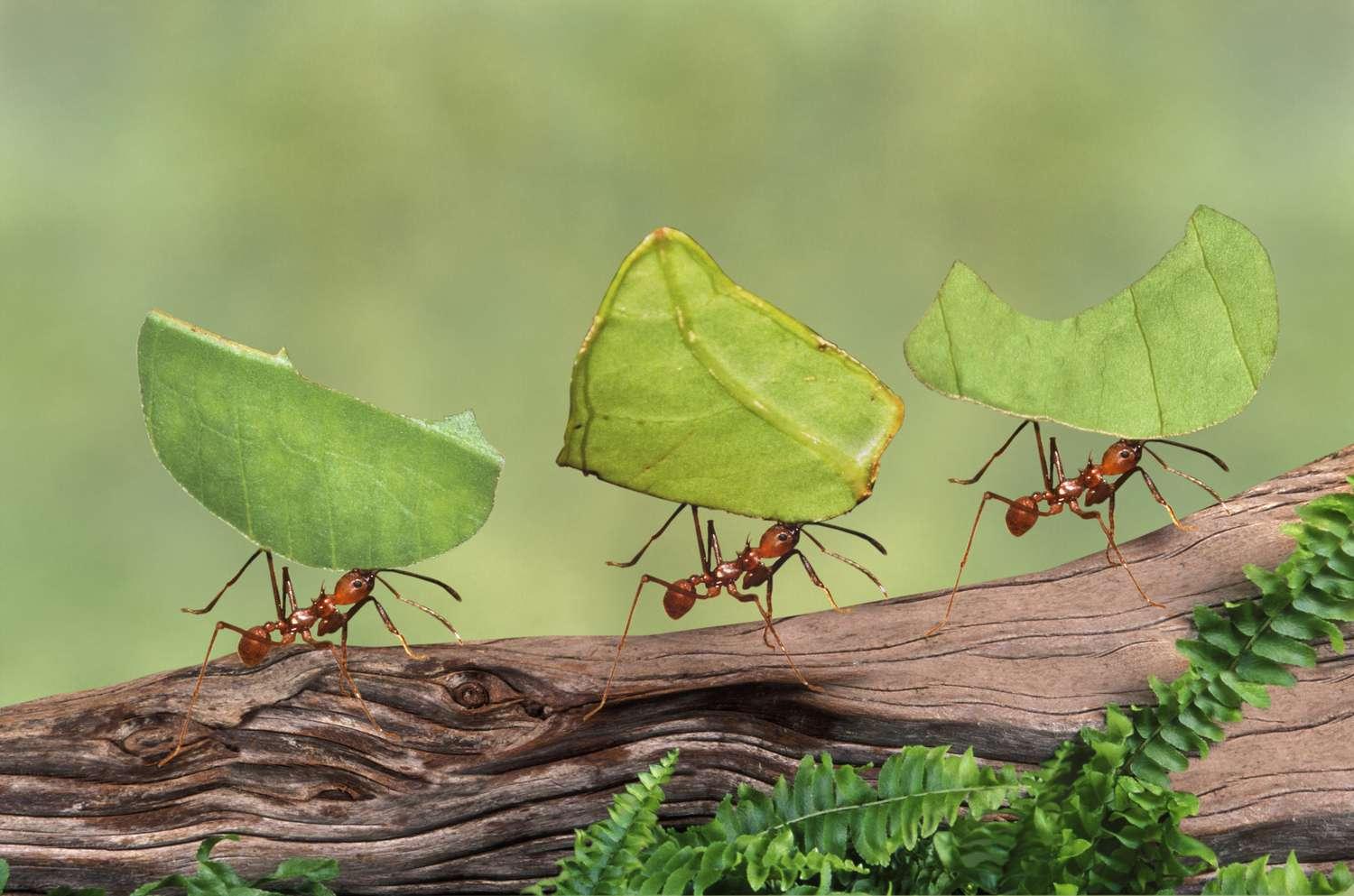
Leafcutter ants harvest leaves, not to eat directly, but to cultivate underground fungus gardens that provide food for the colony.
Weaver ants use silk produced by their larvae to stitch living leaves together into remarkable tree nests.
Distribution and Habitat
Ants occur on every continent except Antarctica and are absent only from a few extremely cold regions such as Greenland and Iceland.
They thrive in almost every land habitat, including:
- Tropical rainforests
- Grasslands
- Deserts
- Woodlands
- Mountains
- Urban environments
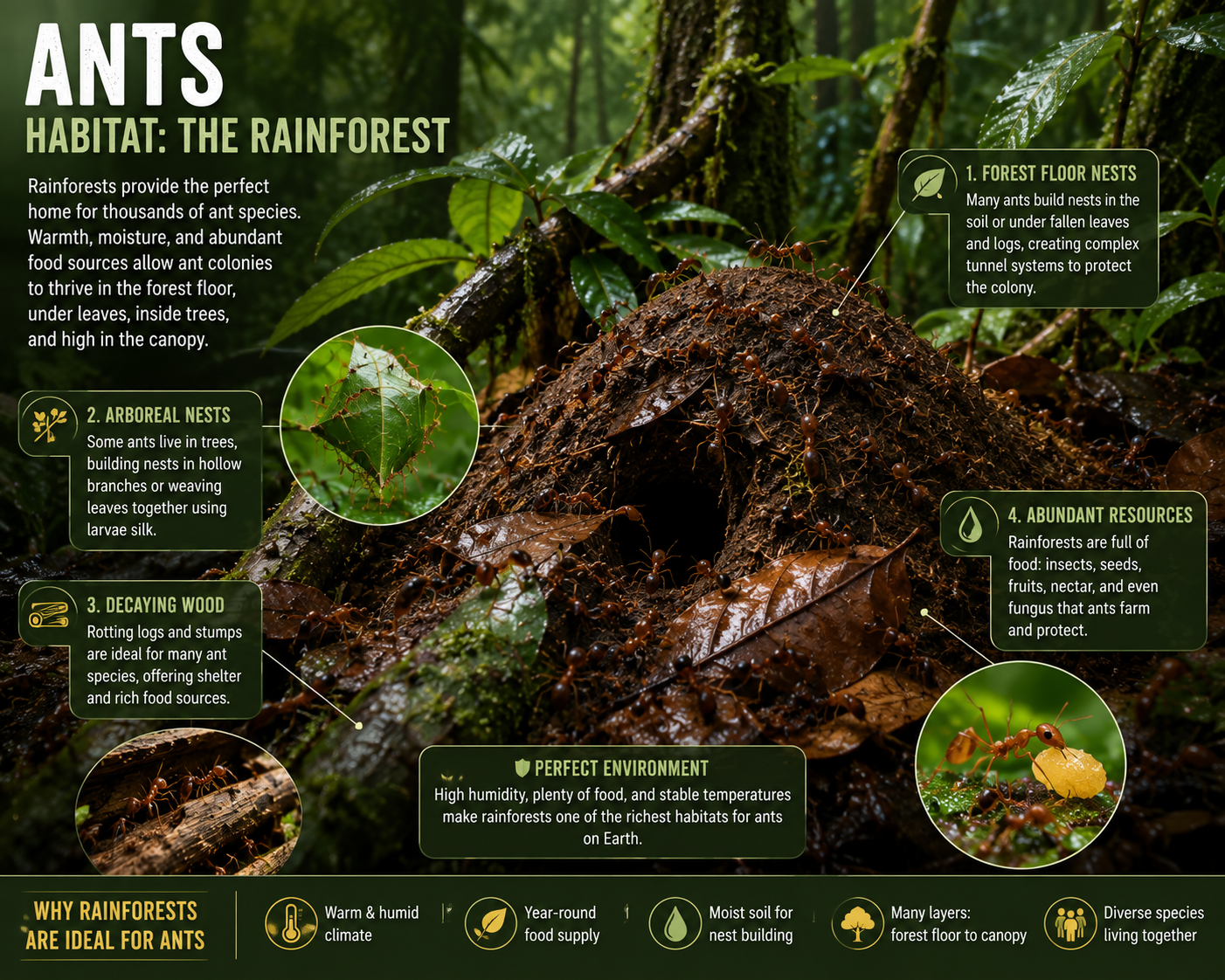
Nesting Sites
Depending on the species, ants may build homes:
- Underground in complex tunnel systems
- Inside rotting logs
- Beneath stones
- In hollow trees
- Within leaf litter
- Inside walls, pavements, and buildings
Some arboreal species spend their entire lives high in the forest canopy.
Social Structure and Behaviour
Ant colonies function like highly efficient cities, with every individual performing a specific role.
The Queen
The queen is the colony's primary egg layer and can live for many years. Some species have only one queen, while others support several queens in a single colony.
Male Ants
Male ants exist solely to mate with young queens during seasonal nuptial flights. After mating, they usually die within a short time.
Worker Ants
Workers are sterile females responsible for virtually everything else, including:
- Caring for eggs and larvae
- Building and repairing nests
- Collecting food
- Defending the colony
- Cleaning tunnels
- Feeding the queen
Larger workers often serve as soldiers, protecting the colony against predators and rival ants.
Teamwork Without a Leader
Remarkably, no single ant controls the colony. Instead, thousands of individuals coordinate their activities through chemical signals and simple interactions, creating one of nature's most efficient cooperative systems.
Diet and Feeding
Ants require a balanced diet consisting of carbohydrates, proteins, and water.
Energy Sources
Adult workers primarily consume sugary foods such as:
- Nectar
- Honeydew produced by aphids
- Sweet fruits
- Plant sap
Protein
Growing larvae and egg-laying queens require protein obtained from:
- Insects
- Spiders
- Small invertebrates
- Animal remains
Some species even hunt live prey, while others scavenge.
Fresh water is essential and is collected from dew, rainwater, or plant moisture.
Reproduction and Lifespan
Ant colonies begin with a remarkable event known as the nuptial flight.
Winged queens and males leave their nests on warm, humid days to mate in the air.
After mating:
- The male dies.
- The queen sheds her wings.
- She digs a small nest.
- She raises the colony's first workers entirely on her own.
The queen stores sperm in a special organ called the spermatheca, allowing her to fertilize eggs for the rest of her life.
Lifespan
- Queens: Several years to over 30 years in some species
- Workers: A few weeks to around one year
- Males: Only a few weeks after mating
Threats and Survival
Despite their success, ants face many dangers.
Natural Threats
- Birds
- Lizards
- Spiders
- Anteaters
- Rival ant colonies
- Flooding
- Disease-causing fungi and bacteria

Extraordinary Survival Strategies
Ants have evolved incredible ways to survive.
Social Immunity
Some sick ants isolate themselves or release chemical signals that allow healthy workers to remove them before disease spreads through the colony.
Rescue Behaviour
Certain African ant species rescue injured nestmates after battles and even clean their wounds, greatly improving survival.
Flood Survival
Fire ants can link their bodies together to create floating rafts that keep the colony alive during floods.
Rapid Communication
Chemical alarm signals can summon hundreds of workers within seconds to defend the nest or exploit newly discovered food sources.
Venomous stingers and Spraying Acid
Some species are equipped with venomous stingers, while others defend themselves by spraying formic acid.
Exoskeleton
Ants are protected by a tough chitin exoskeleton that acts like natural body armour.
Why Ants Matter
Ants are among nature's most important ecosystem engineers.
They help:
- Aerate soil
- Disperse seeds
- Recycle nutrients
- Control insect populations
- Improve soil fertility
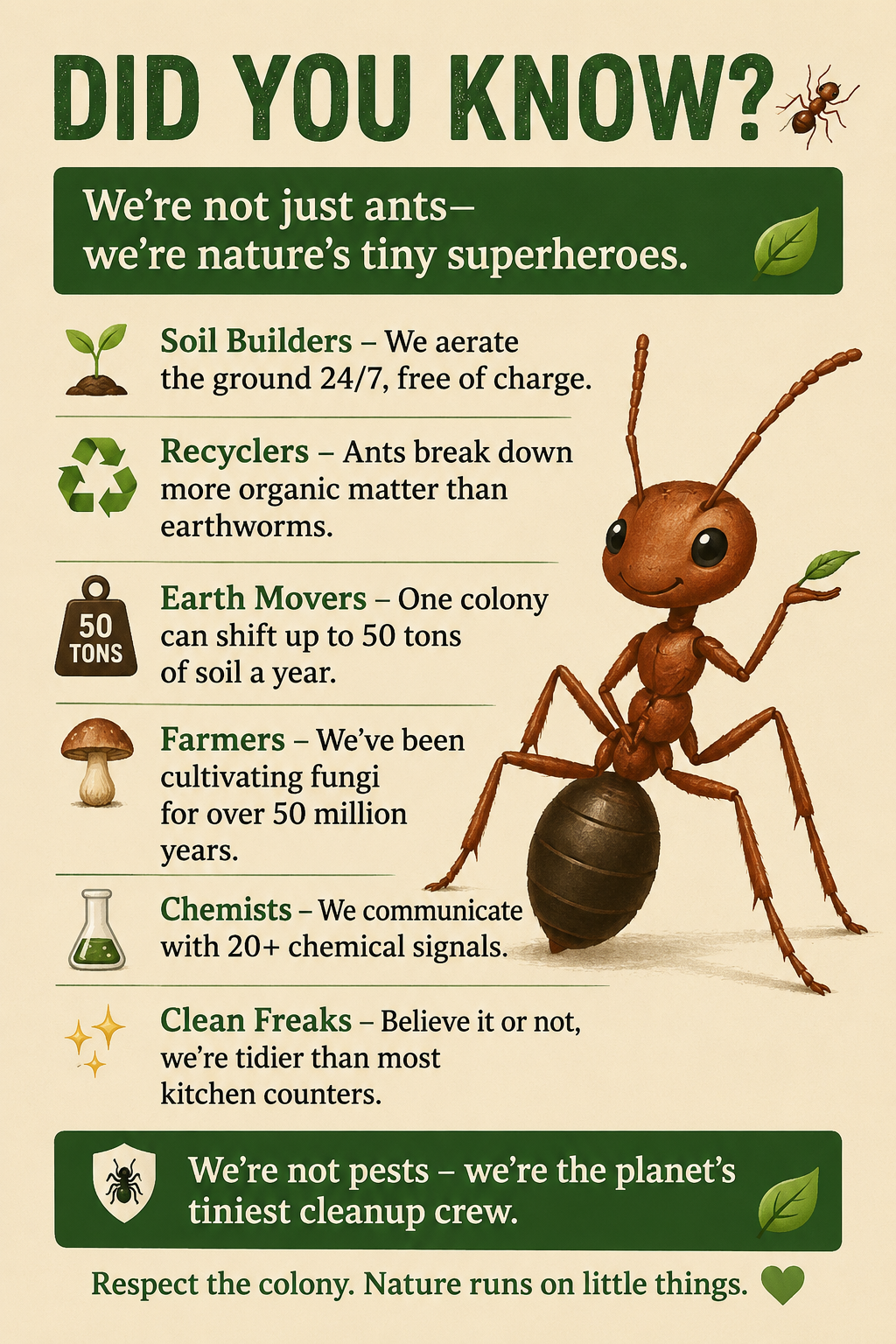
Without ants, many ecosystems would function far less efficiently.
Conclusion
Ants may be tiny, but they are among the most remarkable animals on Earth. Their extraordinary strength, complex societies, advanced communication, and impressive engineering skills have allowed them to colonize nearly every environment on the planet. Whether farming fungi, constructing elaborate underground cities, or working together to rescue injured nestmates, ants demonstrate the incredible power of cooperation. Their success reminds us that teamwork, organization, and resilience can accomplish achievements far beyond what any individual could achieve alone.


- News & Current Affairs
- Business & Economy
- Finance & Money
- Education & Learning
- Technology & Innovation
- Science & Environment
- Health & Wellness
- Food & Drink
- Home, Garden & Lifestyle
- Travel & Tourism
- Fashion & Beauty
- Art & Culture
- Entertainment & Media
- Sports & Recreation
- Personal Growth & Lifestyle
- Careers & Work
- Tutorials & How-To Guides
- Real Estate & Property
- Automotive
- Family & Relationships
- Environment & Sustainability
- Law & Legal Matters
- Gaming & Esports
- Religion & Spirituality
- Community & Local Voices
- Miscellaneous
- History