History of Locomotives in SA:
Early Days and Expansion:
The story of South African railways began in 1859 with the arrival of the country’s first steam locomotive, later known as Blackie. By 1860, eight locomotives were already operating on the Cape’s broad-gauge line between Cape Town and Wellington. That same year, on June 26, the first operational railway line in South Africa officially opened in Natal, connecting Durban and Point.
Railway expansion soon accelerated following the discovery of diamonds in Kimberley and gold in the Witwatersrand. New lines were built to link the booming mining regions with major ports, fueling trade and economic growth.
Formation and Modernization:
In 1910, the formation of the South African Railways and Harbours (SAR) unified the previously separate colonial railway systems. SAR played a major role in expanding and modernizing the network, introducing a diverse range of locomotives suited to the country’s varied terrain.
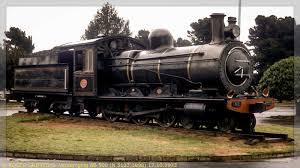
For decades, South Africa remained a stronghold for steam locomotives, which became an attraction for both rail enthusiasts and tourists.
Transition to Modern Power:
During the latter half of the 20th century, South Africa began shifting from steam to diesel and electric power. Electric trains and locomotives gradually replaced steam engines on many routes, though steam continued to operate in certain areas for some time.
By 1990, the SAR was privatized and became Spoornet, which was later restructured as Transnet Freight Rail in 2000.
Legacy:
Today, South Africa’s rich railway heritage lives on through museums and preservation societies. Historic steam locomotives can still be seen operating on heritage lines or displayed in museums such as the National Railway Museum.
Some of South Africa’s locomotive designs even went on to inspire railway systems abroad, a lasting testament to the country’s engineering and transport legacy.
History of Locomotives in SA:
Early Days and Expansion:
The story of South African railways began in 1859 with the arrival of the country’s first steam locomotive, later known as Blackie. By 1860, eight locomotives were already operating on the Cape’s broad-gauge line between Cape Town and Wellington. That same year, on June 26, the first operational railway line in South Africa officially opened in Natal, connecting Durban and Point.
Railway expansion soon accelerated following the discovery of diamonds in Kimberley and gold in the Witwatersrand. New lines were built to link the booming mining regions with major ports, fueling trade and economic growth.
Formation and Modernization:
In 1910, the formation of the South African Railways and Harbours (SAR) unified the previously separate colonial railway systems. SAR played a major role in expanding and modernizing the network, introducing a diverse range of locomotives suited to the country’s varied terrain.
For decades, South Africa remained a stronghold for steam locomotives, which became an attraction for both rail enthusiasts and tourists.
Transition to Modern Power:
During the latter half of the 20th century, South Africa began shifting from steam to diesel and electric power. Electric trains and locomotives gradually replaced steam engines on many routes, though steam continued to operate in certain areas for some time.
By 1990, the SAR was privatized and became Spoornet, which was later restructured as Transnet Freight Rail in 2000.
Legacy:
Today, South Africa’s rich railway heritage lives on through museums and preservation societies. Historic steam locomotives can still be seen operating on heritage lines or displayed in museums such as the National Railway Museum.
Some of South Africa’s locomotive designs even went on to inspire railway systems abroad, a lasting testament to the country’s engineering and transport legacy.