
• *Calling all solar providers and anyone with a heart for upliftment.*
    Reddingsdaad Kwaggaspoort is fighting an ongoing battle, and we refuse to let our golden oldies sit in the dark.
    We’re working to make our facility fully self‑sufficient, and we need your support.

    The new management are left with unpaid debt arising from previous responsibilities not being met and we need your help to help us please.

    If you can contribute equipment, expertise, or donations toward our solar installation, your help will change lives.
    *Let’s build power, dignity, and independence together.*

    *18A CERTIFICATE AVAILABLE*
    *Calling all solar providers and anyone with a heart for upliftment.* Reddingsdaad Kwaggaspoort is fighting an ongoing battle, and we refuse to let our golden oldies sit in the dark. We’re working to make our facility fully self‑sufficient, and we need your support. The new management are left with unpaid debt arising from previous responsibilities not being met and we need your help to help us please. If you can contribute equipment, expertise, or donations toward our solar installation, your help will change lives. *Let’s build power, dignity, and independence together.* *18A CERTIFICATE AVAILABLE*
    Like
    1
    0 Comments 0 Shares 7K Views 1 0 Reviews
  • AMC By Charleen Goosen New
    R2,145.00
    Available
    Country Wide
    0 Reviews
    AMC COMBINATIONS
    NOW Less 25%‼️
    082 850 4156 ☎️
    AMC COMBINATIONS NOW Less 25%‼️ 082 850 4156 ☎️
    Like
    Love
    4
    0 Comments 0 Shares 5K Views 0 Reviews
  • NIV:

    Therefore go and make disciples of all nations, baptizing them in the name of the Father and of the Son and of the Holy Spirit, and teaching them to obey everything I have commanded you. And surely I am with you always, to the very end of the age.

    Matthew 28:19-20
    NIV: Therefore go and make disciples of all nations, baptizing them in the name of the Father and of the Son and of the Holy Spirit, and teaching them to obey everything I have commanded you. And surely I am with you always, to the very end of the age. Matthew 28:19-20
    Love
    Like
    5
    0 Comments 0 Shares 16K Views 0 Reviews
  • How Did The Olympic Games Begin?


    The Olympic Games actually began in ancient Greece nearly 3,000 years ago, and they weren’t just about sport at first — they were part of a religious festival dedicated to Zeus.

    The earliest recorded Olympics took place in 776 BC at Olympia, and the entire event consisted of just one race: a short sprint called the stade. A cook named Koroibos of Elis won it, making him the first known Olympic champion.

    Over time, the Games grew massively. What started as a simple footrace expanded to include wrestling, boxing, chariot racing, discus, javelin, and long-distance running. By the 5th century BC, athletes from nearly 100 Greek cities were competing.

    The Games were so important that Greeks used the four-year interval between them — an Olympiad — as a way to track time.

    But eventually, with the rise of Rome, the Olympics began to fade. In 393 AD, Emperor Theodosius I — a Christian ruler — banned the Games altogether as part of his effort to end pagan traditions. After that, the Olympics disappeared for over 1,500 years.


    The Modern Revival

    Fast forward to the 19th century, when fascination with ancient Greek culture returned during the Renaissance and Enlightenment. There were a few small “Olympic-like” festivals in Europe, but nothing official — until a young French baron, Pierre de Coubertin, came up with a bold idea.

    In 1892, he proposed bringing the Olympics back as a global sporting event meant to promote peace and unity. Two years later, at a sports conference in Paris, his vision was approved, and the International Olympic Committee (IOC) was created.

    The first modern Olympic Games took place in Athens in 1896, a full circle moment for history. There were 280 athletes from 13 nations, competing in 43 events, mostly in track-and-field, swimming, cycling, wrestling, gymnastics, and more. All the athletes were men — and amusingly, a few were tourists who simply signed up on the spot.

    This edition of the Olympics also featured the first modern marathon, inspired by the legendary run from Marathon to Athens by a Greek messenger in 490 BC. Fittingly, a Greek athlete, Spyridon Louis, won it.


    Growth Into the Global Event We Know Today

    Pierre de Coubertin became IOC president and guided the young Games through tough early years. The breakthrough came with the 1924 Olympics in Paris, which had more than 3,000 athletes — including over 100 women — from 44 nations. That year also saw the launch of the Winter Olympics.

    Coubertin retired the following year, but his vision lived on. The Olympics eventually became the world’s biggest international sports competition.

    When the Games returned to Athens in 2004, more than 11,000 athletes from 202 countries took part. The shot put even took place at ancient Olympia, linking past and present in a powerful way.
    How Did The Olympic Games Begin? The Olympic Games actually began in ancient Greece nearly 3,000 years ago, and they weren’t just about sport at first — they were part of a religious festival dedicated to Zeus. The earliest recorded Olympics took place in 776 BC at Olympia, and the entire event consisted of just one race: a short sprint called the stade. A cook named Koroibos of Elis won it, making him the first known Olympic champion. Over time, the Games grew massively. What started as a simple footrace expanded to include wrestling, boxing, chariot racing, discus, javelin, and long-distance running. By the 5th century BC, athletes from nearly 100 Greek cities were competing. The Games were so important that Greeks used the four-year interval between them — an Olympiad — as a way to track time. But eventually, with the rise of Rome, the Olympics began to fade. In 393 AD, Emperor Theodosius I — a Christian ruler — banned the Games altogether as part of his effort to end pagan traditions. After that, the Olympics disappeared for over 1,500 years. The Modern Revival Fast forward to the 19th century, when fascination with ancient Greek culture returned during the Renaissance and Enlightenment. There were a few small “Olympic-like” festivals in Europe, but nothing official — until a young French baron, Pierre de Coubertin, came up with a bold idea. In 1892, he proposed bringing the Olympics back as a global sporting event meant to promote peace and unity. Two years later, at a sports conference in Paris, his vision was approved, and the International Olympic Committee (IOC) was created. The first modern Olympic Games took place in Athens in 1896, a full circle moment for history. There were 280 athletes from 13 nations, competing in 43 events, mostly in track-and-field, swimming, cycling, wrestling, gymnastics, and more. All the athletes were men — and amusingly, a few were tourists who simply signed up on the spot. This edition of the Olympics also featured the first modern marathon, inspired by the legendary run from Marathon to Athens by a Greek messenger in 490 BC. Fittingly, a Greek athlete, Spyridon Louis, won it. Growth Into the Global Event We Know Today Pierre de Coubertin became IOC president and guided the young Games through tough early years. The breakthrough came with the 1924 Olympics in Paris, which had more than 3,000 athletes — including over 100 women — from 44 nations. That year also saw the launch of the Winter Olympics. Coubertin retired the following year, but his vision lived on. The Olympics eventually became the world’s biggest international sports competition. When the Games returned to Athens in 2004, more than 11,000 athletes from 202 countries took part. The shot put even took place at ancient Olympia, linking past and present in a powerful way.
    Like
    Love
    8
    0 Comments 0 Shares 16K Views 0 Reviews
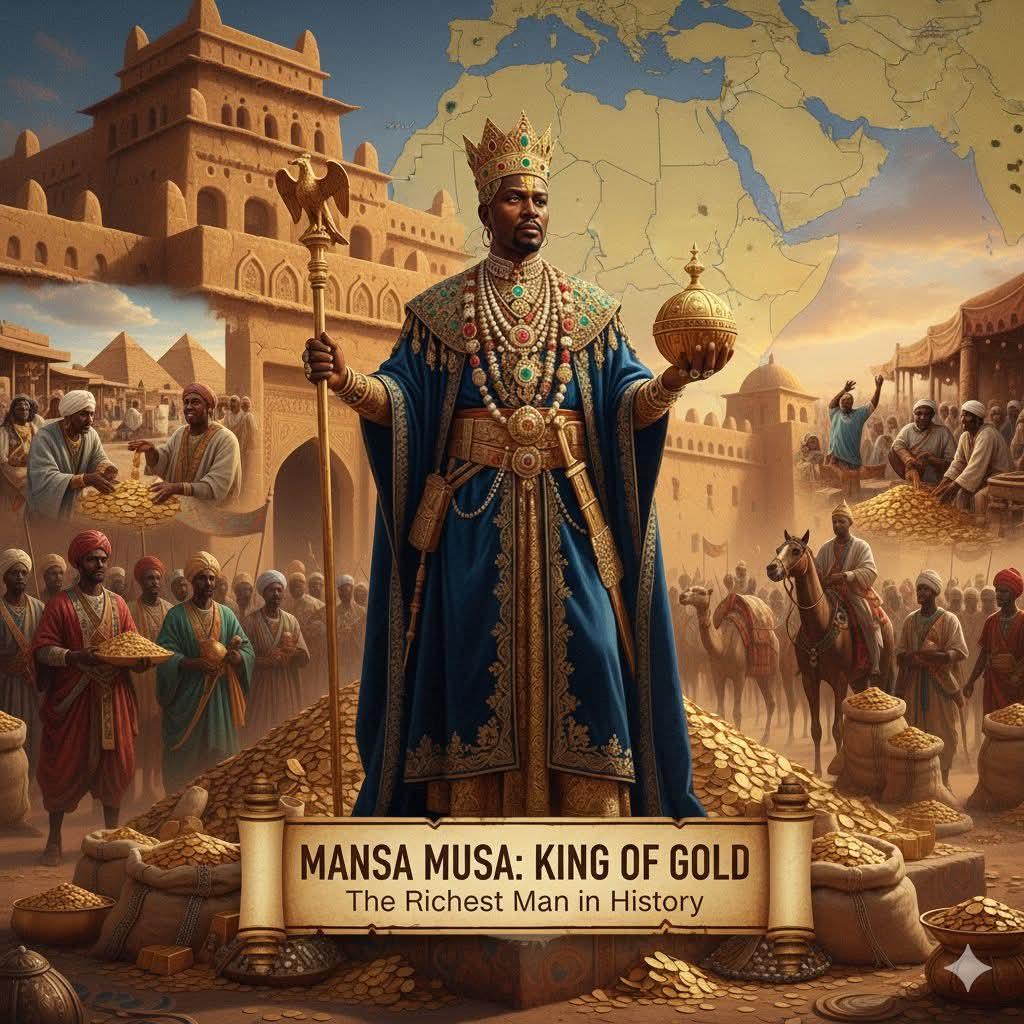
  • Mansa Musa was a wealthy West African ruler who ruled a massive portion of the continent in the 14th century. According to researchers, Musa is considered to be the wealthiest person in history. Estimated to have been born in the year 1280 or so, Musa Keita I rose to lead the Mali Empire after the disappearance of his predecessor, Abubakari Keita II, presumably at sea.

    Taking the title Mansa, which roughly translates to “King,” Musa began his 25-year rule in the year 1312. The sprawling lands that he controlled also contained portions of modern-day Gambia, Senegal, Burkina Faso, Nigeria and other nations.

    On a Pilgrimage to Mecca in 1324 AD, Mansa Musa brought so much gold with him that his visit resulted in the collapse of gold prices in Egypt (kemet) & Arabia. It took 12 years for the economies of the region to normalize.
    Mansa Musa was a wealthy West African ruler who ruled a massive portion of the continent in the 14th century. According to researchers, Musa is considered to be the wealthiest person in history. Estimated to have been born in the year 1280 or so, Musa Keita I rose to lead the Mali Empire after the disappearance of his predecessor, Abubakari Keita II, presumably at sea. Taking the title Mansa, which roughly translates to “King,” Musa began his 25-year rule in the year 1312. The sprawling lands that he controlled also contained portions of modern-day Gambia, Senegal, Burkina Faso, Nigeria and other nations. On a Pilgrimage to Mecca in 1324 AD, Mansa Musa brought so much gold with him that his visit resulted in the collapse of gold prices in Egypt (kemet) & Arabia. It took 12 years for the economies of the region to normalize.
    Like
    Love
    7
    0 Comments 0 Shares 4K Views 0 Reviews
  • Not sure what cake filling goes with the cake sponge?

    Let our Cake Away Guide help you.
    Link is in the comments.

    #cake #cakecombinations #filling #frosting #manlybaker
    Not sure what cake filling goes with the cake sponge? Let our Cake Away Guide help you. Link is in the comments. #cake #cakecombinations #filling #frosting #manlybaker
    Like
    Love
    13
    2 Comments 1 Shares 13K Views 0 Reviews
  • Early morning check in as we are picking up our clients to take them to #CapeTownInternationalAirport

    Yes, The Full Monty Travel Team is always there to make sure you get to your destinations safety.

    Thank you to each and everyone who is supporting us.

    #travel #montytravel #capetown #adventures
    Early morning check in as we are picking up our clients to take them to #CapeTownInternationalAirport Yes, The Full Monty Travel Team is always there to make sure you get to your destinations safety. Thank you to each and everyone who is supporting us. #travel #montytravel #capetown #adventures
    Like
    Love
    4
    0 Comments 0 Shares 4K Views 0 Reviews
  • THE DEAD HORSE THEORY: FACING REALITY WITH WISDOM
    THE SATIRICAL METAPHOR
    The “Dead Horse Theory” is a satirical metaphor that reveals how people, institutions, and even nations deal with obvious problems as if they were unsolvable mysteries. Instead of confronting the truth, they create elaborate justifications, endless strategies, and costly distractions—yet the core issue remains the same: the horse is dead.
    THE SIMPLE IDEA
    If you realize you’re riding a dead horse, the smartest decision you can ever make is simple: get off immediately. But in reality, many refuse to accept the obvious and end up making bizarre and wasteful choices.
    THE STRANGE BEHAVIORS PEOPLE ADOPT
    Instead of accepting the truth, people often:
    1️⃣ Buy a new saddle, hoping it makes the horse useful again.
    2️⃣ Feed the horse as if it were alive, wasting resources.
    3️⃣ Change the rider, pretending the problem is leadership.
    4️⃣ Fire the caretaker, blaming the wrong person.
    5️⃣ Hold endless meetings on how to increase the speed of the dead horse.
    6️⃣ Form committees and task forces to “analyze” the problem.
    7️⃣ Spend months studying the horse, only to conclude what was already obvious: the horse is dead.
    8️⃣ Compare their horse with other dead horses to justify failure.
    9️⃣ Request training for the horse, as if skill could bring life back.
    🔟 Allocate budgets for the training course—wasting even more.
    THE HEIGHT OF DENIAL
    In the end, denial reaches absurd levels. Instead of acknowledging reality, people redefine the meaning of “dead” just to convince themselves that the horse is still alive. This mindset blinds them from progress and traps them in cycles of illusion.
    THE LESSON FOR LIFE AND LEADERSHIP
    How many individuals, companies, and governments fall into this trap? Instead of facing the bitter truth, they live in comforting illusions. The result? Time, money, and effort are wasted on what cannot produce life.
    True wisdom lies in recognizing when something no longer works, whether it’s a failing system, a toxic relationship, a broken method, or a fruitless investment. Clinging to what is dead will only keep you stuck.
    THE PRINCIPLE OF ACCEPTANCE
    Admitting the problem is not weakness; it is the first step toward real solutions. Only when you accept reality can you redirect your energy toward fresh opportunities, new strategies, and living solutions. Refusing to let go of a dead horse only guarantees stagnation, frustration, and wasted potential.
    FINAL WORD
    The Dead Horse Theory is more than a satire—it is a mirror. It asks: What dead horses are you still riding in life? Is it a habit that no longer serves you? A career path with no future? A strategy that produces no results? A relationship that drains you?
    Wisdom calls us to stop pouring life into what is already gone. Courage calls us to dismount and move on. For only then can we channel our resources, strength, and vision toward what is truly alive and fruitful.
    Remember: If the horse is dead, no amount of feeding, training, or committees will change that. Get off, and choose life over illusion.
    THE DEAD HORSE THEORY: FACING REALITY WITH WISDOM THE SATIRICAL METAPHOR The “Dead Horse Theory” is a satirical metaphor that reveals how people, institutions, and even nations deal with obvious problems as if they were unsolvable mysteries. Instead of confronting the truth, they create elaborate justifications, endless strategies, and costly distractions—yet the core issue remains the same: the horse is dead. THE SIMPLE IDEA If you realize you’re riding a dead horse, the smartest decision you can ever make is simple: get off immediately. But in reality, many refuse to accept the obvious and end up making bizarre and wasteful choices. THE STRANGE BEHAVIORS PEOPLE ADOPT Instead of accepting the truth, people often: 1️⃣ Buy a new saddle, hoping it makes the horse useful again. 2️⃣ Feed the horse as if it were alive, wasting resources. 3️⃣ Change the rider, pretending the problem is leadership. 4️⃣ Fire the caretaker, blaming the wrong person. 5️⃣ Hold endless meetings on how to increase the speed of the dead horse. 6️⃣ Form committees and task forces to “analyze” the problem. 7️⃣ Spend months studying the horse, only to conclude what was already obvious: the horse is dead. 8️⃣ Compare their horse with other dead horses to justify failure. 9️⃣ Request training for the horse, as if skill could bring life back. 🔟 Allocate budgets for the training course—wasting even more. THE HEIGHT OF DENIAL In the end, denial reaches absurd levels. Instead of acknowledging reality, people redefine the meaning of “dead” just to convince themselves that the horse is still alive. This mindset blinds them from progress and traps them in cycles of illusion. THE LESSON FOR LIFE AND LEADERSHIP How many individuals, companies, and governments fall into this trap? Instead of facing the bitter truth, they live in comforting illusions. The result? Time, money, and effort are wasted on what cannot produce life. True wisdom lies in recognizing when something no longer works, whether it’s a failing system, a toxic relationship, a broken method, or a fruitless investment. Clinging to what is dead will only keep you stuck. THE PRINCIPLE OF ACCEPTANCE Admitting the problem is not weakness; it is the first step toward real solutions. Only when you accept reality can you redirect your energy toward fresh opportunities, new strategies, and living solutions. Refusing to let go of a dead horse only guarantees stagnation, frustration, and wasted potential. FINAL WORD The Dead Horse Theory is more than a satire—it is a mirror. It asks: What dead horses are you still riding in life? Is it a habit that no longer serves you? A career path with no future? A strategy that produces no results? A relationship that drains you? Wisdom calls us to stop pouring life into what is already gone. Courage calls us to dismount and move on. For only then can we channel our resources, strength, and vision toward what is truly alive and fruitful. Remember: If the horse is dead, no amount of feeding, training, or committees will change that. Get off, and choose life over illusion.
    Like
    Love
    6
    0 Comments 0 Shares 4K Views 0 Reviews
  • Nestled in the heart of Clanwilliam - our lovely selfcatering units!

    Clanwilliam Accommodation has a wide variety of selfcatering units available. From small 1 bedroom units sleeping 2 people all the way to our big units sleeping up to 7 people in each unit!

    Our groundfloor units also offer lovely outside braai areas.

    This accommodation also includes:

    -Unlimited fast Wi-Fi
    -Secure inside and off street parking under camera surveillance
    - DSTV
    - Kitchen facilities

    AND SO MUCH MORE!

    Book your stay today! 071 383 1388
    #Clanwilliam #clanwilliamaccommodation #bookyourstay #traveltheworld #beautifuldestinations
    Nestled in the heart of Clanwilliam - our lovely selfcatering units! Clanwilliam Accommodation has a wide variety of selfcatering units available. From small 1 bedroom units sleeping 2 people all the way to our big units sleeping up to 7 people in each unit! Our groundfloor units also offer lovely outside braai areas. This accommodation also includes: -Unlimited fast Wi-Fi -Secure inside and off street parking under camera surveillance - DSTV - Kitchen facilities AND SO MUCH MORE! Book your stay today! 071 383 1388 #Clanwilliam #clanwilliamaccommodation #bookyourstay #traveltheworld #beautifuldestinations
    Like
    Love
    21
    0 Comments 0 Shares 5K Views 0 Reviews
MySA - South Africa https://mysa.social