
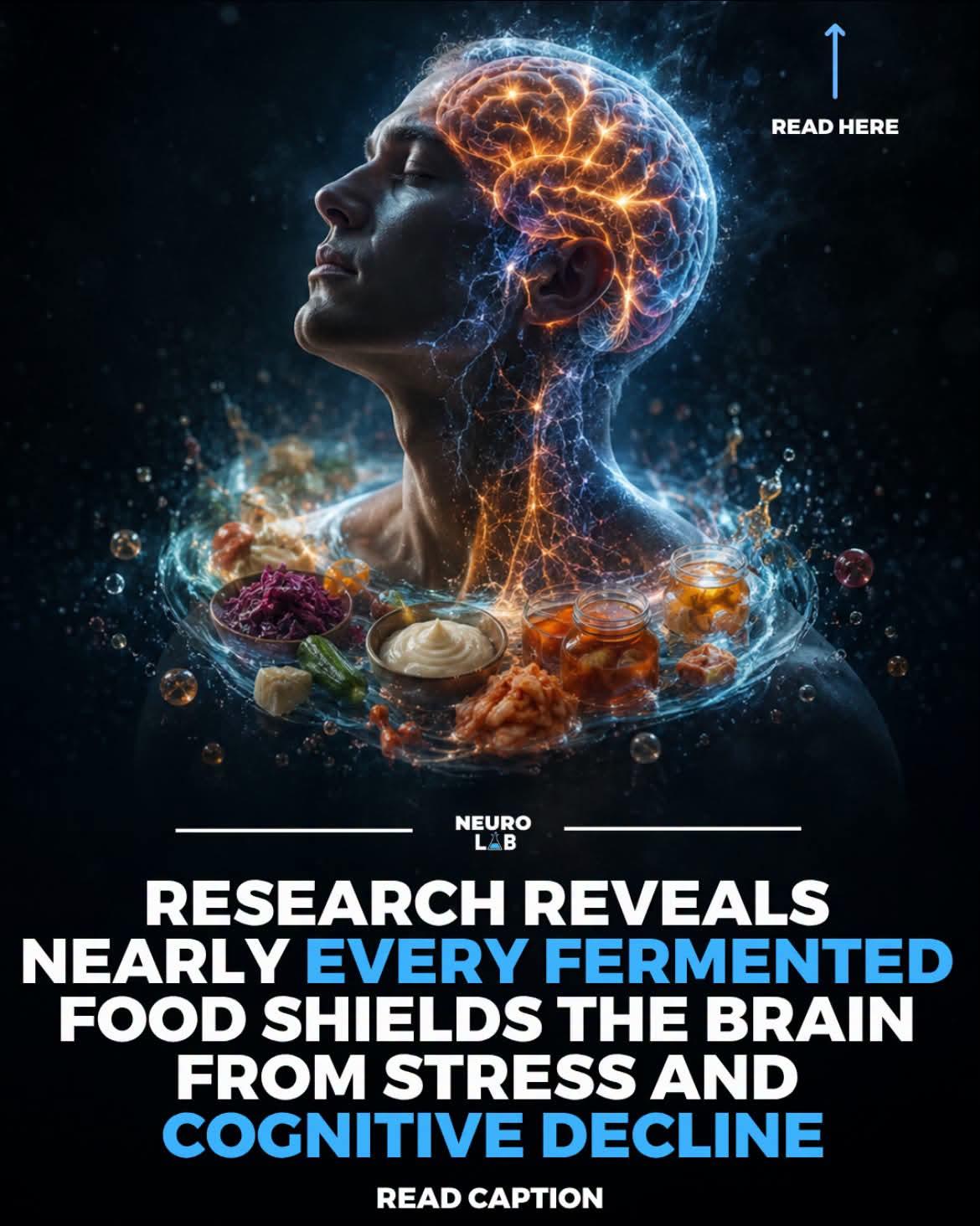
• Research shows that nearly every fermented food studied, from dairy and soy to rice, garlic, ginseng, and even kimchi, offers measurable protection for the brain. Across 45 studies, fermented foods consistently reduced stress hormones, improved memory and learning, and shielded neurons from the processes that lead to cognitive decline. These benefits weren’t tied to any single culture or food category; they appeared repeatedly across all types, highlighting fermentation itself as the key factor.


    One of the most surprising discoveries is that fermentation can completely flip the impact a food has on the brain. In one study, high tofu intake was associated with poorer memory, while tempeh, the fermented version of soy, was linked to better memory in older adults. This striking contrast shows what fermentation actually does: it creates bioactive compounds such as GABA, antioxidant peptides, and anti-inflammatory molecules that directly support neuroplasticity and help protect against oxidative stress and amyloid buildup associated with Alzheimer’s.


    Fermentation turns everyday foods into powerful protectors of the brain. By lowering cortisol and preserving neurons from degeneration, these traditional foods function as natural shields for long-term cognitive health.


    What makes this especially interesting is the connection between fermented foods, the gut, and the brain. Fermentation can change the chemical and microbial profile of a food, producing metabolites and other compounds that may influence the gut-brain axis. Researchers are increasingly interested in how this two-way communication system between the digestive system and brain may affect stress responses, inflammation, mood, and cognitive function.


    And you don’t necessarily need to completely change your diet to start eating more fermented foods.


    Yogurt can be added to breakfast. Kefir can be used in smoothies. Kimchi or sauerkraut can be served alongside a meal. Tempeh can replace other protein sources in certain dishes. The point isn’t that one fermented food is a magic solution. It’s that regularly including a variety of fermented foods may be one simple way to add potentially beneficial compounds to an already balanced diet.


    There’s also an important distinction people often miss: not every fermented product contains live microorganisms by the time you eat it. Processing methods such as heating or pasteurization can reduce or eliminate live cultures. But that doesn’t necessarily make the food nutritionally worthless, because fermentation can also create compounds and alter nutrients before those processing steps occur.


    And none of this means fermented foods can prevent or treat Alzheimer’s disease on their own. Brain health is influenced by many factors, including overall diet, physical activity, sleep, cardiovascular health, genetics, and age. The research is compelling because fermented foods may represent another piece of that much larger puzzle.


    For something humans have been doing to food for thousands of years, fermentation is turning out to be remarkably interesting from a modern neuroscience perspective.


    Here’s the question: What fermented food do you eat most often?


    Yogurt? Kimchi? Kefir? Tempeh? Sauerkraut? Something else?


    Drop yours in the comments, I’m curious which one is most common.


    And save this post for the next time you’re thinking about what to eat for long-term brain health.


    Then send this to the person you know who eats yogurt, kimchi, kefir, or sauerkraut all the time. They might have another reason to keep eating it.


    One final question: If you could only keep ONE fermented food in your diet for the rest of your life, which one are you choosing?
    Research shows that nearly every fermented food studied, from dairy and soy to rice, garlic, ginseng, and even kimchi, offers measurable protection for the brain. Across 45 studies, fermented foods consistently reduced stress hormones, improved memory and learning, and shielded neurons from the processes that lead to cognitive decline. These benefits weren’t tied to any single culture or food category; they appeared repeatedly across all types, highlighting fermentation itself as the key factor. One of the most surprising discoveries is that fermentation can completely flip the impact a food has on the brain. In one study, high tofu intake was associated with poorer memory, while tempeh, the fermented version of soy, was linked to better memory in older adults. This striking contrast shows what fermentation actually does: it creates bioactive compounds such as GABA, antioxidant peptides, and anti-inflammatory molecules that directly support neuroplasticity and help protect against oxidative stress and amyloid buildup associated with Alzheimer’s. Fermentation turns everyday foods into powerful protectors of the brain. By lowering cortisol and preserving neurons from degeneration, these traditional foods function as natural shields for long-term cognitive health. What makes this especially interesting is the connection between fermented foods, the gut, and the brain. Fermentation can change the chemical and microbial profile of a food, producing metabolites and other compounds that may influence the gut-brain axis. Researchers are increasingly interested in how this two-way communication system between the digestive system and brain may affect stress responses, inflammation, mood, and cognitive function. And you don’t necessarily need to completely change your diet to start eating more fermented foods. Yogurt can be added to breakfast. Kefir can be used in smoothies. Kimchi or sauerkraut can be served alongside a meal. Tempeh can replace other protein sources in certain dishes. The point isn’t that one fermented food is a magic solution. It’s that regularly including a variety of fermented foods may be one simple way to add potentially beneficial compounds to an already balanced diet. There’s also an important distinction people often miss: not every fermented product contains live microorganisms by the time you eat it. Processing methods such as heating or pasteurization can reduce or eliminate live cultures. But that doesn’t necessarily make the food nutritionally worthless, because fermentation can also create compounds and alter nutrients before those processing steps occur. And none of this means fermented foods can prevent or treat Alzheimer’s disease on their own. Brain health is influenced by many factors, including overall diet, physical activity, sleep, cardiovascular health, genetics, and age. The research is compelling because fermented foods may represent another piece of that much larger puzzle. For something humans have been doing to food for thousands of years, fermentation is turning out to be remarkably interesting from a modern neuroscience perspective. Here’s the question: What fermented food do you eat most often? Yogurt? Kimchi? Kefir? Tempeh? Sauerkraut? Something else? Drop yours in the comments, I’m curious which one is most common. And save this post for the next time you’re thinking about what to eat for long-term brain health. Then send this to the person you know who eats yogurt, kimchi, kefir, or sauerkraut all the time. They might have another reason to keep eating it. One final question: If you could only keep ONE fermented food in your diet for the rest of your life, which one are you choosing?
    Love
    Like
    6
    0 Comments 0 Shares 10K Views 0 Reviews
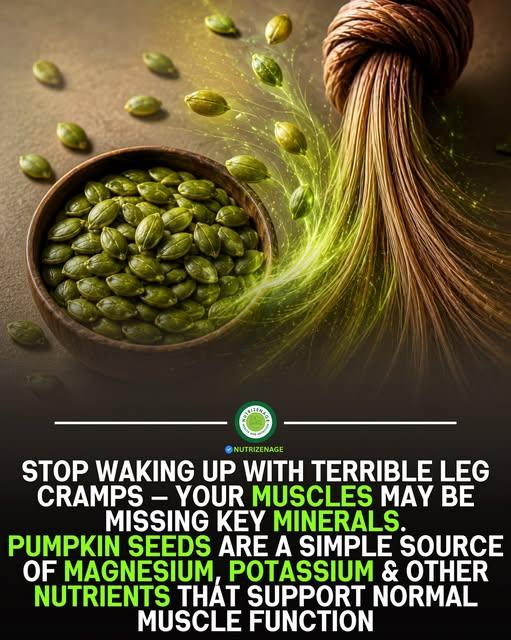
  • Waking up with a painful leg cramp can ruin your night.
    Muscle cramps can have several causes, including dehydration, muscle fatigue, and electrolyte or mineral imbalances. Magnesium and potassium are important nutrients involved in normal muscle and nerve function.
    Pumpkin seeds are an easy food to add to your diet and provide magnesium along with other nutrients that support overall health. 🌱
    Try adding a small handful to oatmeal, yogurt, salads, smoothies, or snacks as part of a balanced diet.
    And remember: if cramps are frequent, severe, or keep happening despite good hydration and nutrition, it’s worth discussing them with a healthcare professional.
    Your muscles need more than exercise—they need the right nutrients, too.
    Waking up with a painful leg cramp can ruin your night. Muscle cramps can have several causes, including dehydration, muscle fatigue, and electrolyte or mineral imbalances. Magnesium and potassium are important nutrients involved in normal muscle and nerve function. Pumpkin seeds are an easy food to add to your diet and provide magnesium along with other nutrients that support overall health. 🌱 Try adding a small handful to oatmeal, yogurt, salads, smoothies, or snacks as part of a balanced diet. And remember: if cramps are frequent, severe, or keep happening despite good hydration and nutrition, it’s worth discussing them with a healthcare professional. Your muscles need more than exercise—they need the right nutrients, too.
    Like
    Love
    3
    0 Comments 0 Shares 3K Views 0 Reviews
  • Boat Pose for Core Strength


    Sit on the floor with your knees bent and feet flat. Lean your upper body back slightly, lift your feet, and slowly straighten your legs as much as you comfortably can. Extend your arms forward and keep your chest lifted. Hold for 20–30 seconds, rest, then repeat 2–3 times. Practice 3–4 times a week.


    Boat Pose strongly activates the trunk muscles, including the abdominal muscles, making it a challenging core exercise. It can strengthen and tighten the core, but it does not directly burn belly fat or make your stomach flat in 45 seconds.


    Tip: Keep your back as straight as possible and avoid rounding your lower back. If straight legs are too difficult, keep your knees bent.
    Boat Pose for Core Strength Sit on the floor with your knees bent and feet flat. Lean your upper body back slightly, lift your feet, and slowly straighten your legs as much as you comfortably can. Extend your arms forward and keep your chest lifted. Hold for 20–30 seconds, rest, then repeat 2–3 times. Practice 3–4 times a week. Boat Pose strongly activates the trunk muscles, including the abdominal muscles, making it a challenging core exercise. It can strengthen and tighten the core, but it does not directly burn belly fat or make your stomach flat in 45 seconds. Tip: Keep your back as straight as possible and avoid rounding your lower back. If straight legs are too difficult, keep your knees bent.
    Like
    Love
    3
    0 Comments 0 Shares 3K Views 0 Reviews
  • There’s a real phenomenon called anabolic resistance: as you age, your muscles respond less efficiently to protein. The same meal that built muscle at 25 does less at 55.


    The fix isn’t to give up — it’s to eat *more* protein and distribute it better.


    What actually works:
    🥩 Aim for roughly 0.7-1g of protein per pound of bodyweight (higher end if active or older)
    🥩 Spread it across meals — 30-40g per meal beats loading it all at dinner, because there’s a per-meal ceiling on how much your body uses for muscle
    🥩 Include a strong protein source at breakfast, where most men fall short
    🥩 Pair it with resistance training — protein without the stimulus does far less


    Best sources: eggs, meat, fish, dairy, Greek yogurt, cottage cheese, and legumes.


    Why it matters so much after 40:
    💪 Muscle loss accelerates with age, and lost muscle drives weakness, poor blood sugar, and loss of independence
    💪 More muscle means a bigger reserve to draw on during illness
    💪 It’s your largest glucose disposal system — protecting against diabetes


    Under-eating protein after 40 quietly accelerates decline. More protein, spread out, with strength training — that’s the formula for aging strong.
    There’s a real phenomenon called anabolic resistance: as you age, your muscles respond less efficiently to protein. The same meal that built muscle at 25 does less at 55. The fix isn’t to give up — it’s to eat *more* protein and distribute it better. What actually works: 🥩 Aim for roughly 0.7-1g of protein per pound of bodyweight (higher end if active or older) 🥩 Spread it across meals — 30-40g per meal beats loading it all at dinner, because there’s a per-meal ceiling on how much your body uses for muscle 🥩 Include a strong protein source at breakfast, where most men fall short 🥩 Pair it with resistance training — protein without the stimulus does far less Best sources: eggs, meat, fish, dairy, Greek yogurt, cottage cheese, and legumes. Why it matters so much after 40: 💪 Muscle loss accelerates with age, and lost muscle drives weakness, poor blood sugar, and loss of independence 💪 More muscle means a bigger reserve to draw on during illness 💪 It’s your largest glucose disposal system — protecting against diabetes Under-eating protein after 40 quietly accelerates decline. More protein, spread out, with strength training — that’s the formula for aging strong.
    Like
    1
    0 Comments 0 Shares 4K Views 0 Reviews
  • Ford has reportedly brought back more than 350 experienced engineers after AI-assisted quality control systems struggled to consistently detect manufacturing defects and production inconsistencies on assembly lines.


    While artificial intelligence remains valuable for automating repetitive inspections and analyzing massive amounts of production data, Ford concluded that experienced human engineers still outperform AI in identifying subtle fit, finish, and reliability issues that directly affect vehicle quality. The move highlights the continuing importance of combining AI with human expertise rather than replacing skilled workers entirely.


    Source: Industry Reports, 2026


    #Ford #ArtificialIntelligence #Manufacturing #Engineering
    Ford has reportedly brought back more than 350 experienced engineers after AI-assisted quality control systems struggled to consistently detect manufacturing defects and production inconsistencies on assembly lines. While artificial intelligence remains valuable for automating repetitive inspections and analyzing massive amounts of production data, Ford concluded that experienced human engineers still outperform AI in identifying subtle fit, finish, and reliability issues that directly affect vehicle quality. The move highlights the continuing importance of combining AI with human expertise rather than replacing skilled workers entirely. Source: Industry Reports, 2026 #Ford #ArtificialIntelligence #Manufacturing #Engineering
    Love
    1
    0 Comments 0 Shares 2K Views 0 Reviews
  • The World Bank Group has advanced a new $1.5 billion (nearly R25 billion) Development Policy Loan to South Africa to support economic reforms that are expected to create almost 600,000 jobs by 2032.


    This is the fourth Development Policy Loan South Africa has secured from the global financial institution since 2022.


    It is the first that supports reforms in the water and sanitation sector. It also adds further support for electricity and freight transport reforms.


    "This programme reflects our government's determination to remove the infrastructure constraints that have held back growth and job creation for too long," said Finance Minister Enoch Godongwana in a statement.


    "Working with the World Bank Group, we are deepening reforms already delivering results in energy and transport, while for the first time tackling the governance and investment gaps in our water sector that affect millions of households, particularly the poorest."


    Since 2020, the government has implemented a series of economic reforms dubbed Operation Vulindlela.


    According to the World Bank, results include the virtual end of load shedding, a sixfold increase in renewable energy investments and a 50% rise in rail and port freight volumes since 2023.


    The loan has a 15-year maturity, a three-year grace period and an interest rate of the six-month Secured Overnight Financing Rate (SOFR) plus 1.35%, National Treasury said.


    It added that the terms are concessional, enabling the government to stabilise debt-servicing costs associated with expensive market borrowing.
    The World Bank Group has advanced a new $1.5 billion (nearly R25 billion) Development Policy Loan to South Africa to support economic reforms that are expected to create almost 600,000 jobs by 2032. This is the fourth Development Policy Loan South Africa has secured from the global financial institution since 2022. It is the first that supports reforms in the water and sanitation sector. It also adds further support for electricity and freight transport reforms. "This programme reflects our government's determination to remove the infrastructure constraints that have held back growth and job creation for too long," said Finance Minister Enoch Godongwana in a statement. "Working with the World Bank Group, we are deepening reforms already delivering results in energy and transport, while for the first time tackling the governance and investment gaps in our water sector that affect millions of households, particularly the poorest." Since 2020, the government has implemented a series of economic reforms dubbed Operation Vulindlela. According to the World Bank, results include the virtual end of load shedding, a sixfold increase in renewable energy investments and a 50% rise in rail and port freight volumes since 2023. The loan has a 15-year maturity, a three-year grace period and an interest rate of the six-month Secured Overnight Financing Rate (SOFR) plus 1.35%, National Treasury said. It added that the terms are concessional, enabling the government to stabilise debt-servicing costs associated with expensive market borrowing.
    Like
    4
    0 Comments 0 Shares 8K Views 0 Reviews
  • JD's Vellies New
    R870.00
    Available
    Countrywide
    0 Reviews
    Order your HANDMADE GENUINE LEATHER LOW CUT VELLIES today! (50) - Choose your own color to add in
    R870 courier included
    Ladies Sizes 1-10
    Men Sizes 1-10 (R100 extra 11-15)
    Children 3-12 Ask for quote
    Youth 13 Ask for quote
    Different colours available where applicable (May vary slightly from chart)

    Delivery via Courier Guy Kiosk 7-14 Business Days
    📲Wapp Juanita: https://wa.me/27824461244

    Besoek gerus my yagashoppé @ https://www.yaga.co.za/juanitad-1

    Of JD’s Vellies @ https://mysa.social/pages/JDsVellies
    Order your HANDMADE GENUINE LEATHER LOW CUT VELLIES today! (50) - Choose your own color to add in R870 courier included Ladies Sizes 1-10 Men Sizes 1-10 (R100 extra 11-15) Children 3-12 Ask for quote Youth 13 Ask for quote Different colours available where applicable (May vary slightly from chart) Delivery via Courier Guy Kiosk 7-14 Business Days 📲Wapp Juanita: https://wa.me/27824461244 Besoek gerus my yagashoppé @ https://www.yaga.co.za/juanitad-1 Of JD’s Vellies @ https://mysa.social/pages/JDsVellies
    Like
    Love
    3
    0 Comments 0 Shares 6K Views 0 Reviews
  • JD's Vellies New
    R950.00
    Available
    Countrywide
    0 Reviews
    Order your HANDMADE GENUINE LEATHER KEDU BOOT today! (49)
    R950 courier included
    Ladies Sizes 1-10
    Men Sizes 1-10 (R100 extra 11-15)
    Children 3-12 Ask for quote
    Youth 13 Ask for quote
    Different colours available where applicable (May vary slightly from chart)

    Delivery via Courier Guy Kiosk 7-14 Business Days
    📲Wapp Juanita: https://wa.me/27824461244

    Besoek gerus my yagashoppé @ https://www.yaga.co.za/juanitad-1

    Of JD’s Vellies @ https://mysa.social/pages/JDsVellies
    Order your HANDMADE GENUINE LEATHER KEDU BOOT today! (49) R950 courier included Ladies Sizes 1-10 Men Sizes 1-10 (R100 extra 11-15) Children 3-12 Ask for quote Youth 13 Ask for quote Different colours available where applicable (May vary slightly from chart) Delivery via Courier Guy Kiosk 7-14 Business Days 📲Wapp Juanita: https://wa.me/27824461244 Besoek gerus my yagashoppé @ https://www.yaga.co.za/juanitad-1 Of JD’s Vellies @ https://mysa.social/pages/JDsVellies
    Like
    3
    0 Comments 0 Shares 5K Views 0 Reviews
  • JD's Vellies New
    R980.00
    Available
    Countrywide
    0 Reviews
    Order your HANDMADE GENUINE LEATHER BUCKLE BOOT today! (48)
    R980 courier included
    Ladies Sizes 1-10
    Men Sizes 1-10 (R100 extra 11-15)
    Children 3-12 Ask for quote
    Youth 13 Ask for quote
    Different colours available where applicable (May vary slightly from chart)

    Delivery via Courier Guy Kiosk 7-14 Business Days
    📲Wapp Juanita: https://wa.me/27824461244

    Besoek gerus my yagashoppé @ https://www.yaga.co.za/juanitad-1

    Of JD’s Vellies @ https://mysa.social/pages/JDsVellies
    Order your HANDMADE GENUINE LEATHER BUCKLE BOOT today! (48) R980 courier included Ladies Sizes 1-10 Men Sizes 1-10 (R100 extra 11-15) Children 3-12 Ask for quote Youth 13 Ask for quote Different colours available where applicable (May vary slightly from chart) Delivery via Courier Guy Kiosk 7-14 Business Days 📲Wapp Juanita: https://wa.me/27824461244 Besoek gerus my yagashoppé @ https://www.yaga.co.za/juanitad-1 Of JD’s Vellies @ https://mysa.social/pages/JDsVellies
    Like
    3
    0 Comments 0 Shares 5K Views 0 Reviews
  • JD's Vellies New
    R910.00
    Available
    Countrywide
    0 Reviews
    Order your HANDMADE GENUINE LEATHER JOHN'S VELLIES today! (47)
    R910 courier included
    Ladies Sizes 1-10
    Men Sizes 1-10 (R100 extra 11-15)
    Children 3-12 Ask for quote
    Youth 13 Ask for quote
    Different colours available where applicable (May vary slightly from chart)

    Delivery via Courier Guy Kiosk 7-14 Business Days
    📲Wapp Juanita: https://wa.me/27824461244

    Besoek gerus my yagashoppé @ https://www.yaga.co.za/juanitad-1

    Of JD’s Vellies @ https://mysa.social/pages/JDsVellies
    Order your HANDMADE GENUINE LEATHER JOHN'S VELLIES today! (47) R910 courier included Ladies Sizes 1-10 Men Sizes 1-10 (R100 extra 11-15) Children 3-12 Ask for quote Youth 13 Ask for quote Different colours available where applicable (May vary slightly from chart) Delivery via Courier Guy Kiosk 7-14 Business Days 📲Wapp Juanita: https://wa.me/27824461244 Besoek gerus my yagashoppé @ https://www.yaga.co.za/juanitad-1 Of JD’s Vellies @ https://mysa.social/pages/JDsVellies
    Love
    Like
    3
    0 Comments 0 Shares 5K Views 0 Reviews
More Results
MySA - South Africa https://mysa.social