

• Research shows that nearly every fermented food studied, from dairy and soy to rice, garlic, ginseng, and even kimchi, offers measurable protection for the brain. Across 45 studies, fermented foods consistently reduced stress hormones, improved memory and learning, and shielded neurons from the processes that lead to cognitive decline. These benefits weren’t tied to any single culture or food category; they appeared repeatedly across all types, highlighting fermentation itself as the key factor.


    One of the most surprising discoveries is that fermentation can completely flip the impact a food has on the brain. In one study, high tofu intake was associated with poorer memory, while tempeh, the fermented version of soy, was linked to better memory in older adults. This striking contrast shows what fermentation actually does: it creates bioactive compounds such as GABA, antioxidant peptides, and anti-inflammatory molecules that directly support neuroplasticity and help protect against oxidative stress and amyloid buildup associated with Alzheimer’s.


    Fermentation turns everyday foods into powerful protectors of the brain. By lowering cortisol and preserving neurons from degeneration, these traditional foods function as natural shields for long-term cognitive health.


    What makes this especially interesting is the connection between fermented foods, the gut, and the brain. Fermentation can change the chemical and microbial profile of a food, producing metabolites and other compounds that may influence the gut-brain axis. Researchers are increasingly interested in how this two-way communication system between the digestive system and brain may affect stress responses, inflammation, mood, and cognitive function.


    And you don’t necessarily need to completely change your diet to start eating more fermented foods.


    Yogurt can be added to breakfast. Kefir can be used in smoothies. Kimchi or sauerkraut can be served alongside a meal. Tempeh can replace other protein sources in certain dishes. The point isn’t that one fermented food is a magic solution. It’s that regularly including a variety of fermented foods may be one simple way to add potentially beneficial compounds to an already balanced diet.


    There’s also an important distinction people often miss: not every fermented product contains live microorganisms by the time you eat it. Processing methods such as heating or pasteurization can reduce or eliminate live cultures. But that doesn’t necessarily make the food nutritionally worthless, because fermentation can also create compounds and alter nutrients before those processing steps occur.


    And none of this means fermented foods can prevent or treat Alzheimer’s disease on their own. Brain health is influenced by many factors, including overall diet, physical activity, sleep, cardiovascular health, genetics, and age. The research is compelling because fermented foods may represent another piece of that much larger puzzle.


    For something humans have been doing to food for thousands of years, fermentation is turning out to be remarkably interesting from a modern neuroscience perspective.


    Here’s the question: What fermented food do you eat most often?


    Yogurt? Kimchi? Kefir? Tempeh? Sauerkraut? Something else?


    Drop yours in the comments, I’m curious which one is most common.


    And save this post for the next time you’re thinking about what to eat for long-term brain health.


    Then send this to the person you know who eats yogurt, kimchi, kefir, or sauerkraut all the time. They might have another reason to keep eating it.


    One final question: If you could only keep ONE fermented food in your diet for the rest of your life, which one are you choosing?
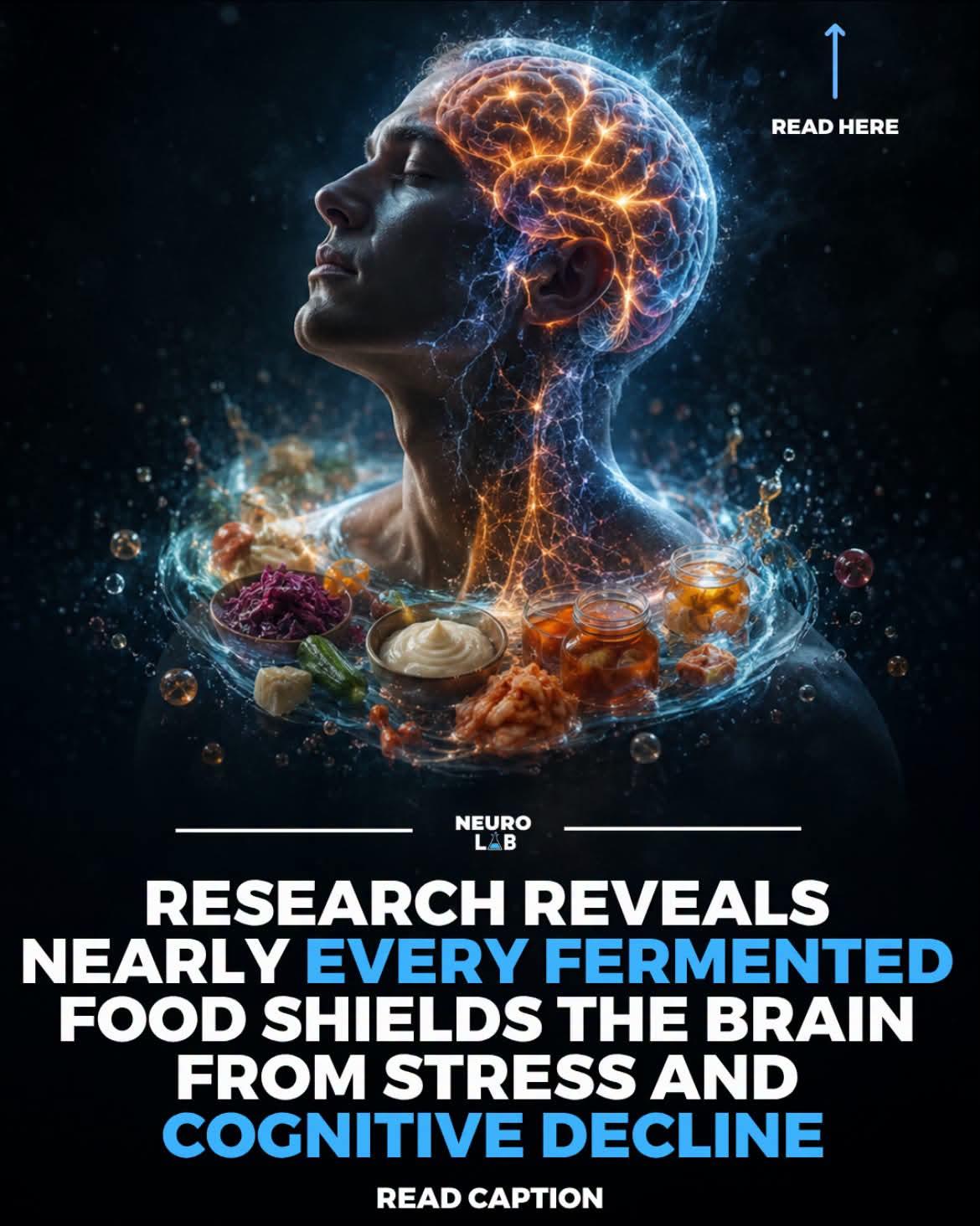
    Research shows that nearly every fermented food studied, from dairy and soy to rice, garlic, ginseng, and even kimchi, offers measurable protection for the brain. Across 45 studies, fermented foods consistently reduced stress hormones, improved memory and learning, and shielded neurons from the processes that lead to cognitive decline. These benefits weren’t tied to any single culture or food category; they appeared repeatedly across all types, highlighting fermentation itself as the key factor. One of the most surprising discoveries is that fermentation can completely flip the impact a food has on the brain. In one study, high tofu intake was associated with poorer memory, while tempeh, the fermented version of soy, was linked to better memory in older adults. This striking contrast shows what fermentation actually does: it creates bioactive compounds such as GABA, antioxidant peptides, and anti-inflammatory molecules that directly support neuroplasticity and help protect against oxidative stress and amyloid buildup associated with Alzheimer’s. Fermentation turns everyday foods into powerful protectors of the brain. By lowering cortisol and preserving neurons from degeneration, these traditional foods function as natural shields for long-term cognitive health. What makes this especially interesting is the connection between fermented foods, the gut, and the brain. Fermentation can change the chemical and microbial profile of a food, producing metabolites and other compounds that may influence the gut-brain axis. Researchers are increasingly interested in how this two-way communication system between the digestive system and brain may affect stress responses, inflammation, mood, and cognitive function. And you don’t necessarily need to completely change your diet to start eating more fermented foods. Yogurt can be added to breakfast. Kefir can be used in smoothies. Kimchi or sauerkraut can be served alongside a meal. Tempeh can replace other protein sources in certain dishes. The point isn’t that one fermented food is a magic solution. It’s that regularly including a variety of fermented foods may be one simple way to add potentially beneficial compounds to an already balanced diet. There’s also an important distinction people often miss: not every fermented product contains live microorganisms by the time you eat it. Processing methods such as heating or pasteurization can reduce or eliminate live cultures. But that doesn’t necessarily make the food nutritionally worthless, because fermentation can also create compounds and alter nutrients before those processing steps occur. And none of this means fermented foods can prevent or treat Alzheimer’s disease on their own. Brain health is influenced by many factors, including overall diet, physical activity, sleep, cardiovascular health, genetics, and age. The research is compelling because fermented foods may represent another piece of that much larger puzzle. For something humans have been doing to food for thousands of years, fermentation is turning out to be remarkably interesting from a modern neuroscience perspective. Here’s the question: What fermented food do you eat most often? Yogurt? Kimchi? Kefir? Tempeh? Sauerkraut? Something else? Drop yours in the comments, I’m curious which one is most common. And save this post for the next time you’re thinking about what to eat for long-term brain health. Then send this to the person you know who eats yogurt, kimchi, kefir, or sauerkraut all the time. They might have another reason to keep eating it. One final question: If you could only keep ONE fermented food in your diet for the rest of your life, which one are you choosing?
    Love
    Like
    6
    0 Comments 0 Shares 11K Views 0 Reviews
  • Providing professional communication, accurate estimating with advanced artistic painting skills, SApaintco and their professional team is always ready to assist in your preference.
    Providing professional communication, accurate estimating with advanced artistic painting skills, SApaintco and their professional team is always ready to assist in your preference.
    Like
    Love
    5
    0 Comments 0 Shares 3K Views 0 Reviews
  • 🚨 SPRINGS, WHEN LAST DID YOU CHECK THAT YOUR ALARM SYSTEM IS ACTUALLY WORKING? 🚨


    We rely on our alarm systems to protect our families, homes and businesses—but many of us only discover that something is faulty when we need the system most.


    That is why Lapua Strike Force is offering the Springs community a professional Alarm System Health Check for only R350.00 excluding VAT.


    A qualified technician will visit your property and carefully inspect your complete alarm system, including the sensors, keypads, sirens, batteries and communication devices. Any faulty or worn components will be identified, and you will receive honest, professional recommendations—together with a no-obligation quotation should any repairs or replacements be needed.


    This is not simply about testing equipment. It is about giving Springs families and business owners greater confidence that the security protecting them is ready when it matters most.


    Do not wait for an emergency to discover that your alarm was not working properly.


    📞 Book your Alarm System Health Check today:
    087 265 5572


    Lapua Strike Force — proudly helping protect the homes, businesses and people of Springs.


    #LapuaStrikeForce #SpringsCommunity #SpringsGauteng #AlarmSystemCheck #CommunitySafety #ProtectWhatMatters
    🚨 SPRINGS, WHEN LAST DID YOU CHECK THAT YOUR ALARM SYSTEM IS ACTUALLY WORKING? 🚨 We rely on our alarm systems to protect our families, homes and businesses—but many of us only discover that something is faulty when we need the system most. That is why Lapua Strike Force is offering the Springs community a professional Alarm System Health Check for only R350.00 excluding VAT. A qualified technician will visit your property and carefully inspect your complete alarm system, including the sensors, keypads, sirens, batteries and communication devices. Any faulty or worn components will be identified, and you will receive honest, professional recommendations—together with a no-obligation quotation should any repairs or replacements be needed. This is not simply about testing equipment. It is about giving Springs families and business owners greater confidence that the security protecting them is ready when it matters most. Do not wait for an emergency to discover that your alarm was not working properly. 📞 Book your Alarm System Health Check today: 087 265 5572 Lapua Strike Force — proudly helping protect the homes, businesses and people of Springs. #LapuaStrikeForce #SpringsCommunity #SpringsGauteng #AlarmSystemCheck #CommunitySafety #ProtectWhatMatters
    Love
    4
    0 Comments 0 Shares 7K Views 0 Reviews
  • 💥 Power Start! 💥
    How does your morning start? ☀️
    Mine starts with Ambrotose Complex Powder, Essential Collagen, and GI-ProBalance, together with a healthy breakfast. 🌿🥣
    Why do I choose these every morning?
    ✨ Ambrotose Complex Powder supports healthy cell-to-cell communication, helping my body function at its best.
    ✨ Essential Collagen helps me maintain healthy skin, supports my joints (especially my knee!), and helps me recover after all the hard gym workouts I've done this week.
    ✨ GI-ProBalance supports a healthy digestive system and helps keep my gut balanced.
    Starting my day by nourishing my body from the inside out helps me feel energized and ready for whatever the day brings! 💚
    How do you power up your mornings? ☕🥣💪
    💥 Power Start! 💥 How does your morning start? ☀️ Mine starts with Ambrotose Complex Powder, Essential Collagen, and GI-ProBalance, together with a healthy breakfast. 🌿🥣 Why do I choose these every morning? ✨ Ambrotose Complex Powder supports healthy cell-to-cell communication, helping my body function at its best. ✨ Essential Collagen helps me maintain healthy skin, supports my joints (especially my knee!), and helps me recover after all the hard gym workouts I've done this week. ✨ GI-ProBalance supports a healthy digestive system and helps keep my gut balanced. Starting my day by nourishing my body from the inside out helps me feel energized and ready for whatever the day brings! 💚 How do you power up your mornings? ☕🥣💪
    Love
    3
    0 Comments 1 Shares 21K Views 0 Reviews
  • 📢 WE’RE HIRING: APPOINTMENT SETTER (REMOTE)

    💰 100% COMMISSION | Work from anywhere in SA

    We are looking for a motivated Appointment Setter to join our education business, Magnikid.

    Your role:
    👉 Contact warm leads
    👉 Follow up on WhatsApp
    👉 Book Zoom appointments

    No cold calling. No selling. Just conversations that lead to bookings.

    💰 COMMISSION ONLY

    ✔ Once-off fee per appointment booked
    ✔ Extra commission when sales happen
    ✔ Unlimited earning potential based on performance

    If you work, you earn. Simple.

    🎯 YOU’LL BE A GREAT FIT IF YOU:
    Are confident talking to people
    Can follow a simple system
    Are consistent with follow-ups
    Want flexible remote income

    ❌ NOT FOR YOU IF:
    You need a salary
    You are not consistent
    You avoid communication

    ⚡ HOW TO APPLY
    👉 Comment your email address below
    We will send you full details + application steps.

    🔥 Only serious applicants please.
    📢 WE’RE HIRING: APPOINTMENT SETTER (REMOTE) 💰 100% COMMISSION | Work from anywhere in SA We are looking for a motivated Appointment Setter to join our education business, Magnikid. Your role: 👉 Contact warm leads 👉 Follow up on WhatsApp 👉 Book Zoom appointments No cold calling. No selling. Just conversations that lead to bookings. 💰 COMMISSION ONLY ✔ Once-off fee per appointment booked ✔ Extra commission when sales happen ✔ Unlimited earning potential based on performance If you work, you earn. Simple. 🎯 YOU’LL BE A GREAT FIT IF YOU: Are confident talking to people Can follow a simple system Are consistent with follow-ups Want flexible remote income ❌ NOT FOR YOU IF: You need a salary You are not consistent You avoid communication ⚡ HOW TO APPLY 👉 Comment your email address below We will send you full details + application steps. 🔥 Only serious applicants please.
    Love
    Like
    7
    0 Comments 0 Shares 13K Views 0 Reviews
  • We don’t rise to the level of our intentions as parents we fall to the level of our awareness! This Child Protection Week we were privileged to partner with Heart of Stella Foundatuon to bring more awareness to the safety of children. Not just your own child, but every child you come in contact with.

    Visit the link to watch our full workshop! In today's digital age, social media plays a significant role in both our professional and personal lives. However, it is crucial to recognize that while these platforms can foster connections and opportunities, they can also pose risks, particularly when it comes to the safety of our children.

    As parents, we must be vigilant in protecting our kids from potential social media predators. Here are some effective ways to safeguard them:
    1. Educate Your Child: Talk openly about the dangers of sharing personal information online. Teach them to keep their profiles private and only accept friend requests from people they know.
    2. Set Boundaries: Establish clear rules regarding social media use, including time limits and the types of content they can share.
    3. Monitor Activity: Regularly check your child’s social media accounts and their interactions. This will help you stay informed about who they're communicating with.
    4. Use Parental Controls: Utilize built-in parental control features on devices and apps to restrict access to certain content or limit screen time.
    5. Encourage Open Communication: Create an environment where your child feels comfortable discussing any uncomfortable interactions or experiences they may encounter online.

    By taking these proactive steps, we can help ensure that our children navigate the world of social media safely and responsibly. Let's work together to protect the next generation!
    #ChildSafety #SocialMediaAwareness #ParentingTips #unchainourchildren #heartofstellafoundation

    https://www.youtube.com/watch?si=tjdXlqsA7e9F9Y-r&v=KYb6Bcn75BQ&feature=youtu.be
    We don’t rise to the level of our intentions as parents we fall to the level of our awareness! This Child Protection Week we were privileged to partner with Heart of Stella Foundatuon to bring more awareness to the safety of children. Not just your own child, but every child you come in contact with. Visit the link to watch our full workshop! In today's digital age, social media plays a significant role in both our professional and personal lives. However, it is crucial to recognize that while these platforms can foster connections and opportunities, they can also pose risks, particularly when it comes to the safety of our children. As parents, we must be vigilant in protecting our kids from potential social media predators. Here are some effective ways to safeguard them: 1. Educate Your Child: Talk openly about the dangers of sharing personal information online. Teach them to keep their profiles private and only accept friend requests from people they know. 2. Set Boundaries: Establish clear rules regarding social media use, including time limits and the types of content they can share. 3. Monitor Activity: Regularly check your child’s social media accounts and their interactions. This will help you stay informed about who they're communicating with. 4. Use Parental Controls: Utilize built-in parental control features on devices and apps to restrict access to certain content or limit screen time. 5. Encourage Open Communication: Create an environment where your child feels comfortable discussing any uncomfortable interactions or experiences they may encounter online. By taking these proactive steps, we can help ensure that our children navigate the world of social media safely and responsibly. Let's work together to protect the next generation! #ChildSafety #SocialMediaAwareness #ParentingTips #unchainourchildren #heartofstellafoundation https://www.youtube.com/watch?si=tjdXlqsA7e9F9Y-r&v=KYb6Bcn75BQ&feature=youtu.be
    Like
    1
    0 Comments 0 Shares 12K Views 0 Reviews
  • Advanced Ambrotose caps New
    R690.00
    Available
    https://za.mannatech.com/?account=4309050
    0 Reviews
    Advanced Ambrotose powder is one of Mannatech’s flagship glyconutrient formulas. It combines Manapol aloe vera gel extract, arabinogalactan, wakame (brown seaweed), and beta-carotene (vitamin A source). Mannatech positions it to support immune health, digestive health, and cellular communication
    Advanced Ambrotose powder is one of Mannatech’s flagship glyconutrient formulas. It combines Manapol aloe vera gel extract, arabinogalactan, wakame (brown seaweed), and beta-carotene (vitamin A source). Mannatech positions it to support immune health, digestive health, and cellular communication
    Love
    Like
    5
    0 Comments 0 Shares 6K Views 0 Reviews
  • Advanced Ambrotose New
    R2,130.00
    Available
    https://za.mannatech.com/?account=4309050
    0 Reviews
    Advanced Ambrotose powder is one of Mannatech’s flagship glyconutrient formulas. It combines Manapol aloe vera gel extract, arabinogalactan, wakame (brown seaweed), and beta-carotene (vitamin A source). Mannatech positions it to support immune health, digestive health, and cellular communication
    Advanced Ambrotose powder is one of Mannatech’s flagship glyconutrient formulas. It combines Manapol aloe vera gel extract, arabinogalactan, wakame (brown seaweed), and beta-carotene (vitamin A source). Mannatech positions it to support immune health, digestive health, and cellular communication
    Love
    Like
    5
    0 Comments 0 Shares 6K Views 0 Reviews
  • Ambrotose Complex New
    R2,210.00
    Available
    https://za.mannatech.com/?account=3618894
    0 Reviews
    Ambrotose Complex is a premium glyconutrient supplement designed to support cellular communication, immune health, and overall wellness—helping your body function at its best from the inside out.”
    Ambrotose Complex is a premium glyconutrient supplement designed to support cellular communication, immune health, and overall wellness—helping your body function at its best from the inside out.”
    Love
    Like
    8
    1 Comments 0 Shares 4K Views 0 Reviews
  • 🛰️ How Do Satellites Stay in Orbit?

    Satellites stay in orbit because they are launched at very high speeds. To remain above Earth, a satellite must travel at about 8 kilometers per second. At this speed, gravity pulls the satellite toward Earth while its forward motion keeps it moving around the planet instead of falling straight down.

    If a satellite orbits too close to Earth (below about 200 km), thin traces of the atmosphere create drag that slowly slows it down. Eventually it loses height and can burn up or crash back to Earth.

    Satellites placed much higher above Earth can remain in orbit for many years.

    Some satellites are put into a special path called a geostationary orbit. In this orbit, the satellite moves at the same speed as Earth’s rotation, so it appears to stay fixed above the same point on Earth, making it ideal for communication and weather satellites. 🛰️
    🛰️ How Do Satellites Stay in Orbit? Satellites stay in orbit because they are launched at very high speeds. To remain above Earth, a satellite must travel at about 8 kilometers per second. At this speed, gravity pulls the satellite toward Earth while its forward motion keeps it moving around the planet instead of falling straight down. If a satellite orbits too close to Earth (below about 200 km), thin traces of the atmosphere create drag that slowly slows it down. Eventually it loses height and can burn up or crash back to Earth. Satellites placed much higher above Earth can remain in orbit for many years. Some satellites are put into a special path called a geostationary orbit. In this orbit, the satellite moves at the same speed as Earth’s rotation, so it appears to stay fixed above the same point on Earth, making it ideal for communication and weather satellites. 🛰️
    0 Comments 0 Shares 3K Views 0 Reviews
More Results
MySA - South Africa https://mysa.social