
• This is crazy!

    A con man sold the Eiffel Tower, escaped, returned later, and sold it again. 🏃‍♂️💰

    One of history’s most unusual scams involved a man who managed to convince buyers that he could sell the Eiffel Tower. Using documents and confidence, he created a believable situation that led to a successful deal.

    After leaving the country, he realized there had been no immediate pursuit. Taking advantage of that, he returned and repeated the same plan again, targeting new victims with a similar approach.

    The story remains a striking example of deception and human trust. It highlights how confidence and timing can sometimes influence decisions, even in situations that seem impossible.

    References:
    BBC News: Historic scams reveal how deception can succeed through confidence and timing.
    Reuters: Famous fraud cases continue to be studied for their unusual execution methods.
    CNN: The Eiffel Tower scam remains one of the most surprising fraud stories recorded.
    This is crazy! A con man sold the Eiffel Tower, escaped, returned later, and sold it again. 🏃‍♂️💰 One of history’s most unusual scams involved a man who managed to convince buyers that he could sell the Eiffel Tower. Using documents and confidence, he created a believable situation that led to a successful deal. After leaving the country, he realized there had been no immediate pursuit. Taking advantage of that, he returned and repeated the same plan again, targeting new victims with a similar approach. The story remains a striking example of deception and human trust. It highlights how confidence and timing can sometimes influence decisions, even in situations that seem impossible. References: BBC News: Historic scams reveal how deception can succeed through confidence and timing. Reuters: Famous fraud cases continue to be studied for their unusual execution methods. CNN: The Eiffel Tower scam remains one of the most surprising fraud stories recorded.
    Love
    Like
    16
    0 Comments 0 Shares 13K Views 0 Reviews
  • AMC is a premium stainless steel cookware system famous for its "fat-free and waterless" cooking method. Manufactured in South Africa and backed by a lifetime guarantee, the system is designed to lock in flavor and retain maximum nutritional value. Premium Material: Crafted from high-grade 18/10 stainless steel, which is durable, non-porous, non-reactive, and easy to clean. Akkutherm Base: A patented, heavy-duty capsule base comprising two layers of steel encapsulating an aluminum core. It eliminates hot spots and evenly distributes and stores heat for energy efficiency. Waterless Cooking: Because the single-layer side walls stay cooler than the base, moisture naturally condenses inside the pot and drips back down, allowing ingredients to steam and cook gently in their own juices.Visiotherm Temperature Control: The lid knobs feature an integrated thermometer. This displays the temperature inside the pot, letting you control the heat without lifting the lid or using excess water and fats.Energy Efficient: Designed to work efficiently on modern induction stoves and retain heat long after the stove is turned off. Versatility: The pieces can be used on the stove or inside the oven (by removing the lids) and are easily expanded with AMC Cookware Individual Units as your family grows.
    Products are sold either as predefined combos or as individual pieces and can be ordered directly through the AMC Cookware authorized consultants.
    AMC is a premium stainless steel cookware system famous for its "fat-free and waterless" cooking method. Manufactured in South Africa and backed by a lifetime guarantee, the system is designed to lock in flavor and retain maximum nutritional value. Premium Material: Crafted from high-grade 18/10 stainless steel, which is durable, non-porous, non-reactive, and easy to clean. Akkutherm Base: A patented, heavy-duty capsule base comprising two layers of steel encapsulating an aluminum core. It eliminates hot spots and evenly distributes and stores heat for energy efficiency. Waterless Cooking: Because the single-layer side walls stay cooler than the base, moisture naturally condenses inside the pot and drips back down, allowing ingredients to steam and cook gently in their own juices.Visiotherm Temperature Control: The lid knobs feature an integrated thermometer. This displays the temperature inside the pot, letting you control the heat without lifting the lid or using excess water and fats.Energy Efficient: Designed to work efficiently on modern induction stoves and retain heat long after the stove is turned off. Versatility: The pieces can be used on the stove or inside the oven (by removing the lids) and are easily expanded with AMC Cookware Individual Units as your family grows. Products are sold either as predefined combos or as individual pieces and can be ordered directly through the AMC Cookware authorized consultants.
    Like
    Love
    4
    0 Comments 0 Shares 7K Views 0 Reviews
  • How do Whirlpools Happen?

    Whirlpools are powerful spinning movements of water that can form in seas, rivers, or oceans. They occur when water currents moving in different directions meet and begin to twist around each other.

    When these opposing currents collide, the water cannot continue flowing smoothly, so it starts to spin rapidly, creating a circular motion. This spinning can sometimes become very strong, forming a whirlpool.

    Large whirlpools in the ocean are often caused by strong tides. One of the most famous examples is the Maelstrom, found between islands off the coast of Norway. Another well-known whirlpool is Charybdis in the Mediterranean, which was feared by ancient sailors.

    Although whirlpools can be dangerous, most are not strong enough to pull down large ships. However, smaller boats can be at risk if they get too close to the centre, where the spinning motion is strongest.
    How do Whirlpools Happen? Whirlpools are powerful spinning movements of water that can form in seas, rivers, or oceans. They occur when water currents moving in different directions meet and begin to twist around each other. When these opposing currents collide, the water cannot continue flowing smoothly, so it starts to spin rapidly, creating a circular motion. This spinning can sometimes become very strong, forming a whirlpool. Large whirlpools in the ocean are often caused by strong tides. One of the most famous examples is the Maelstrom, found between islands off the coast of Norway. Another well-known whirlpool is Charybdis in the Mediterranean, which was feared by ancient sailors. Although whirlpools can be dangerous, most are not strong enough to pull down large ships. However, smaller boats can be at risk if they get too close to the centre, where the spinning motion is strongest.
    0 Comments 0 Shares 1K Views 0 Reviews
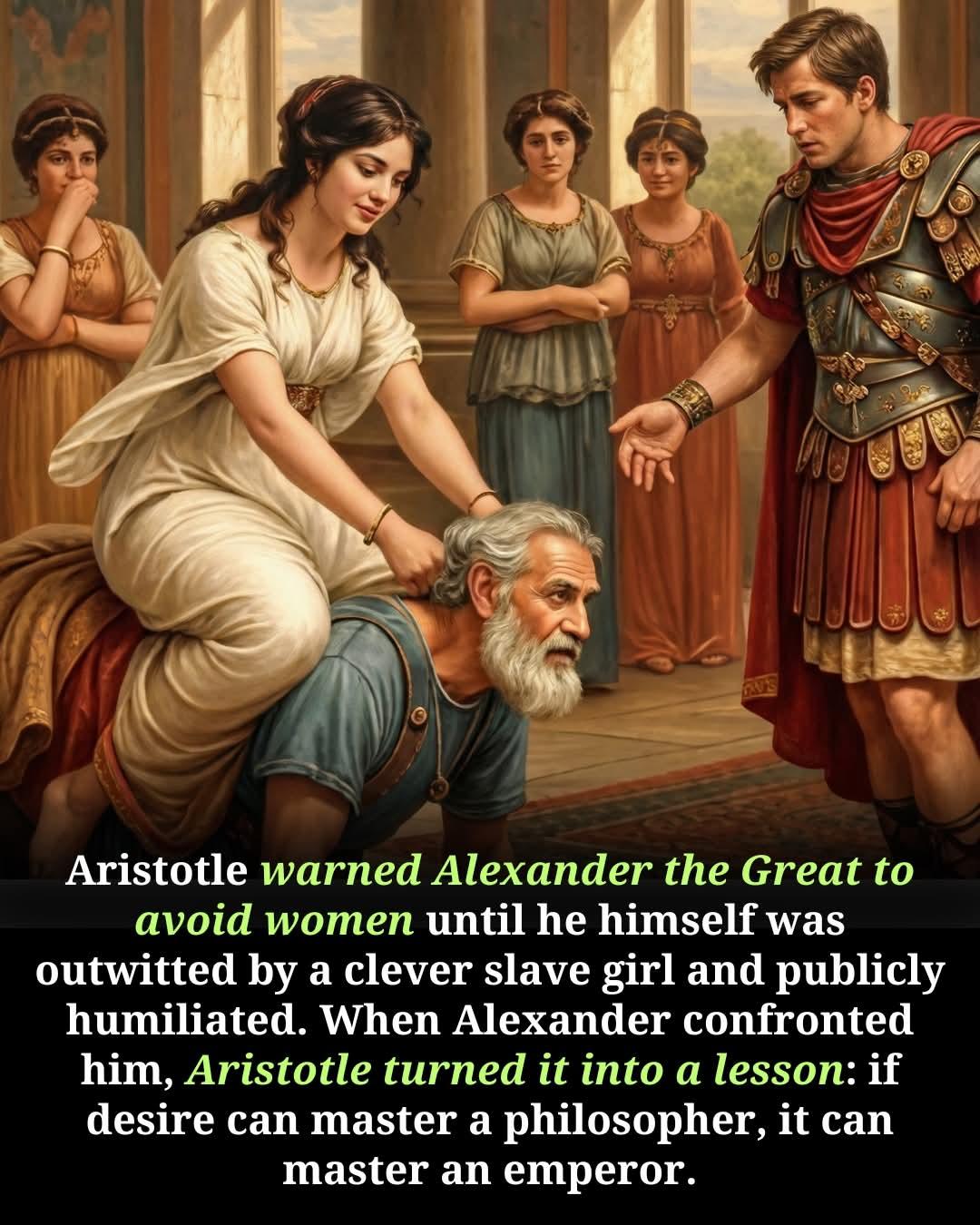
  • It is said that Aristotle always advised his disciple, Alexander the Great, to stay away from women’s company. Because of this, the women of the harem were very angry with him.

    One day, they conspired together. They sent a very beautiful, mischievous, and charming slave girl to serve Aristotle. The girl, with her gestures and charms, ensnared Aristotle.

    One day, she set a condition: that Aristotle become a horse, and she would ride him. At the very moment this famous incident was unfolding, all the women of the harem entered the room with Alexander.

    Seeing his teacher truly become a "horse" for a slave girl, Alexander was astonished and said, "Oh, teacher! What kind of teaching is this? You advise us to stay away from women, and you yourself...?"

    Aristotle, who was very clever, immediately stood up and, smiling, said: My dear emperor! All this has been done for your own training. Just think, if a woman can make her teacher a horse, she will surely turn you into a donkey...!

    I'm the philosopher
    It is said that Aristotle always advised his disciple, Alexander the Great, to stay away from women’s company. Because of this, the women of the harem were very angry with him. One day, they conspired together. They sent a very beautiful, mischievous, and charming slave girl to serve Aristotle. The girl, with her gestures and charms, ensnared Aristotle. One day, she set a condition: that Aristotle become a horse, and she would ride him. At the very moment this famous incident was unfolding, all the women of the harem entered the room with Alexander. Seeing his teacher truly become a "horse" for a slave girl, Alexander was astonished and said, "Oh, teacher! What kind of teaching is this? You advise us to stay away from women, and you yourself...?" Aristotle, who was very clever, immediately stood up and, smiling, said: My dear emperor! All this has been done for your own training. Just think, if a woman can make her teacher a horse, she will surely turn you into a donkey...! I'm the philosopher
    Like
    Love
    3
    0 Comments 0 Shares 7K Views 0 Reviews
  • A Crime Short Story by The Cozy Nook Writer:

    Patterns Don’t Lie:

    Detective Robert Hale had learned to trust patterns more than people.

    People lied, forgot, changed their stories. Patterns stayed loyal to themselves.

    The latest crime scene looked ordinary at first glance: a small second-floor apartment, furniture overturned just enough to suggest a struggle, drawers pulled out but not fully emptied. Officers moved around quietly, taking photos, bagging evidence. Someone muttered that it was probably another robbery gone wrong.

    Robert didn’t answer. He was staring at the clock on the wall.

    It had stopped at 2:17 a.m.

    “Why would a thief stop a clock?” he asked.

    No one had an answer.

    On his way out, Robert noticed the window cracked open, rainwater seeping onto the sill. It bothered him more than it should have. That night, at home, he dug through the department’s digital archives, following a feeling he couldn’t quite explain.

    He found it an hour later.

    An unsolved case from 1989. Same stopped clock. Same time. Same open window.

    The next morning, Robert requested the old file from storage. Then another. And another. Soon his office was stacked with boxes labeled *Unresolved*. Each one told a story that had never ended—murders with no arrests, suspects who vanished, evidence that led nowhere.

    Individually, they were cold. Together, they were speaking.

    A victim left near a riverbank in 1974. Another found the same way last year. A pawn shop receipt in two different cities, decades apart. A cheap wristwatch placed beside the body instead of worn. Always small details. Always things most detectives would ignore.

    Robert pinned photos and notes across a corkboard. Red string crisscrossed the surface like a web.

    “This isn’t coincidence,” he said to himself.

    The killer wasn’t just inspired by the past. They were following it. Carefully. Respectfully. Almost lovingly.

    Robert started reading the old cases differently. Not as investigations, but as instructions.

    In one case, the police had focused too hard on a neighbor who owned a similar jacket to one seen near the scene. In another, they wasted months chasing a witness who later admitted to lying. Each mistake, each wrong turn, was preserved in the files.

    And the modern crimes repeated those same mistakes perfectly.

    The killer knew exactly how to disappear.

    Until they didn’t.

    The break came from a forgotten detail Robert remembered reading years ago, back when he was still a rookie: a handwritten note left at an old crime scene. The public version mentioned the message but not the wording. Internally, the note was famous for one thing—the writer had misspelled a simple word.

    Robert pulled the file again and compared it to a photo from the latest crime scene.

    Same word. Same misspelling.

    “That detail was never released,” Robert whispered.

    Only two kinds of people could know it: the original killer… or someone who had studied the case files.

    Robert made a new list. Not suspects—readers.

    He tracked down everyone who had accessed multiple unsolved case files over the years: retired officers, archivists, crime bloggers, researchers. One name kept appearing, quietly, consistently, across decades.

    Adam Mercer.

    Mercer wasn’t a cop. He was a clerk. A background worker who moved boxes, digitized reports, organized evidence. Invisible by design. He had spent years surrounded by stories that never reached an ending.

    Robery visited Mercer’s apartment with a warrant.

    Inside, the walls were covered floor to ceiling with clippings, photos, and handwritten notes. Each unsolved case had its own section, neatly arranged. Some were crossed out. Others were marked *Incomplete*.

    One space on the wall was empty.

    Robert turned to Mercer, who stood calmly by the table.

    “You were fixing them,” Robert said. “In your own way.”

    Mercer smiled faintly. “I was finishing what they started. The system failed them. I didn’t.”
    Robert shook his head. “You didn’t fix anything. You just copied history and hoped we’d repeat our mistakes.”

    Mercer’s smile faded.

    “But you didn’t,” he said.

    “No,” Robert replied. “You did.”

    The case closed quietly. No dramatic press conference. No headlines celebrating the detective who cracked it. Just another solved file placed gently back into storage.
    Robert returned to his office late that night and took down the corkboard. As he packed the old files away, he paused, running his hand over the worn cardboard.

    Unsolved cases, he realized, were never really forgotten.

    Someone was always reading them.
    A Crime Short Story by The Cozy Nook Writer: Patterns Don’t Lie: Detective Robert Hale had learned to trust patterns more than people. People lied, forgot, changed their stories. Patterns stayed loyal to themselves. The latest crime scene looked ordinary at first glance: a small second-floor apartment, furniture overturned just enough to suggest a struggle, drawers pulled out but not fully emptied. Officers moved around quietly, taking photos, bagging evidence. Someone muttered that it was probably another robbery gone wrong. Robert didn’t answer. He was staring at the clock on the wall. It had stopped at 2:17 a.m. “Why would a thief stop a clock?” he asked. No one had an answer. On his way out, Robert noticed the window cracked open, rainwater seeping onto the sill. It bothered him more than it should have. That night, at home, he dug through the department’s digital archives, following a feeling he couldn’t quite explain. He found it an hour later. An unsolved case from 1989. Same stopped clock. Same time. Same open window. The next morning, Robert requested the old file from storage. Then another. And another. Soon his office was stacked with boxes labeled *Unresolved*. Each one told a story that had never ended—murders with no arrests, suspects who vanished, evidence that led nowhere. Individually, they were cold. Together, they were speaking. A victim left near a riverbank in 1974. Another found the same way last year. A pawn shop receipt in two different cities, decades apart. A cheap wristwatch placed beside the body instead of worn. Always small details. Always things most detectives would ignore. Robert pinned photos and notes across a corkboard. Red string crisscrossed the surface like a web. “This isn’t coincidence,” he said to himself. The killer wasn’t just inspired by the past. They were following it. Carefully. Respectfully. Almost lovingly. Robert started reading the old cases differently. Not as investigations, but as instructions. In one case, the police had focused too hard on a neighbor who owned a similar jacket to one seen near the scene. In another, they wasted months chasing a witness who later admitted to lying. Each mistake, each wrong turn, was preserved in the files. And the modern crimes repeated those same mistakes perfectly. The killer knew exactly how to disappear. Until they didn’t. The break came from a forgotten detail Robert remembered reading years ago, back when he was still a rookie: a handwritten note left at an old crime scene. The public version mentioned the message but not the wording. Internally, the note was famous for one thing—the writer had misspelled a simple word. Robert pulled the file again and compared it to a photo from the latest crime scene. Same word. Same misspelling. “That detail was never released,” Robert whispered. Only two kinds of people could know it: the original killer… or someone who had studied the case files. Robert made a new list. Not suspects—readers. He tracked down everyone who had accessed multiple unsolved case files over the years: retired officers, archivists, crime bloggers, researchers. One name kept appearing, quietly, consistently, across decades. Adam Mercer. Mercer wasn’t a cop. He was a clerk. A background worker who moved boxes, digitized reports, organized evidence. Invisible by design. He had spent years surrounded by stories that never reached an ending. Robery visited Mercer’s apartment with a warrant. Inside, the walls were covered floor to ceiling with clippings, photos, and handwritten notes. Each unsolved case had its own section, neatly arranged. Some were crossed out. Others were marked *Incomplete*. One space on the wall was empty. Robert turned to Mercer, who stood calmly by the table. “You were fixing them,” Robert said. “In your own way.” Mercer smiled faintly. “I was finishing what they started. The system failed them. I didn’t.” Robert shook his head. “You didn’t fix anything. You just copied history and hoped we’d repeat our mistakes.” Mercer’s smile faded. “But you didn’t,” he said. “No,” Robert replied. “You did.” The case closed quietly. No dramatic press conference. No headlines celebrating the detective who cracked it. Just another solved file placed gently back into storage. Robert returned to his office late that night and took down the corkboard. As he packed the old files away, he paused, running his hand over the worn cardboard. Unsolved cases, he realized, were never really forgotten. Someone was always reading them.
    Love
    1
    0 Comments 1 Shares 9K Views 0 Reviews
  • A famous streamer touring Africa
    A famous streamer touring Africa
    Like
    Love
    5
    2 Comments 0 Shares 9K Views 0 Reviews
  • How do trees grow?

    Trees grow much like any other living thing—they need nourishment. They draw water and minerals up from the soil through their roots, and they take in carbon dioxide from the air. Thanks to chlorophyll in their leaves, they can use sunlight to create the sugars, starches, and cellulose that fuel their growth.

    Just beneath the bark is a thin, active layer called the cambium. This is where new cells are constantly being made. The cells that form on the inside become new wood, and those on the outside become new bark. Over time, this steady production of cells causes the tree’s trunk to expand in diameter.
    Trees don’t just grow wider—they grow taller too. At the tip of every twig or branch is a cluster of living cells that produce new leaves and lengthen the stem during the growing season.

    If you cut across a tree trunk, you’ll notice alternating light and dark rings. The lighter rings are made of larger cells formed in spring, while the darker rings are tighter, smaller cells produced in autumn. Together, these rings tell the story of the tree’s age and the conditions it has lived through.


    Fun fact:

    Trees are the largest living organisms on the planet. The giant sequoias of California hold the record for the greatest volume—especially the famous General Sherman tree. Some of these giants weigh millions of pounds. The tallest trees, however, are the coast redwoods, which can soar to more than 380 feet into the sky.
    How do trees grow? Trees grow much like any other living thing—they need nourishment. They draw water and minerals up from the soil through their roots, and they take in carbon dioxide from the air. Thanks to chlorophyll in their leaves, they can use sunlight to create the sugars, starches, and cellulose that fuel their growth. Just beneath the bark is a thin, active layer called the cambium. This is where new cells are constantly being made. The cells that form on the inside become new wood, and those on the outside become new bark. Over time, this steady production of cells causes the tree’s trunk to expand in diameter. Trees don’t just grow wider—they grow taller too. At the tip of every twig or branch is a cluster of living cells that produce new leaves and lengthen the stem during the growing season. If you cut across a tree trunk, you’ll notice alternating light and dark rings. The lighter rings are made of larger cells formed in spring, while the darker rings are tighter, smaller cells produced in autumn. Together, these rings tell the story of the tree’s age and the conditions it has lived through. Fun fact: Trees are the largest living organisms on the planet. The giant sequoias of California hold the record for the greatest volume—especially the famous General Sherman tree. Some of these giants weigh millions of pounds. The tallest trees, however, are the coast redwoods, which can soar to more than 380 feet into the sky.
    Love
    1
    0 Comments 1 Shares 5K Views 0 Reviews
  • Did you Know?

    Mona Lisa

    The famous painting by Leonardo da Vinci lacks eyebrows and eyelashes
    Did you Know? Mona Lisa The famous painting by Leonardo da Vinci lacks eyebrows and eyelashes
    Like
    Love
    Wow
    13
    0 Comments 0 Shares 7K Views 0 Reviews
  • 25 On Main is located in the charming coastal town of Struis Bay and offers comfortable, convenient accommodation, suited for a large family or a group of friends.

    The property consists of a main house and two private flatlets, each thoughtfully furnished with comfortable beds and bathrooms fitted with showers. Fresh linen and bath towels are provided for your convenience. Each unit offers its own space and privacy, along with well-equipped self-catering facilities for a relaxed, home-away-from-home stay.

    Guests can enjoy free Wi-Fi, Netflix, and secure on-site parking behind an electric gate for added peace of mind.

    Ideally positioned close to both the beach and local shops, the house is perfectly located for exploring the area, with the famous Agulhas Lighthouse being a popular nearby attraction.

    #25OnMain
    25 On Main is located in the charming coastal town of Struis Bay and offers comfortable, convenient accommodation, suited for a large family or a group of friends. The property consists of a main house and two private flatlets, each thoughtfully furnished with comfortable beds and bathrooms fitted with showers. Fresh linen and bath towels are provided for your convenience. Each unit offers its own space and privacy, along with well-equipped self-catering facilities for a relaxed, home-away-from-home stay. Guests can enjoy free Wi-Fi, Netflix, and secure on-site parking behind an electric gate for added peace of mind. Ideally positioned close to both the beach and local shops, the house is perfectly located for exploring the area, with the famous Agulhas Lighthouse being a popular nearby attraction. #25OnMain
    Like
    Love
    Yay
    50
    2 Comments 1 Shares 10K Views 0 Reviews
  • The “Slow Pour Effect”: How Heinz Turned Frustration Into Fortune

    In the 1970s, Heinz faced a major problem.

    People loved the taste of Heinz ketchup…
    but hated how long it took to come out of the glass bottle.

    Competitors mocked them.
    Consumers complained.
    And fast-food chains even threatened to drop Heinz for being “too slow.”

    So the company hired an ad agency to fix the problem.
    Their proposal? Don’t fix it. Reframe it.

    Instead of apologizing for the “slow pour,” Heinz built an entire brand around it.

    They launched the now-famous slogan:

    “The best things come to those who wait.”

    Suddenly, what used to be a weakness became a status symbol.

    That slow, satisfying glug-glug-glug of ketchup wasn’t a flaw anymore…
    it was proof of quality.
    Thicker. Richer. More authentic.

    Sales soared.
    Heinz didn’t make the ketchup thinner …they made patience feel premium.

    The Marketing Lesson:

    People don’t buy speed …they buy significance.

    When you own your flaw, you transform it into a feature.

    That’s why:
    • Heinz turned slowness into quality.
    • Crocs turned “ugly” into iconic.
    • Tesla turned “delay” into demand.

    The difference?
    They didn’t hide their weakness …they branded it.

    🤓 The Nerdy Takeaway:

    Every brand has a “slow pour.”
    Something inconvenient. Imperfect. Human.

    Don’t rush to fix it.
    Tell the story that makes it valuable.

    Because when you turn friction into fascination…
    you don’t just sell a product …you sell a belief.
    The “Slow Pour Effect”: How Heinz Turned Frustration Into Fortune In the 1970s, Heinz faced a major problem. People loved the taste of Heinz ketchup… but hated how long it took to come out of the glass bottle. Competitors mocked them. Consumers complained. And fast-food chains even threatened to drop Heinz for being “too slow.” So the company hired an ad agency to fix the problem. Their proposal? Don’t fix it. Reframe it. Instead of apologizing for the “slow pour,” Heinz built an entire brand around it. They launched the now-famous slogan: “The best things come to those who wait.” Suddenly, what used to be a weakness became a status symbol. That slow, satisfying glug-glug-glug of ketchup wasn’t a flaw anymore… it was proof of quality. Thicker. Richer. More authentic. Sales soared. Heinz didn’t make the ketchup thinner …they made patience feel premium. The Marketing Lesson: People don’t buy speed …they buy significance. When you own your flaw, you transform it into a feature. That’s why: • Heinz turned slowness into quality. • Crocs turned “ugly” into iconic. • Tesla turned “delay” into demand. The difference? They didn’t hide their weakness …they branded it. 🤓 The Nerdy Takeaway: Every brand has a “slow pour.” Something inconvenient. Imperfect. Human. Don’t rush to fix it. Tell the story that makes it valuable. Because when you turn friction into fascination… you don’t just sell a product …you sell a belief.
    Love
    Like
    18
    0 Comments 0 Shares 3K Views 0 Reviews
More Results
MySA - South Africa https://mysa.social