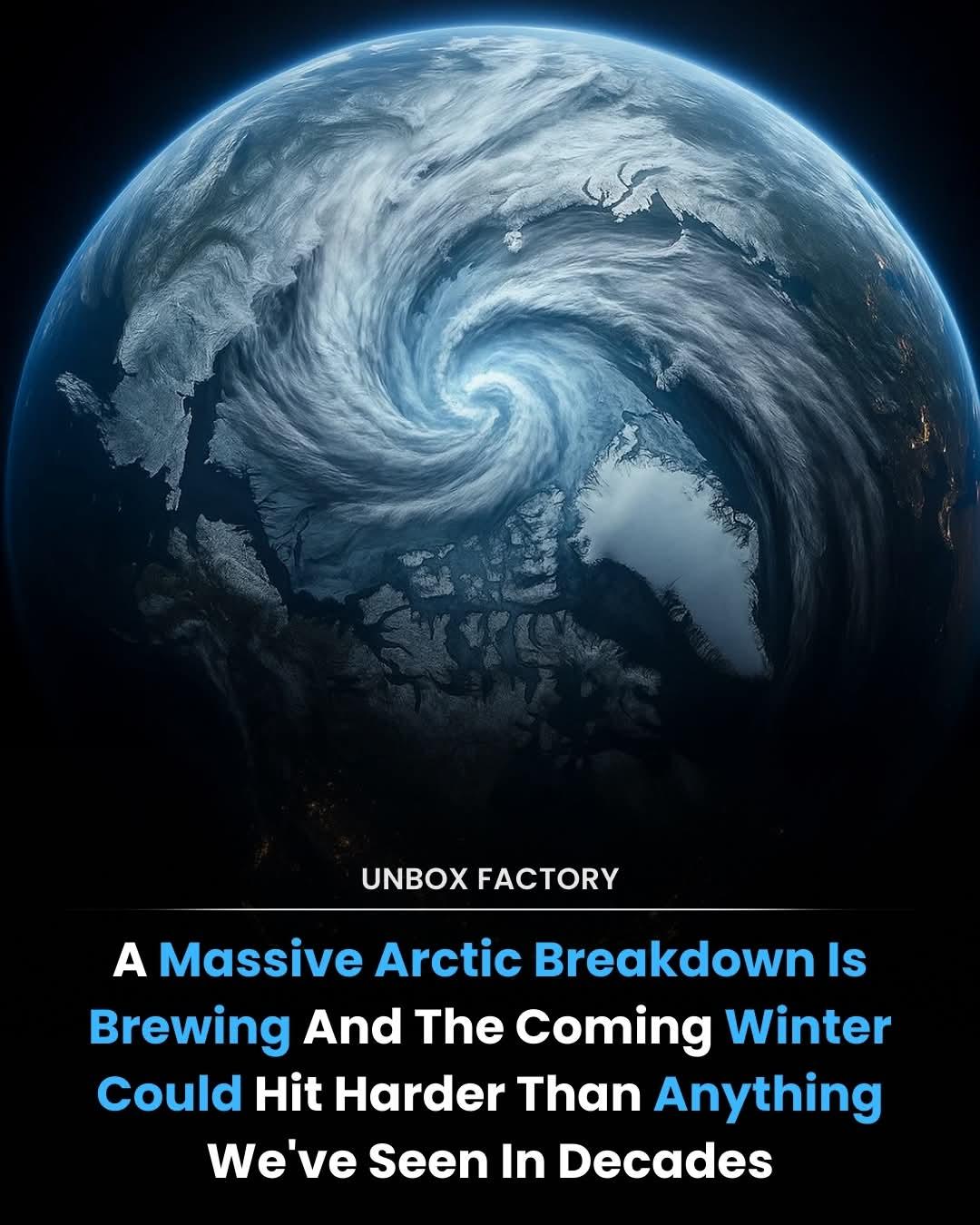
Climate scientists are warning that a major Arctic polar vortex disruption is forming—an event that could unleash extreme winter conditions across parts of Europe, Asia, and North America. The Arctic is warming four times faster than the rest of the planet. This temperature imbalance destabilizes the polar vortex, the massive cold-air system that usually stays locked over the North Pole.
When the vortex weakens or breaks apart, icy Arctic air can plunge deep into southern regions, causing intense snowfall, freezing storms, and record-breaking cold temperatures. This phenomenon was responsible for major weather disasters in the past, including the 2021 Texas freeze.
Current satellite and atmospheric data suggest unusually low sea ice, warmer Arctic waters, and disrupted jet streams—all signs that a severe winter could be imminent. Experts warn that infrastructure, power grids, and transportation networks must prepare for potential stress.
While some may view this as “just another winter,” the science shows it could be one of the harshest in decades. Cities unprepared for sudden temperature drops could face significant disruptions.
The event serves as a reminder of how climate change does not only cause heat waves—it also intensifies cold extremes by destabilizing natural atmospheric systems.
When the vortex weakens or breaks apart, icy Arctic air can plunge deep into southern regions, causing intense snowfall, freezing storms, and record-breaking cold temperatures. This phenomenon was responsible for major weather disasters in the past, including the 2021 Texas freeze.
Current satellite and atmospheric data suggest unusually low sea ice, warmer Arctic waters, and disrupted jet streams—all signs that a severe winter could be imminent. Experts warn that infrastructure, power grids, and transportation networks must prepare for potential stress.
While some may view this as “just another winter,” the science shows it could be one of the harshest in decades. Cities unprepared for sudden temperature drops could face significant disruptions.
The event serves as a reminder of how climate change does not only cause heat waves—it also intensifies cold extremes by destabilizing natural atmospheric systems.
Climate scientists are warning that a major Arctic polar vortex disruption is forming—an event that could unleash extreme winter conditions across parts of Europe, Asia, and North America. The Arctic is warming four times faster than the rest of the planet. This temperature imbalance destabilizes the polar vortex, the massive cold-air system that usually stays locked over the North Pole.
When the vortex weakens or breaks apart, icy Arctic air can plunge deep into southern regions, causing intense snowfall, freezing storms, and record-breaking cold temperatures. This phenomenon was responsible for major weather disasters in the past, including the 2021 Texas freeze.
Current satellite and atmospheric data suggest unusually low sea ice, warmer Arctic waters, and disrupted jet streams—all signs that a severe winter could be imminent. Experts warn that infrastructure, power grids, and transportation networks must prepare for potential stress.
While some may view this as “just another winter,” the science shows it could be one of the harshest in decades. Cities unprepared for sudden temperature drops could face significant disruptions.
The event serves as a reminder of how climate change does not only cause heat waves—it also intensifies cold extremes by destabilizing natural atmospheric systems.