
📦 The “Paper Bag Principle”: How a Grocery Store Accident Changed Modern Marketing
In the 1940s, a small grocery store in St. Louis made a printing mistake.
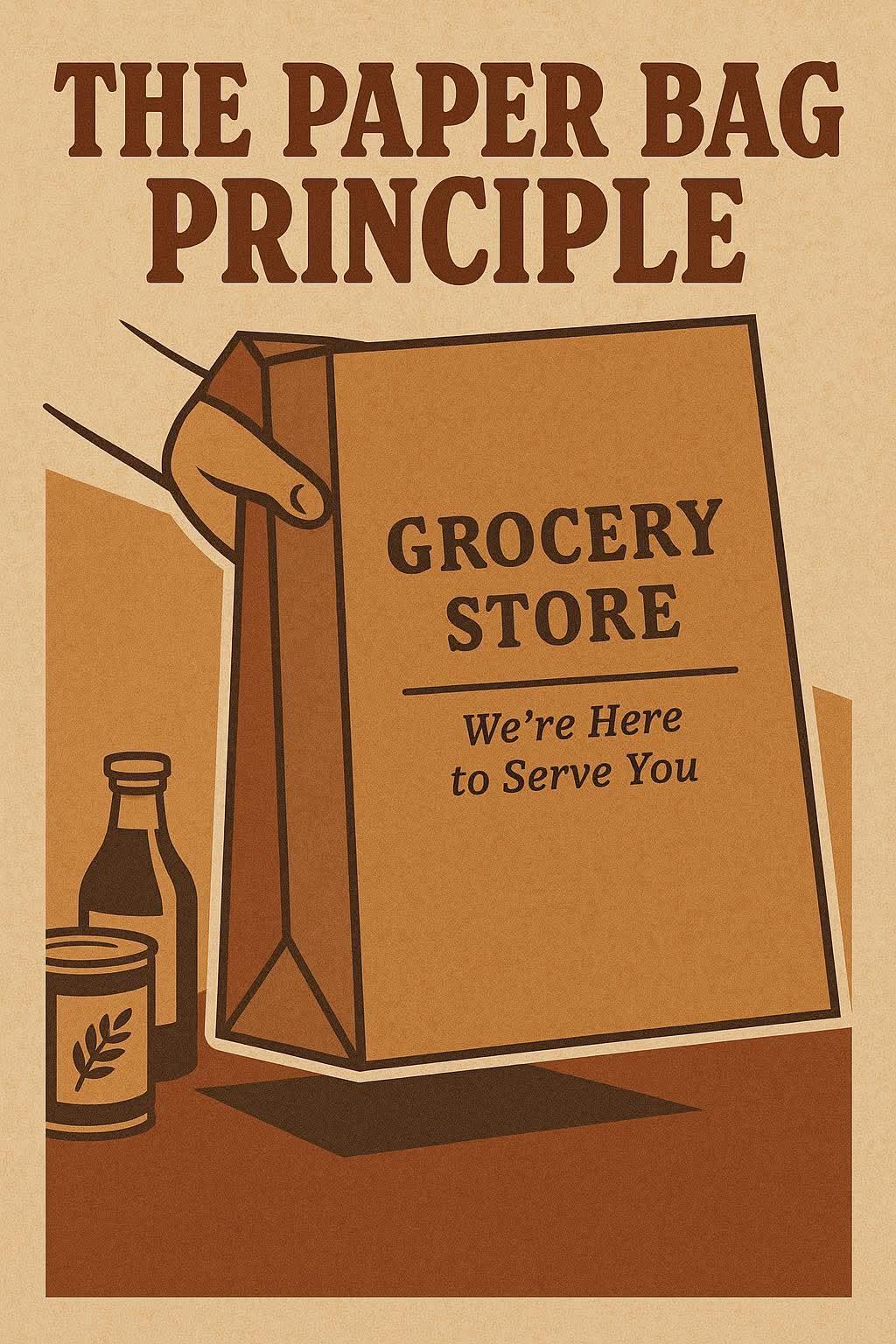
They had just ordered thousands of brown paper bags …but when they arrived, every bag had the store’s name and slogan printed upside down.
The owner was furious.
He considered sending them all back… but wartime paper shortages made replacements impossible.
So he used them anyway.
A week later, something strange happened.
Customers started asking for extra bags.
Then other stores called, asking where they got them printed.
It turned out …when people carried the upside-down bags, the logo was facing upright to everyone walking by.
Shoppers became walking billboards.
That “mistake” turned one small store into a regional chain…
and started a trend that would define decades of brand strategy: visible, mobile advertising.
💡 The Marketing Lesson:
Great marketing doesn’t happen in your business.
It happens after people leave it.
That’s why:
• Starbucks writes your name on the cup — to make you carry it like a badge.
• Apple puts its logo on the back of every device …so the world sees it, not you.
• Lululemon made their shopping bags so iconic that people reuse them for years.
The smartest marketers design visibility into the experience.
They don’t just sell the product …they turn customers into the medium.
🧠 The Nerdy Takeaway:
The Paper Bag Principle reminds us: People don’t just buy your brand …they broadcast it.
Every product you sell is a potential megaphone.
Every customer is a walking ad.
So don’t just think about how your brand looks in the store.
Think about how it looks in the world.
Because when your brand travels, your business grows without buying a single billboard.
In the 1940s, a small grocery store in St. Louis made a printing mistake.
They had just ordered thousands of brown paper bags …but when they arrived, every bag had the store’s name and slogan printed upside down.
The owner was furious.
He considered sending them all back… but wartime paper shortages made replacements impossible.
So he used them anyway.
A week later, something strange happened.
Customers started asking for extra bags.
Then other stores called, asking where they got them printed.
It turned out …when people carried the upside-down bags, the logo was facing upright to everyone walking by.
Shoppers became walking billboards.
That “mistake” turned one small store into a regional chain…
and started a trend that would define decades of brand strategy: visible, mobile advertising.
💡 The Marketing Lesson:
Great marketing doesn’t happen in your business.
It happens after people leave it.
That’s why:
• Starbucks writes your name on the cup — to make you carry it like a badge.
• Apple puts its logo on the back of every device …so the world sees it, not you.
• Lululemon made their shopping bags so iconic that people reuse them for years.
The smartest marketers design visibility into the experience.
They don’t just sell the product …they turn customers into the medium.
🧠 The Nerdy Takeaway:
The Paper Bag Principle reminds us: People don’t just buy your brand …they broadcast it.
Every product you sell is a potential megaphone.
Every customer is a walking ad.
So don’t just think about how your brand looks in the store.
Think about how it looks in the world.
Because when your brand travels, your business grows without buying a single billboard.
📦 The “Paper Bag Principle”: How a Grocery Store Accident Changed Modern Marketing
In the 1940s, a small grocery store in St. Louis made a printing mistake.
They had just ordered thousands of brown paper bags …but when they arrived, every bag had the store’s name and slogan printed upside down.
The owner was furious.
He considered sending them all back… but wartime paper shortages made replacements impossible.
So he used them anyway.
A week later, something strange happened.
Customers started asking for extra bags.
Then other stores called, asking where they got them printed.
It turned out …when people carried the upside-down bags, the logo was facing upright to everyone walking by.
Shoppers became walking billboards.
That “mistake” turned one small store into a regional chain…
and started a trend that would define decades of brand strategy: visible, mobile advertising.
💡 The Marketing Lesson:
Great marketing doesn’t happen in your business.
It happens after people leave it.
That’s why:
• Starbucks writes your name on the cup — to make you carry it like a badge.
• Apple puts its logo on the back of every device …so the world sees it, not you.
• Lululemon made their shopping bags so iconic that people reuse them for years.
The smartest marketers design visibility into the experience.
They don’t just sell the product …they turn customers into the medium.
🧠 The Nerdy Takeaway:
The Paper Bag Principle reminds us: People don’t just buy your brand …they broadcast it.
Every product you sell is a potential megaphone.
Every customer is a walking ad.
So don’t just think about how your brand looks in the store.
Think about how it looks in the world.
Because when your brand travels, your business grows without buying a single billboard.