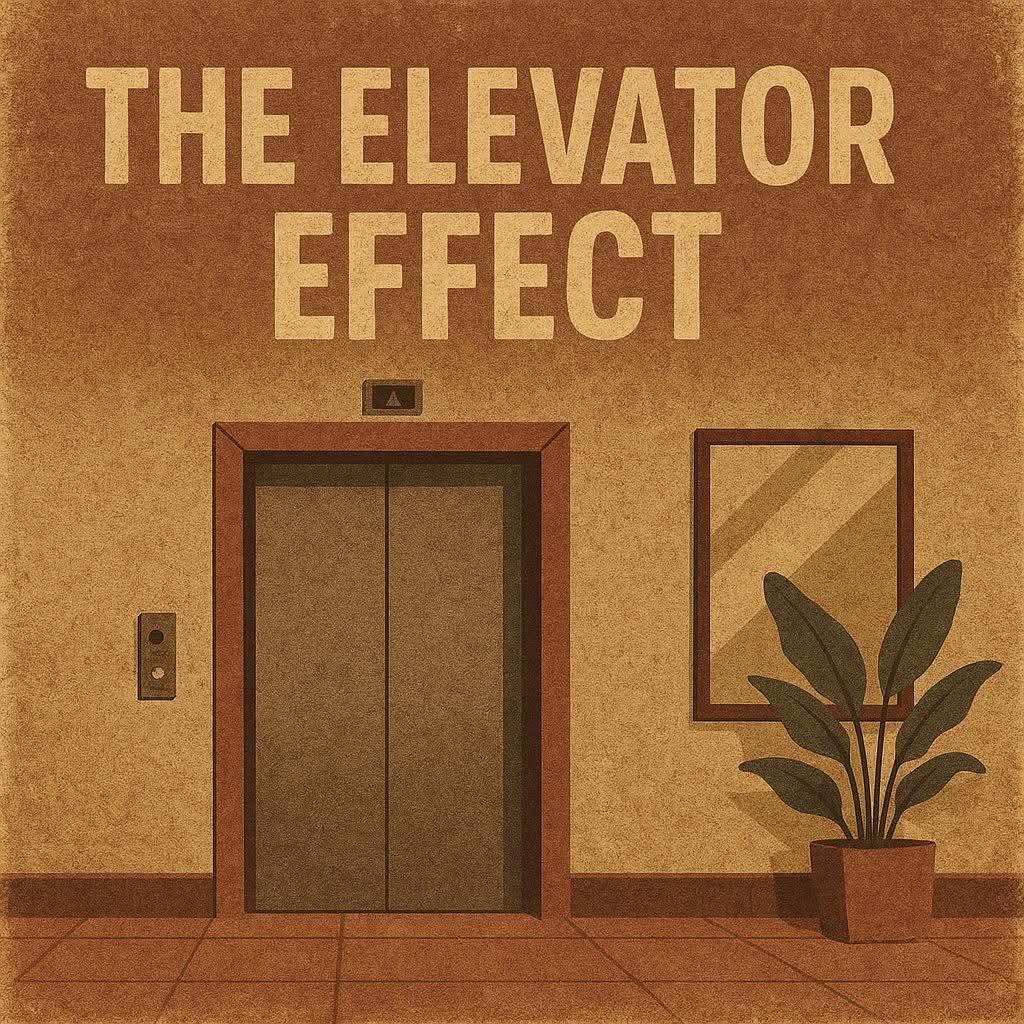


The “Elevator Effect”: How One Broken Elevator Saved a Failing Skyscraper
In the 1960s, a newly built office tower in New York had a strange problem.
It wasn’t the rent.
It wasn’t the location.
It was… the elevator.
Tenants kept complaining it was too slow.
Management spent months calling engineers, tweaking motors, adding relays…nothing helped.
Finally, they hired a behavioral psychologist.
He didn’t touch the machinery.
He just walked around, looked at the lobby, and said one sentence:
“Your elevator isn’t slow. Your tenants are bored.”
So he gave an odd recommendation:
Install mirrors in every elevator and in the lobby.
The engineers were baffled. But they did it.
Within weeks, the complaints vanished.
Why?
Because people stopped noticing the wait when they were looking at themselves.
The “slow elevator problem” wasn’t mechanical…it was perceptual.
And that tiny change saved the building.
🧩 The Marketing Lesson:
Most business problems aren’t “speed” problems …they’re perception problems.
Your product might be great.
Your system might work perfectly.
But if it feels slow, dull, or empty …people disengage.
So instead of asking “How do I move faster?”
Ask: “How do I make the wait feel valuable?”
That’s why:
• Apple turns loading screens into art.
• Tesla updates cars overnight so it feels futuristic.
• Smart brands fill the silence with story, movement, and reflection.
Because humans don’t measure time in seconds… they measure it in attention.
💡 The Nerdy Takeaway:
Sometimes, the smartest way to fix the machine… is to change the mirror.
People don’t just buy speed.
They buy how it feels to wait for something worth having.
In the 1960s, a newly built office tower in New York had a strange problem.
It wasn’t the rent.
It wasn’t the location.
It was… the elevator.
Tenants kept complaining it was too slow.
Management spent months calling engineers, tweaking motors, adding relays…nothing helped.
Finally, they hired a behavioral psychologist.
He didn’t touch the machinery.
He just walked around, looked at the lobby, and said one sentence:
“Your elevator isn’t slow. Your tenants are bored.”
So he gave an odd recommendation:
Install mirrors in every elevator and in the lobby.
The engineers were baffled. But they did it.
Within weeks, the complaints vanished.
Why?
Because people stopped noticing the wait when they were looking at themselves.
The “slow elevator problem” wasn’t mechanical…it was perceptual.
And that tiny change saved the building.
🧩 The Marketing Lesson:
Most business problems aren’t “speed” problems …they’re perception problems.
Your product might be great.
Your system might work perfectly.
But if it feels slow, dull, or empty …people disengage.
So instead of asking “How do I move faster?”
Ask: “How do I make the wait feel valuable?”
That’s why:
• Apple turns loading screens into art.
• Tesla updates cars overnight so it feels futuristic.
• Smart brands fill the silence with story, movement, and reflection.
Because humans don’t measure time in seconds… they measure it in attention.
💡 The Nerdy Takeaway:
Sometimes, the smartest way to fix the machine… is to change the mirror.
People don’t just buy speed.
They buy how it feels to wait for something worth having.
The “Elevator Effect”: How One Broken Elevator Saved a Failing Skyscraper
In the 1960s, a newly built office tower in New York had a strange problem.
It wasn’t the rent.
It wasn’t the location.
It was… the elevator.
Tenants kept complaining it was too slow.
Management spent months calling engineers, tweaking motors, adding relays…nothing helped.
Finally, they hired a behavioral psychologist.
He didn’t touch the machinery.
He just walked around, looked at the lobby, and said one sentence:
“Your elevator isn’t slow. Your tenants are bored.”
So he gave an odd recommendation:
Install mirrors in every elevator and in the lobby.
The engineers were baffled. But they did it.
Within weeks, the complaints vanished.
Why?
Because people stopped noticing the wait when they were looking at themselves.
The “slow elevator problem” wasn’t mechanical…it was perceptual.
And that tiny change saved the building.
🧩 The Marketing Lesson:
Most business problems aren’t “speed” problems …they’re perception problems.
Your product might be great.
Your system might work perfectly.
But if it feels slow, dull, or empty …people disengage.
So instead of asking “How do I move faster?”
Ask: “How do I make the wait feel valuable?”
That’s why:
• Apple turns loading screens into art.
• Tesla updates cars overnight so it feels futuristic.
• Smart brands fill the silence with story, movement, and reflection.
Because humans don’t measure time in seconds… they measure it in attention.
💡 The Nerdy Takeaway:
Sometimes, the smartest way to fix the machine… is to change the mirror.
People don’t just buy speed.
They buy how it feels to wait for something worth having.