


Croup: Causes, Symptoms, Treatment, Complications & Prevention
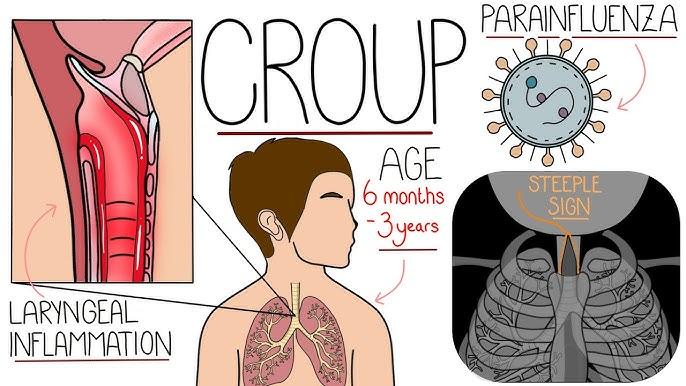
Croup also known as laryngotracheobronchitis, is caused by a viral infection such as parainfluenza, respiratory syncytial virus (RSV), influenza, and other respiratory viruses, that affects the upper airways, causing swelling around the voice box (larynx) and windpipe. This swelling leads to the classic “barking” cough, hoarseness, and noisy breathing known as stridor. While croup is usually mild, it can sometimes become serious and requires close monitoring.
It most commonly affects children between 6 months and 5 years, with the highest risk in those aged 6 months to 3 years. Because young children have smaller airways, even mild swelling can make breathing more difficult.

Causes and How It Spreads
Croup is caused by viruses that spread through:
- Coughing and sneezing (respiratory droplets)
- Touching contaminated surfaces
- Close contact with infected individuals
Signs and Symptoms
Croup often begins like a common cold and then progresses. Symptoms may include:
- Barking cough (seal-like sound), often worse at night
- Stridor: A high-pitched sound when breathing in
- Hoarse voice
- Runny nose and congestion
- Fever
- Worsening symptoms at night, typically peaking on nights 2–3

As the condition progresses, children may develop:
- Wheezing or noisy breathing
- Chest retractions (skin pulling in between ribs when breathing)
- Fatigue or unusual sleepiness
- Difficulty breathing in severe cases
Symptoms usually last 2 to 5 days, although a lingering cough may continue longer.
Spasmodic Croup
Some children experience sudden nighttime episodes of croup without prior illness. This is known as spasmodic croup and is more common in children with asthma or a family history of allergies.
Treatment Options
At-Home Care (Mild to Moderate Cases)
Most cases of croup can be managed at home with supportive care:
- Keep your child calm and comfortable (crying worsens symptoms)
- Ensure adequate hydration
- Use fever-reducing medication like paracetamol or ibuprofen if needed
- Keep your child upright to help ease breathing
- Cool mist humidifier in bedroom where child is sleeping

Medical Treatment (Severe Cases)
If symptoms worsen, medical care is essential. Treatment may include:
- Steroid medication (e.g., dexamethasone) to reduce airway swelling
- Nebulised adrenaline in hospital settings for severe breathing difficulty
- Monitoring in hospital for several hours

Antibiotics are not effective, as croup is caused by viruses.
Possible Complications
Although rare, complications can occur, including:
- Severe breathing difficulties or respiratory failure
- Secondary bacterial infections (e.g., bacterial tracheitis)
- Pneumonia
- Dehydration
- Low oxygen levels (hypoxemia)
When to See a Doctor
Consult a doctor if your child:
- Is under 6 months old with symptoms
- Has stridor even at rest
- Shows chest retractions when breathing
- Has symptoms lasting more than 4 days
- Becomes more distressed or symptoms worsen
When to Seek Emergency Care
Seek urgent medical attention if your child has:
- Severe difficulty breathing
- Blue or grey lips or fingernails
- Loud stridor at rest
- Difficulty swallowing or excessive drooling
- Extreme fatigue or reduced alertness
Croup can worsen quickly, don’t delay seeking help if breathing is affected.
Prevention Tips
While croup cannot always be prevented, you can reduce risk by:
- Encouraging regular handwashing

- Keeping children away from sick individuals
- Teaching proper cough and sneeze hygiene
- Cleaning commonly touched surfaces

- Keeping your child home when unwell
- Ensuring influenza vaccination where appropriate
Final Thoughts
Croup is a common childhood illness that is usually mild and manageable at home. However, because it affects breathing, it should always be taken seriously. Recognizing the warning signs and knowing when to seek medical care is essential.
Keeping your child calm, hydrated, and closely monitored can make a big difference in recovery, but never hesitate to seek professional help if symptoms escalate.

- News & Current Affairs
- Business & Economy
- Finance & Money
- Education & Learning
- Technology & Innovation
- Science & Environment
- Health & Wellness
- Food & Drink
- Home, Garden & Lifestyle
- Travel & Tourism
- Fashion & Beauty
- Art & Culture
- Entertainment & Media
- Sports & Recreation
- Personal Growth & Lifestyle
- Careers & Work
- Tutorials & How-To Guides
- Real Estate & Property
- Automotive
- Family & Relationships
- Environment & Sustainability
- Law & Legal Matters
- Gaming & Esports
- Religion & Spirituality
- Community & Local Voices
- Miscellaneous
- History