


Musa Motha: Dancing Beyond Limits, Living Beyond Fear
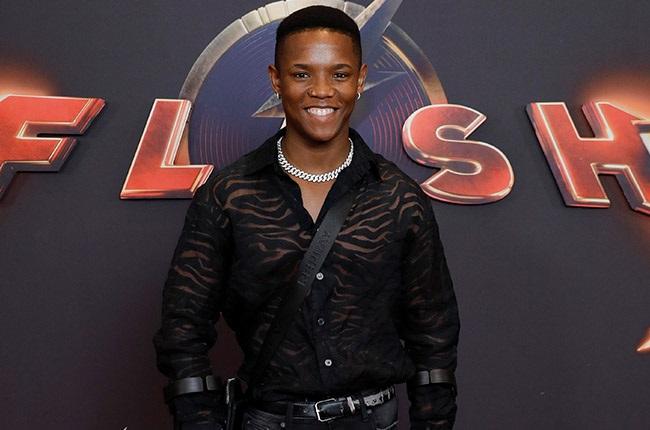
When you hear about Musa Motha, words often fall short.
Dancer. Choreographer. Motivational speaker. Cancer survivor. Visionary.
Watching him perform is a breathtaking experience, not just because of his technical brilliance, but because every movement carries a story of survival, purpose, and courage.
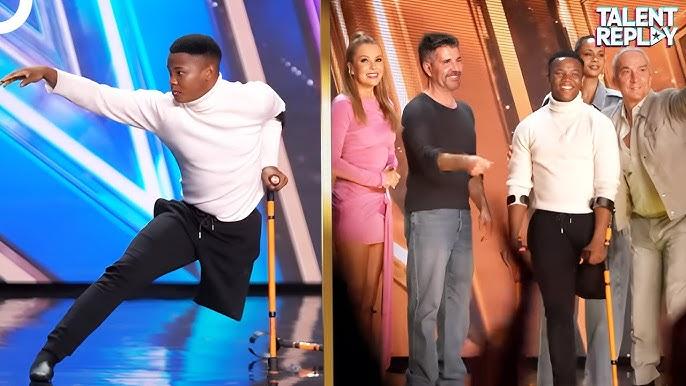
Musa is an award-winning South African-born dancer whose journey has taken him from the streets of Johannesburg to the world’s biggest stages, including Britain’s Got Talent, America’s Got Talent: Fantasy League, and international theatres. Performing with one leg and crutches, Musa doesn’t simply dance - he redefines what movement, strength, and possibility look like.
From Football Dreams to a Life-Saving Decision
Born in Johannesburg in 1995, Musa’s early dream was to become a professional footballer. That dream changed dramatically in 2005, when a knee injury sustained during a football tournament revealed something far more serious: osteosarcoma, a rare and aggressive form of bone cancer.
After chemotherapy failed and the tumour continued to grow, Musa and his family faced an impossible decision. In 2006, at just 11 years old, Musa chose to have his left leg amputated, a decision that ultimately saved his life.
What could have broken him instead reshaped him.
“I don’t see my limb loss as a setback,” Musa says. “I believe it was a blessing. It gave me purpose, direction, and perspective.”
When Dance Found Him
After recovery, Musa returned to football with crutches, determined not to give up, but he soon realised his future lay elsewhere. Dance, he says, found him. Watching neighbourhood dancers as a child, he was drawn to movement, rhythm, and expression. By 2009, he had joined a local dance crew, competing in street battles and performances.
He trained in hip-hop and Pantsula, a vibrant South African street dance style, while learning to adapt his body to movement in entirely new ways. Balance, gravity, and endurance became daily battles. He endured torn ligaments, fear of slippery stages, and the physical strain of supporting his body weight on crutches, but he never stopped.
With better equipment, physiotherapy, and unwavering support, Musa began developing his own unique movement language.
Finding His Voice at Vuyani Dance Theatre
A pivotal moment came when Musa joined Vuyani Dance Theatre in Johannesburg. There, he trained professionally in contemporary, Afro-fusion, tap, ballet, and modern dance, and worked closely with renowned choreographer Gregory Maqoma.
Gregory challenged Musa to see his crutches not as limitations, but as extensions of his body — tools of storytelling, like a paintbrush to an artist. This shift transformed Musa’s performances, allowing him to fully embody his identity on stage.
“That’s when my stories really came alive,” Musa reflects.
Taking the World by Storm
By 2019, Musa was performing internationally. In 2022, he moved to the UK, a decision that would change his life once again. Encouraged by a friend, he auditioned for Britain’s Got Talent in 2023.
What followed became television history.
As the final audition of the season, Musa delivered a performance so powerful that — despite all golden buzzers already being used — all four judges broke the rules and pressed the golden buzzer together, sending him straight to the semi-finals.

It was the first and only golden buzzer rule-break in the show’s history.
Musa finished 5th overall, opening doors to global opportunities.
That same year, he:
- Won the Emerging Artist Award at the National Dance Awards
- Appeared on the cover of Vogue UK’s Disability Portfolio (May 2023)
- Performed internationally with leading artists and institutions
- Appeared on America’s Got Talent: Fantasy League

- Performed at the Bridging Bionics Foundation Gala in the United States
More Than Crutches — An Extension of Identity
For years, Musa relied on hospital-issued crutches that were noisy, weak, and uninspiring. He longed for crutches that felt like an extension of himself — something strong, expressive, and stylish.
After moving to the UK, he discovered Cool Crutches, finally finding tools that supported both his body and his art.
“They’re not just for movement,” Musa says. “They’re part of my performance, my confidence, and my identity.”
Living Principles and Daily Discipline
Despite global success, Musa remains deeply grounded. His life is guided by simple but powerful principles:
- “In everything I do, I do my best.”
- “I don’t believe in impossible — I see IM POSSIBLE.”
His days are disciplined, balancing intense physical training with work as an entrepreneur, motivational speaker, music producer, video editor, and photographer.
On difficult days, he reminds himself of one truth:
“I survived.”
Final Thoughts
Musa Motha’s journey is not just about overcoming adversity, it’s about transforming it into art, purpose, and hope. From cancer survivor to global performer, from street dancer to international icon, Musa continues to prove that the human spirit is far more powerful than physical limitation.
He doesn’t just move audiences - he changes lives.

- News & Current Affairs
- Business & Economy
- Finance & Money
- Education & Learning
- Technology & Innovation
- Science & Environment
- Health & Wellness
- Food & Drink
- Home, Garden & Lifestyle
- Travel & Tourism
- Fashion & Beauty
- Art & Culture
- Entertainment & Media
- Sports & Recreation
- Personal Growth & Lifestyle
- Careers & Work
- Tutorials & How-To Guides
- Real Estate & Property
- Automotive
- Family & Relationships
- Environment & Sustainability
- Law & Legal Matters
- Gaming & Esports
- Religion & Spirituality
- Community & Local Voices
- Miscellaneous
- History